Listening to beautiful music is good. Hearing the tone of the Earth is better.
Antoine de Saint-Christophe
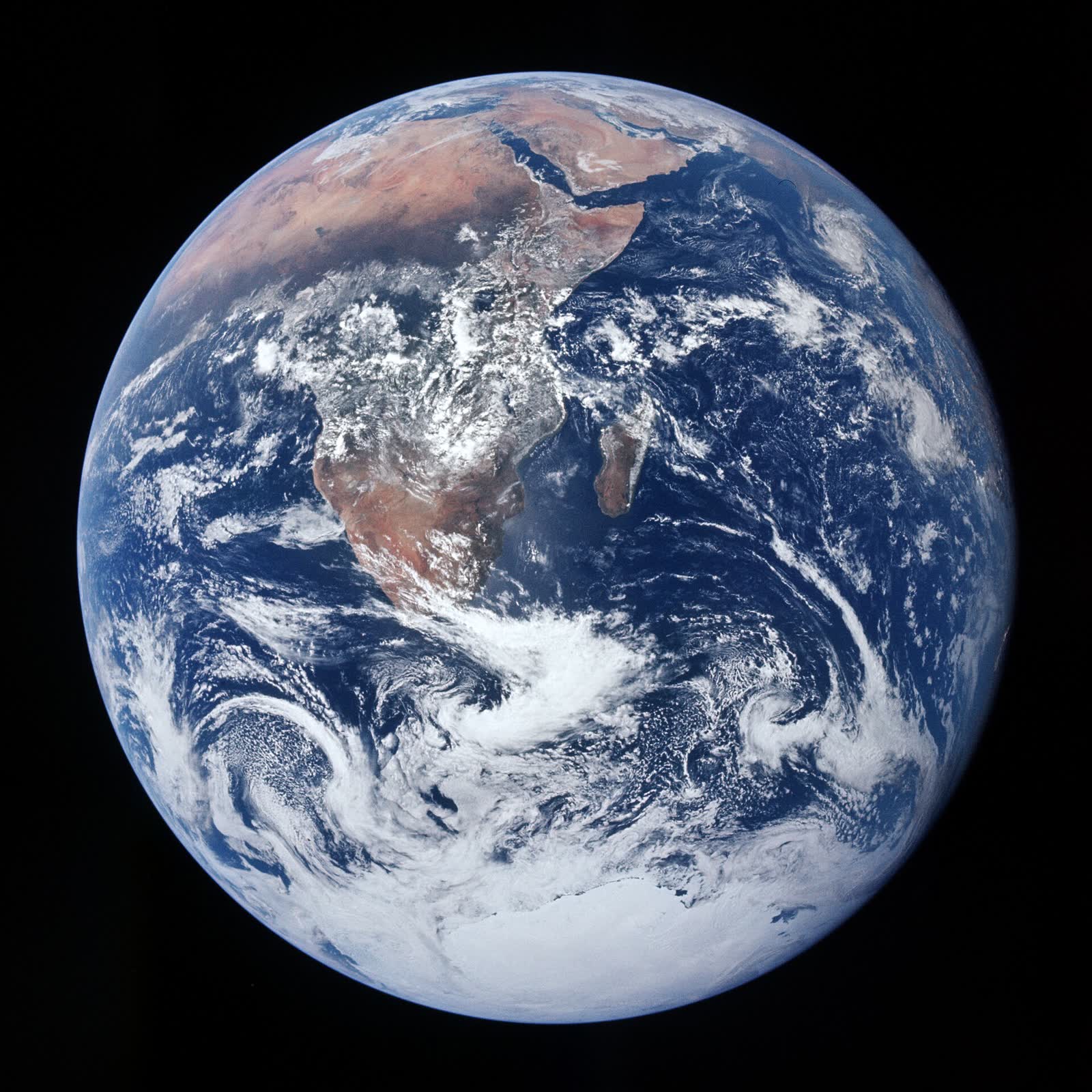
You can't hear it, and yet it sounds. The Earth turns once on itself in a day, and once around the Sun in a year. Anything that comes back regularly is a vibration, and every vibration is a sound. The Earth's is simply far too low for our ears.
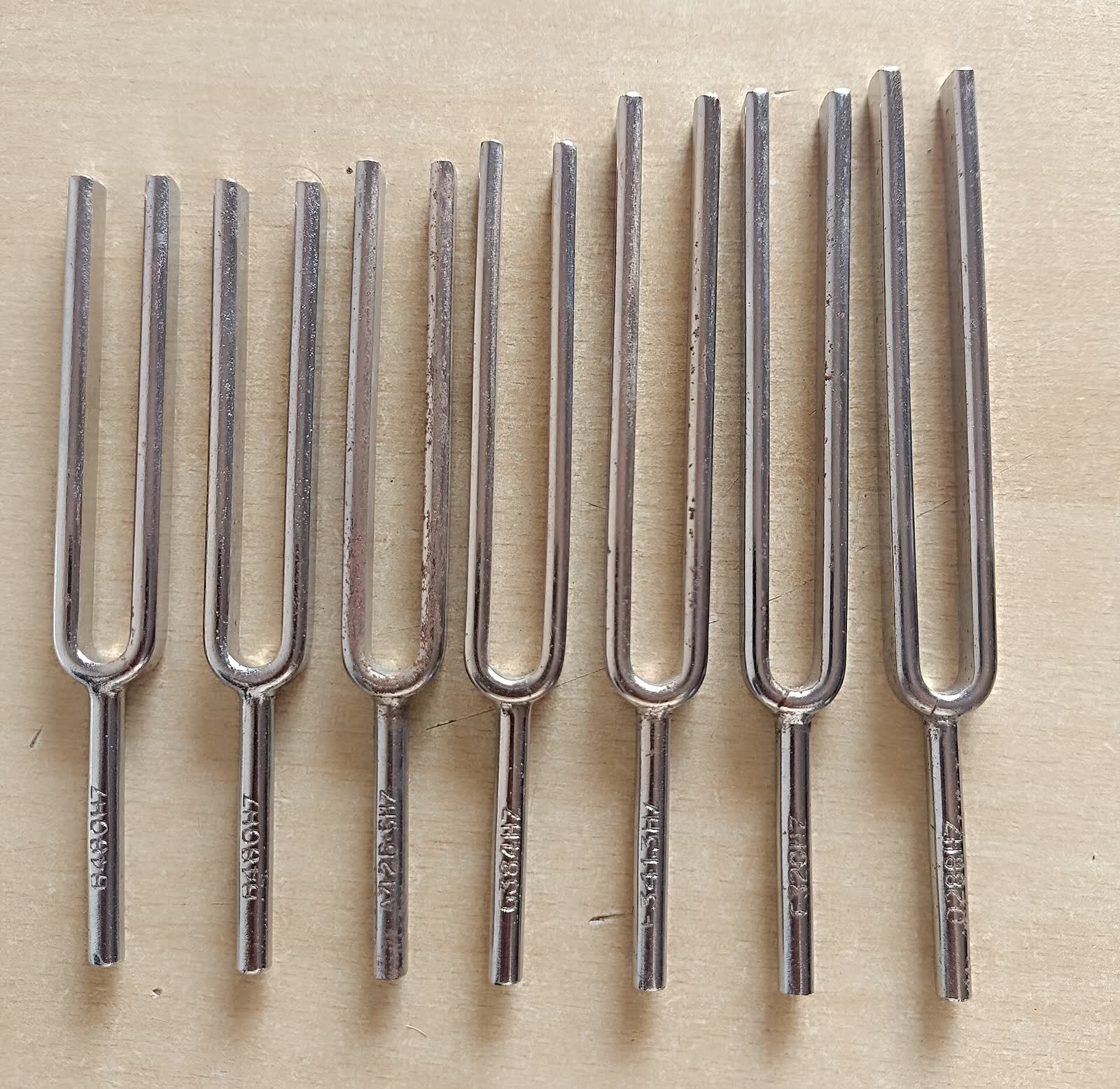
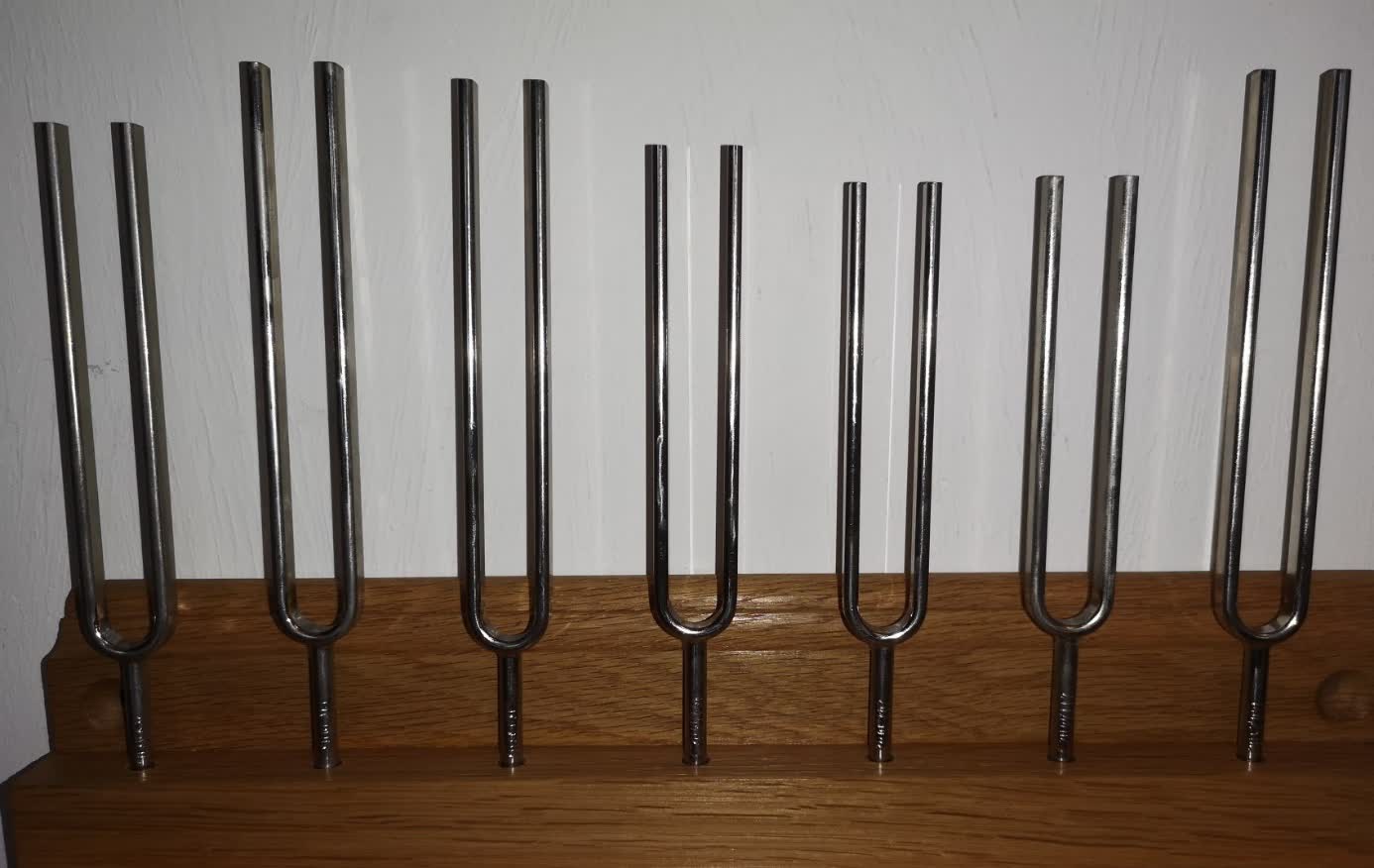
There is a very simple way to hear it anyway. It's the one Antoine uses to tune his tuning forks, his rituals and his colours.
An old intuition: the world is music
The idea is nothing new. It is 2,500 years old.
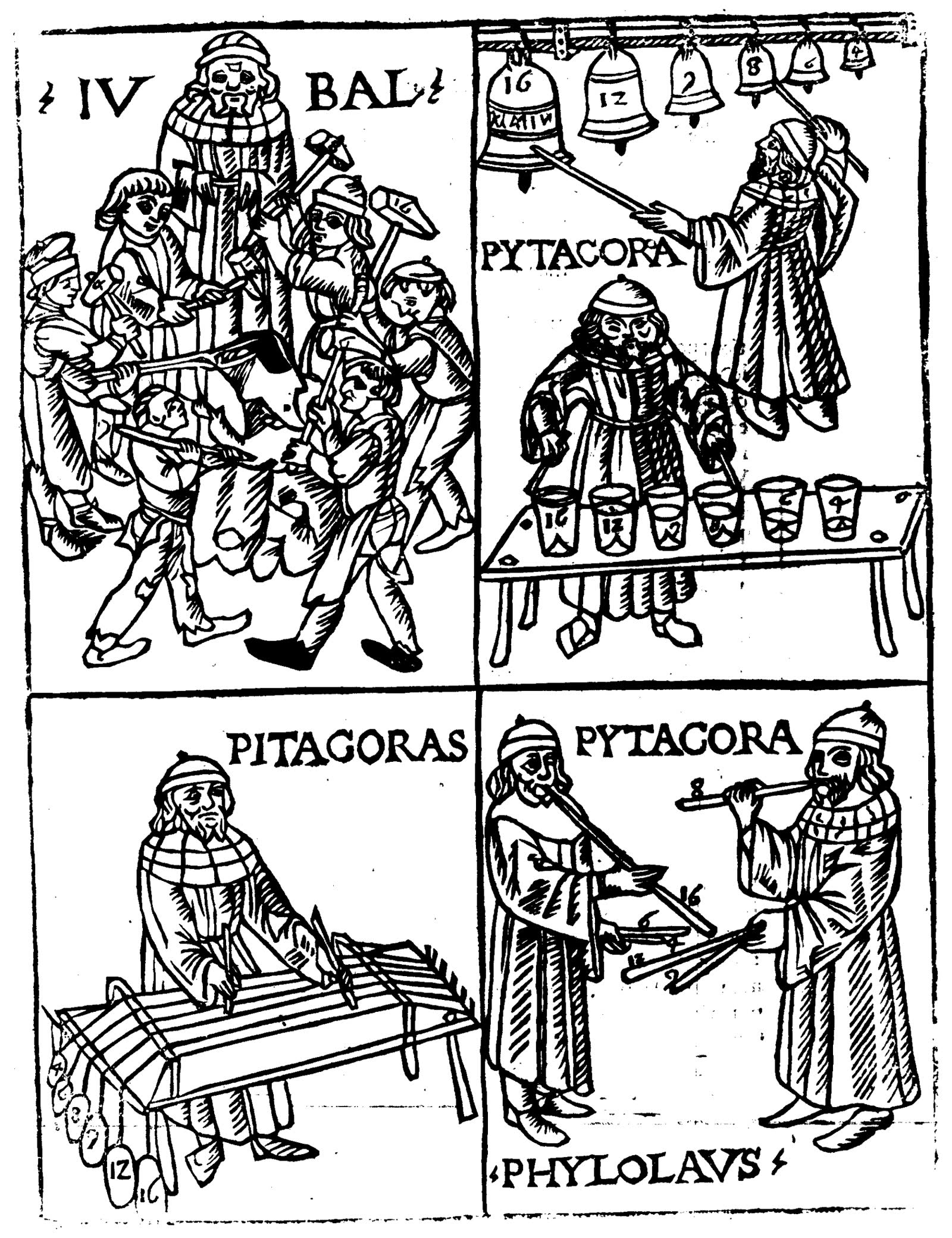
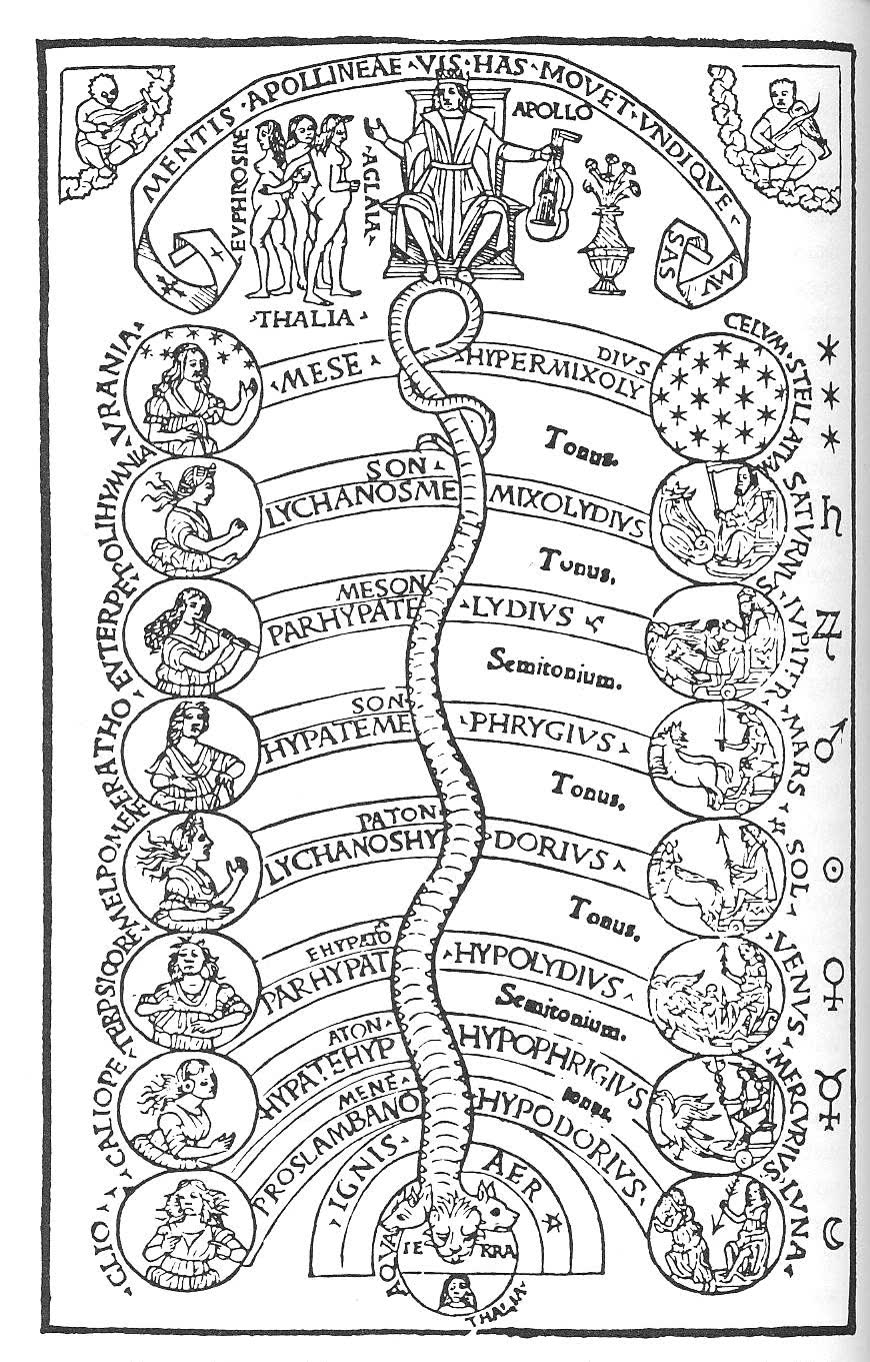
The story goes that Pythagoras, walking past a forge, noticed that the hammers rang in harmony when their weights were in simple ratios: 1 to 2, 2 to 3, 3 to 4. He drew from it a law that underpins all our music: harmonious intervals are simple numbers. And he drew a vision from it: if numbers govern sounds, they govern the sky as well. The planets, as they turn, make a music, the harmony of the spheres, which we don't hear because we have been hearing it since birth.
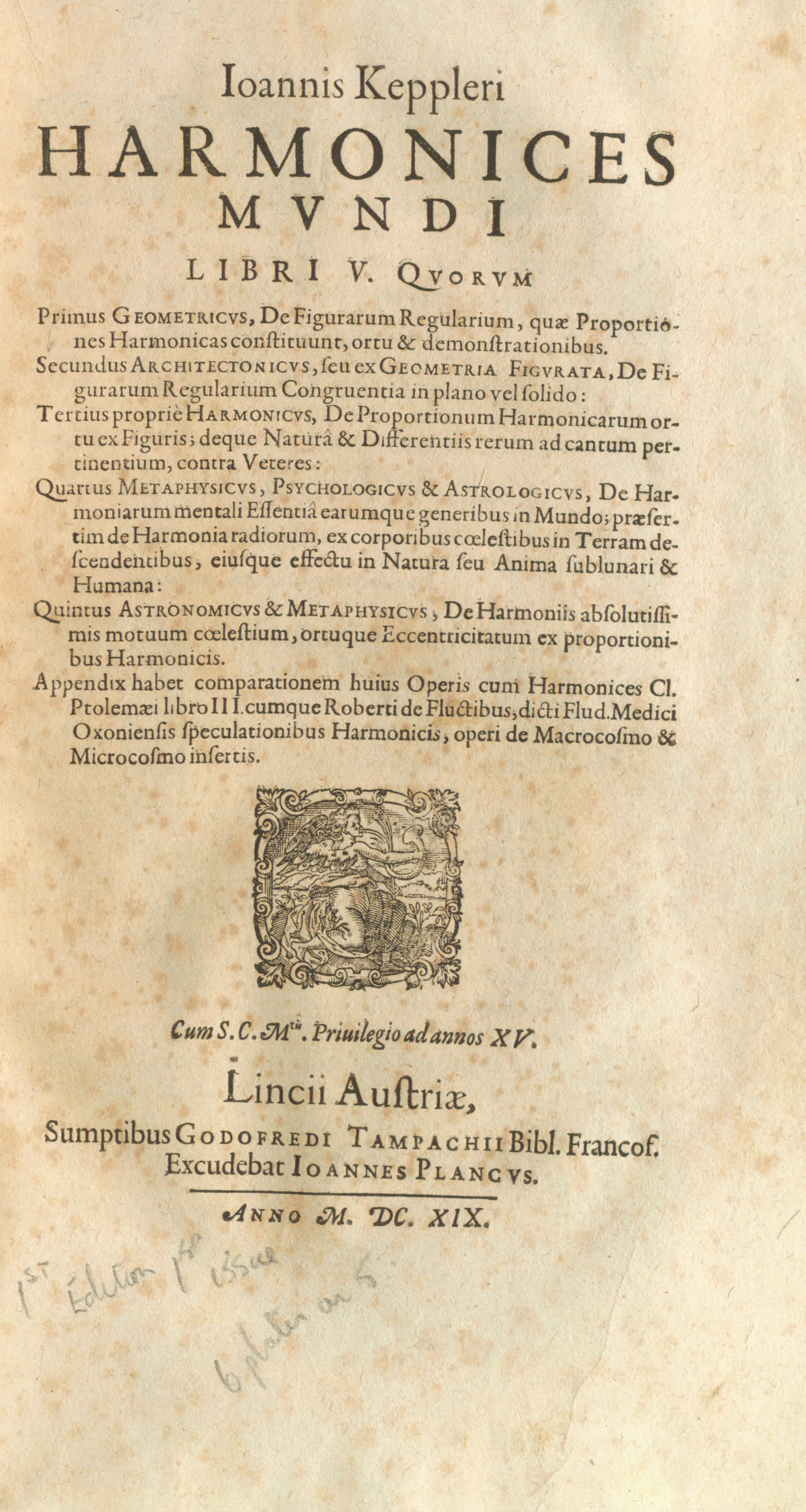
Two thousand years later, the astronomer Johannes Kepler took this idea seriously. In 1619 he published Harmonices Mundi, “The Harmony of the World”, in which he gave each planet a melody, based on its speed at its closest to and furthest from the Sun. It is in this same book that he set out his third law, the one every student still learns.
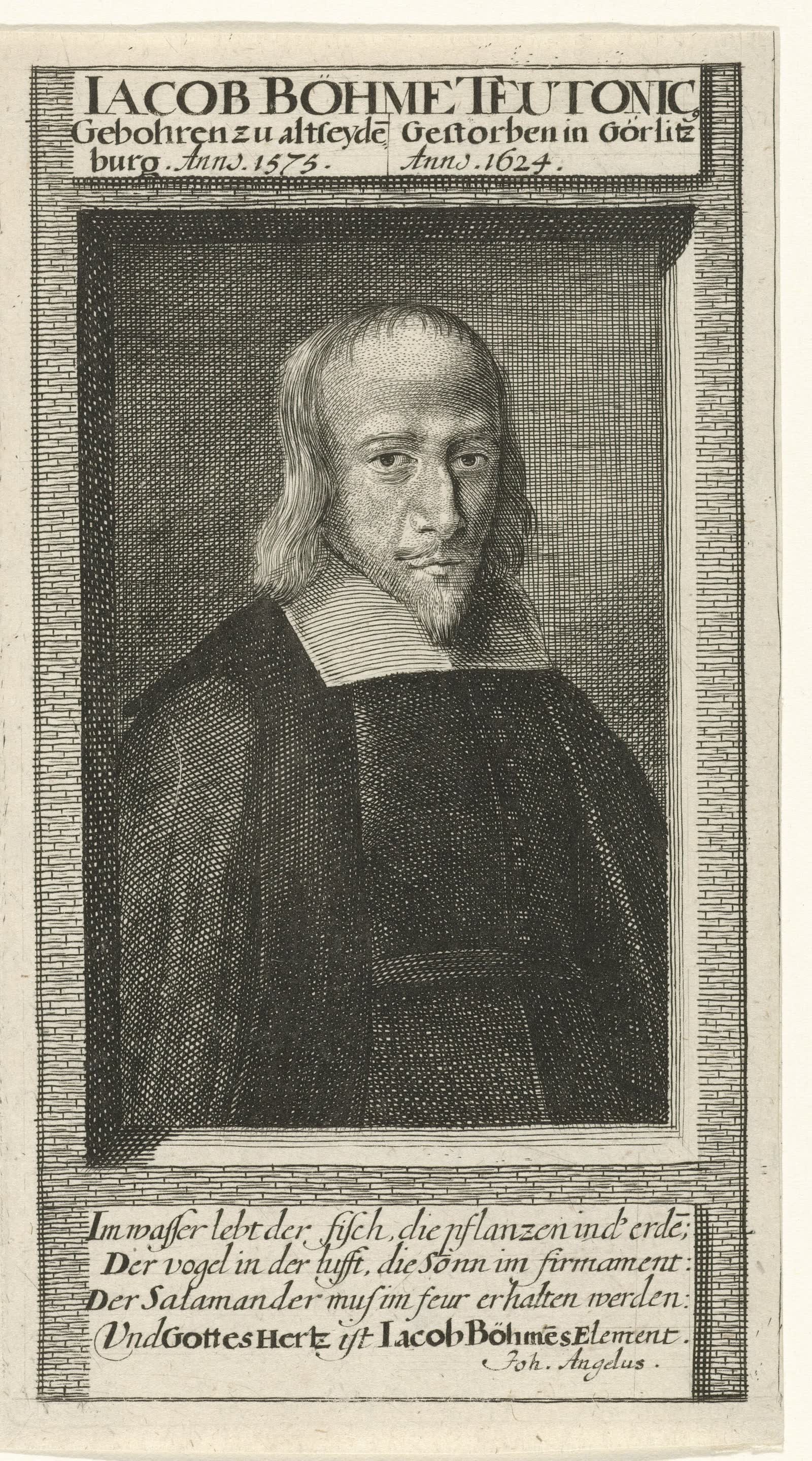
At the same time, in Germany, a mystical shoemaker, Jakob Böhme, wrote that all creation is a song, and that each thing has its own sound.
The law of the octave
These intuitions lacked a way to calculate. That way is the octave.
Pluck a string, then pluck it exactly at its middle: you hear the same note, higher. That's the octave. Physically, the frequency has been multiplied by two. And the ear recognises this ratio so well that all the music of the world, without ever agreeing on it, gives the same name to two notes an octave apart.
No relationship is more common in the universe than the octave. Antoine liked to recall that even a cell, when it divides, splits like a string plucked in its middle. It is also this law that the inscription of the abbey of Cluny celebrates, which he quotes about Fortuna Major: the holy octave teaches everyone the joy of living.
Hence a very simple idea: if you double the frequency of a rhythm enough times, you end up hearing it. Doubling means staying on the same note. The sound you get is therefore the true note of that rhythm, brought within reach of the ear.
That is what the Swiss mathematician and musicologist Hans Cousto did in the 1970s and 1980s. Octave after octave, he calculated the notes of the day, the year, the Moon and the planets. He called his work the cosmic octave. Antoine quotes him in his texts, and made it the basis of all his sound calculations.
The sound of the day: 194.18 hertz
A solar day lasts 24 hours, or 86,400 seconds. A vibration that goes back and forth once in 86,400 seconds is unimaginably slow: barely more than a hundred-thousandth of a hertz.
Double its frequency once, twice, ten times. You are still in silence. But at the 24th octave, after doubling it 24 times, it reaches the range the ear can hear: 194.18 hertz. It's a G, slightly low.
This is the sound of the earth day. Antoine keeps it for lunar returns, the return of the Moon to the exact place it held at your birth, once a month. He called them the monthly ratchets of time: every month, the clock of the sky moves forward a notch, and the tuning fork of the day goes with it.
The sound of the year: 136.10 hertz
Do the same with the Earth's orbit around the Sun: about 365 days, 5 hours and 49 minutes. After 32 octaves, you get 136.10 hertz, a C sharp.
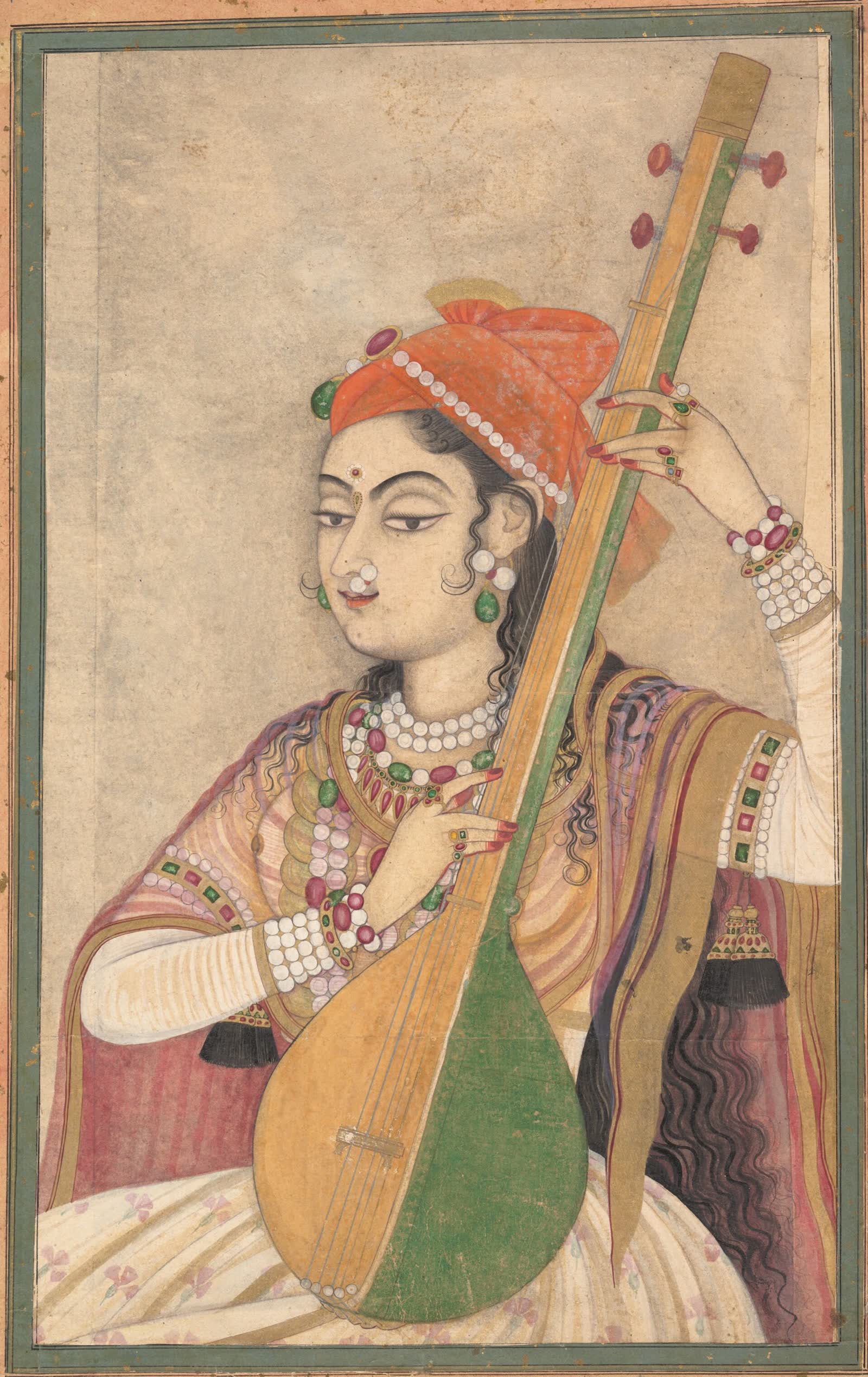
This is the sound of the earth year, and it is probably the most famous frequency of this whole family. Musicians and yoga teachers call it the OM tone: tuning forks, gongs and singing bowls are tuned to it, and many Indian musicians tune the tanpura, the stringed instrument that holds the drone behind singers, to a very close note.
Antoine keeps this tuning fork for solar returns, the return of the Sun to its place at your birth, once a year. In other words, your birthday. It is the sound that goes with the birthday trip and the ritual of Deutz, when you set a wish on the day the new year begins.
The song of the planets
Antoine took the calculation all the way, planet by planet. In his tables, each body has its period, its frequency, its note, but also its day of the week and its digit from 1 to 9, the same as those of the birth number.
| Body | Period | Octaves | Frequency | Note | Day | Digit |
|---|---|---|---|---|---|---|
| The Earth (the day) | 1 day | 24 | 194.18 Hz | G | 5 | |
| The Earth (the year) | 365.24 days | 32 | 136.10 Hz | C sharp | ||
| The Sun | 126.22 Hz | B | Sunday | 3 | ||
| Mars | 686.97 days | 33 | 144.72 Hz | D | Tuesday | 2 |
| Venus | 224.70 days | 32 | 221.23 Hz | A | Friday | 4 |
| Saturn | 10,759 days | 37 | 147.85 Hz | D | Saturday | 6 |
| Jupiter | 4,332.5 days | 36 | 183.58 Hz | F sharp | Thursday | 7 |
| Mercury | 87.96 days | 30 | 141.27 Hz | D | Wednesday | 8 |
| The Moon | 27.32 days | 29 | 227.43 Hz | A sharp | Monday | 9 |
These are exactly the seven bodies of the seven days of the week, the ones lit one by one in the ritual of Saint Ambrose, and the ones that take turns ruling the 7 seasons of your year.
And the Earth? For Antoine, it carries the digit 5, the middle one, that of the pentatonic scale, the five-note scale found in the oldest music in the world, from China to the Andes. Its colour is translucent white, and its stone is rock crystal.
When sound becomes colour
Keep going up. Sound is a vibration of the air, light a much faster vibration. But the law of the octave holds for all vibrations: by doubling again and again, you end up in visible light.
About forty octaves above the sound of the day, you land on a colour: a bright orange-red. For centuries it has been the colour of the robes of India's wandering monks, the sadhus, and of Buddhist monks' robes. The sound of the year becomes a turquoise blue-green.
Antoine went further. One octave above orange-red, he said, you reach the vibration of human DNA as studied by the German biophysicist Fritz-Albert Popp, known for his work on the very faint light given off by living cells. His conclusion was striking: whoever wears orange-red resonates with their own DNA.
It is also why Antoine chose colours so carefully, right down to that of the radionic T-shirt, which he selected according to each person's birth sky.
How to use it
Antoine drew three simple uses from it, which anyone can take up:
- On your birthday, strike a 136.10 hertz tuning fork, or listen to a recording of this sound, at the moment you make your wish for the year.
- Each month, when the Moon returns to its place at your birth, do the same with the sound of the day, 194.18 hertz. The 4 Moon windows tell you which energy dominates at that moment.
- On each planet's day, tune yourself to its note: Venus's A on a Friday, Jupiter's F sharp on a Thursday.
A tuning fork isn't struck against a table: you tap it gently on your knee, or on a rubber mallet, then hold it near your ear, or rest its foot on a wooden object that resonates.
To find out which planet rules the period you are living through right now, calculate your 7 seasons.
For you
Your solar return
On the day the Sun comes back to its place at your birth, your year begins again. Your astrologer tells you what it points to, and where to spend it. The reply comes in writing.
€18
These markers from tradition accompany your choices; they predict nothing and guarantee no result. For entertainment and self-reflection.
Frequently asked questions
What is the tone of the Earth?
The sound you get by doubling the frequency of the Earth's movements until they become audible. The 24-hour solar day gives 194.18 hertz after 24 octaves; the year gives 136.10 hertz after 32 octaves.
Why can you “raise” a rhythm octave by octave?
Because doubling a frequency doesn't change the note, only its pitch. The sound you get is therefore the note of the original rhythm, brought within reach of the ear. This is the principle of Hans Cousto's cosmic octave.
What is the OM sound at 136.10 hertz?
It is the sound of the earth year, a C sharp. Tuning forks, gongs and singing bowls are tuned to it, and Antoine keeps it for your birthday.
What is the 194.18 hertz sound for?
It is the sound of the earth day, a G. Antoine uses it for lunar returns, the monthly return of the Moon to its place at your birth.
What is the colour of the Earth?
Forty octaves above the sound of the day, you get an orange-red, the colour of the robes of India's monks. In Antoine's correspondences, the Earth also has translucent white as its colour and rock crystal as its stone.
Do the planets have their own sound too?
Yes. By the same calculation, Venus sounds an A at 221.23 hertz, Mars a D at 144.72 hertz, Jupiter an F sharp at 183.58 hertz and the Moon an A sharp at 227.43 hertz.
Free guide · Timing
The Right Moment. The three clocks of tradition, to know when to act and when to wait. Twenty pages, free, by email.
Get the free guide