There is a point in your natal chart that matches no star at all.
You will never see it through a telescope. It gives off no light. It is a calculated point, built from three elements of your birth sky. The astrologers of Antiquity gave it a magnificent name: the Part of Fortune.
And in the old treatises, it is one of the first places you look. Because it is supposed to answer the question everyone asks: where is my luck?
A point born of the Sun and the Moon
The idea is old. It is found among the Greek astrologers of Alexandria, at the beginning of our era, notably in Vettius Valens, who made it one of the pillars of his work.
The principle is this. You measure the distance between the Sun and the Moon at the moment of birth. Then you carry that same distance from the Ascendant. The point you get is the Part of Fortune.
In other words: the Part of Fortune carries the relationship between your two lights, your will and your sensitivity, all the way to the horizon of your birth. It is the place where what you are and what you feel meets the world.
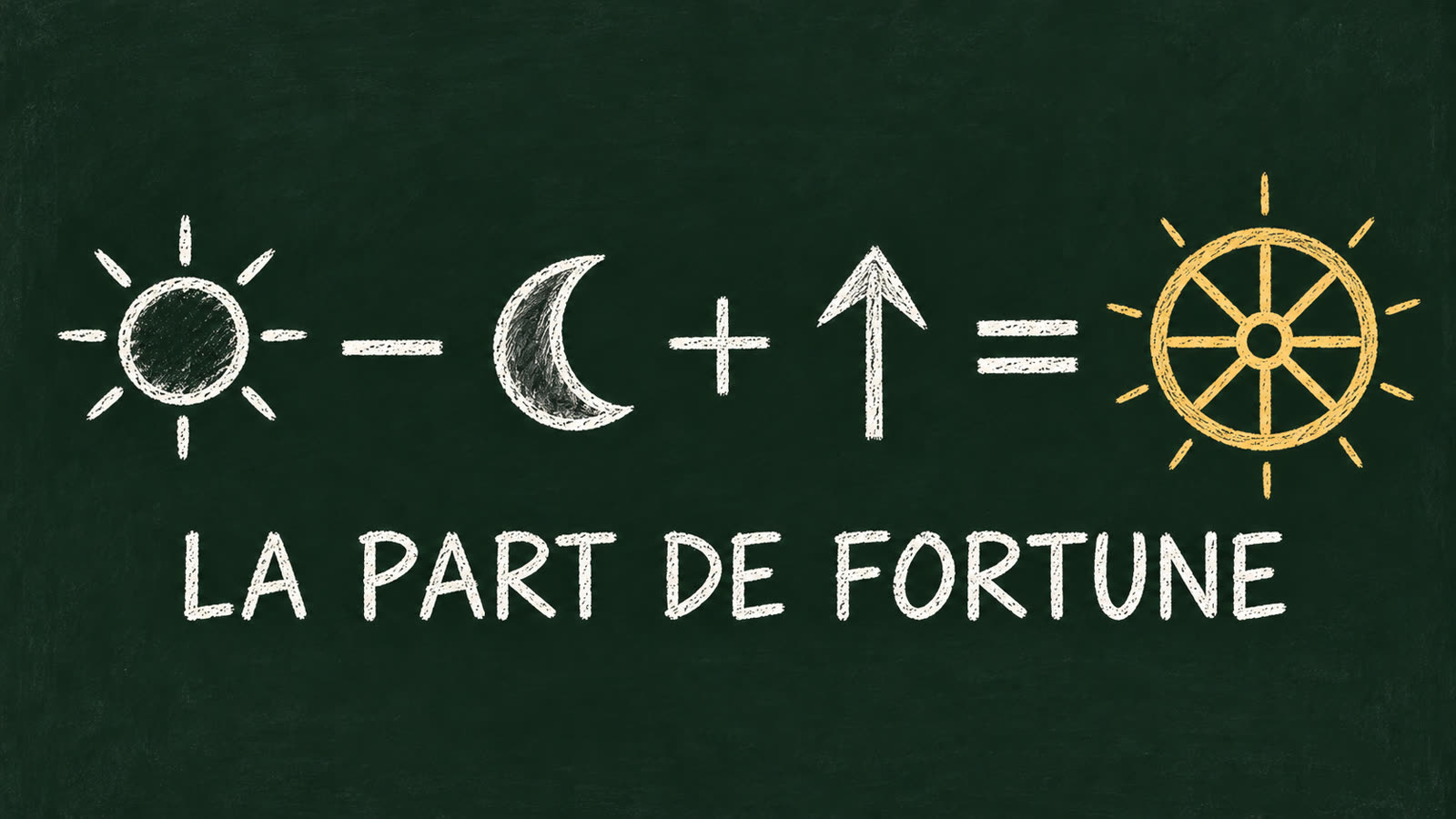
For a daytime birth and a nighttime birth, the Hellenistic tradition reverses the calculation. That kind of detail completely changes the result, which is why the workshop always does it by hand, or with its own calculation tools, never with a mass-market app.
The Part of Fortune requires the time of birth: it moves with the Ascendant, by about one degree every four minutes.
The goddess’s wheel
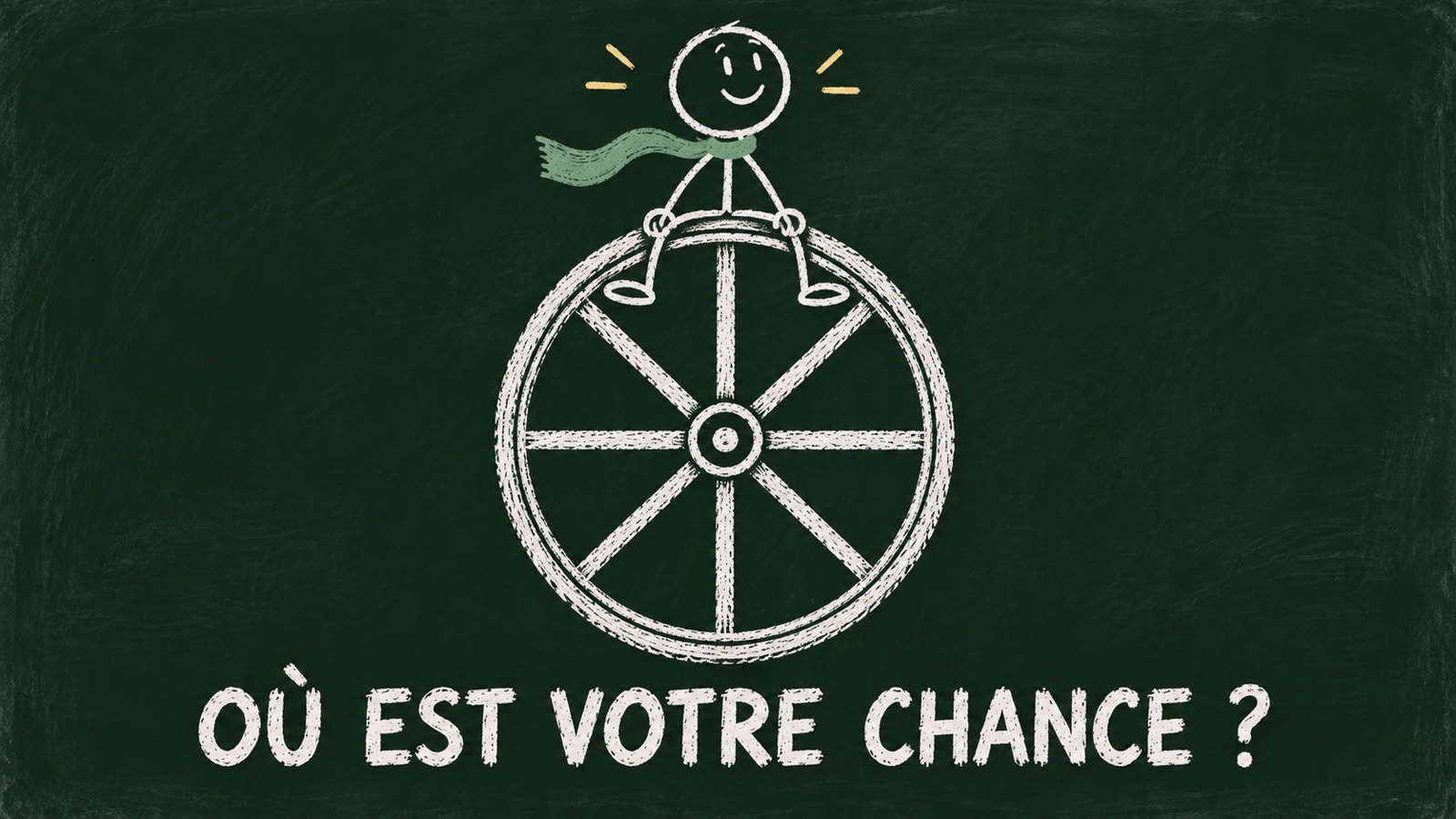
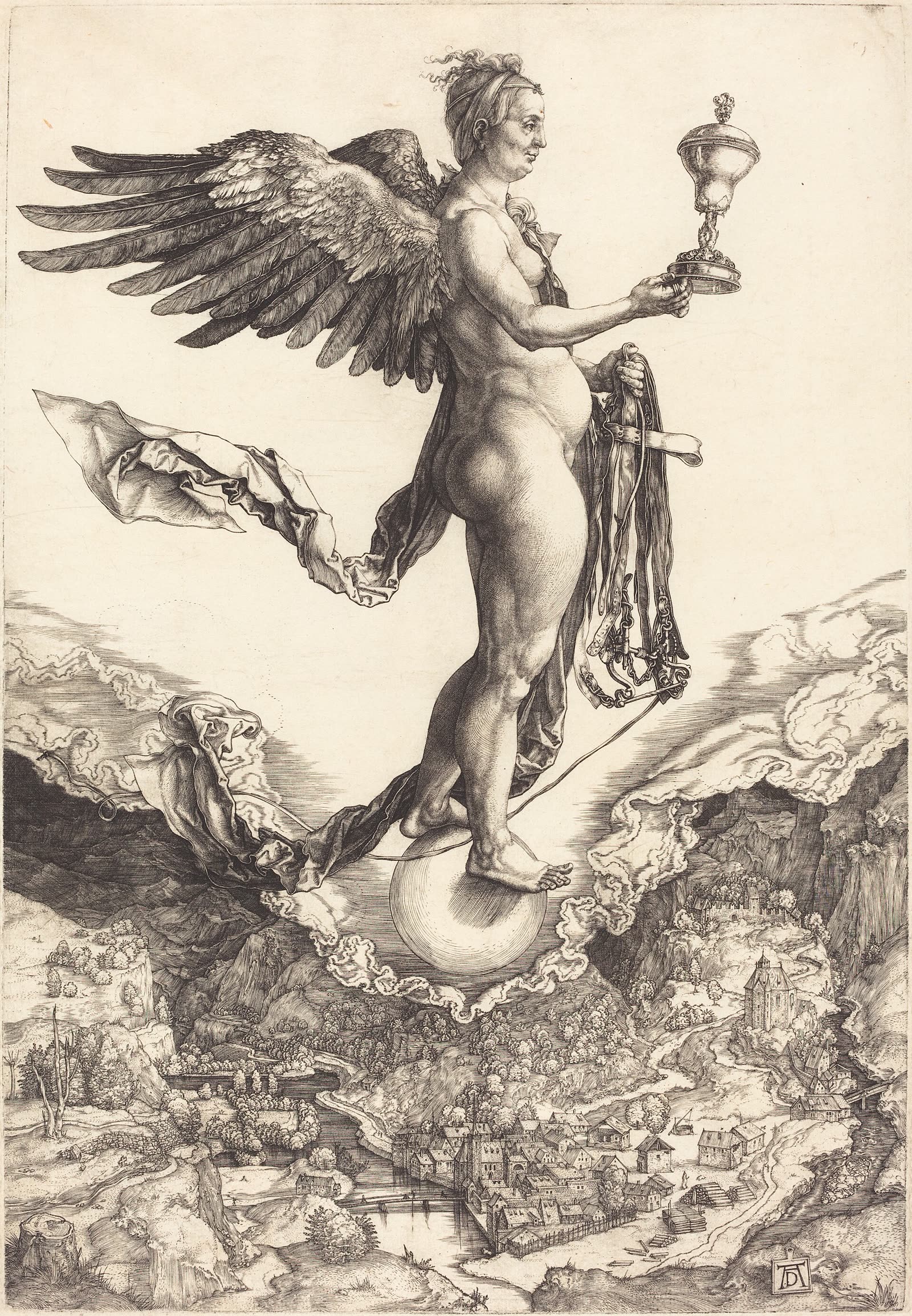
The name comes from Fortuna, the Roman goddess of fate and luck. She was shown with a horn of plenty, a rudder, and above all a wheel.
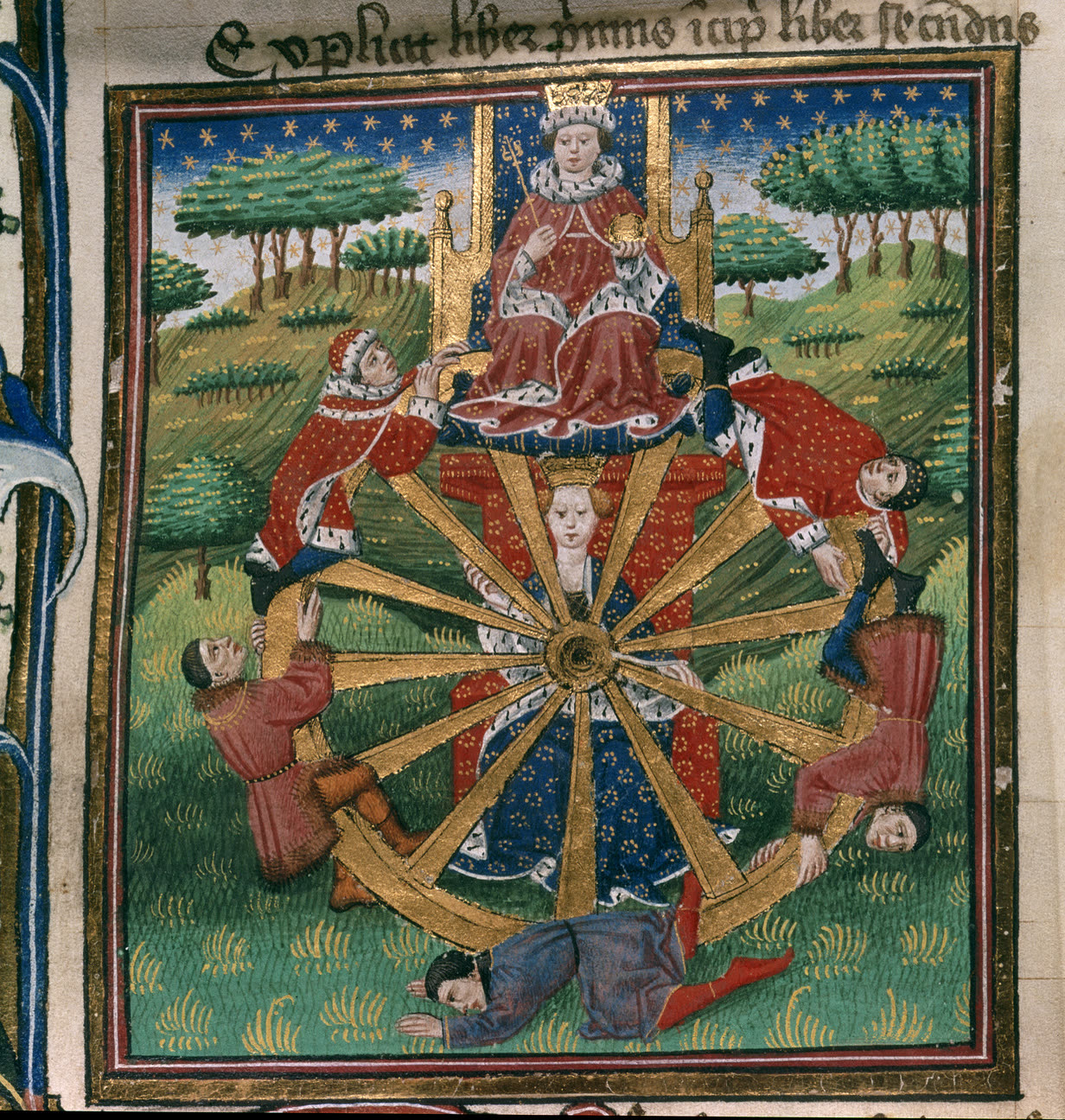
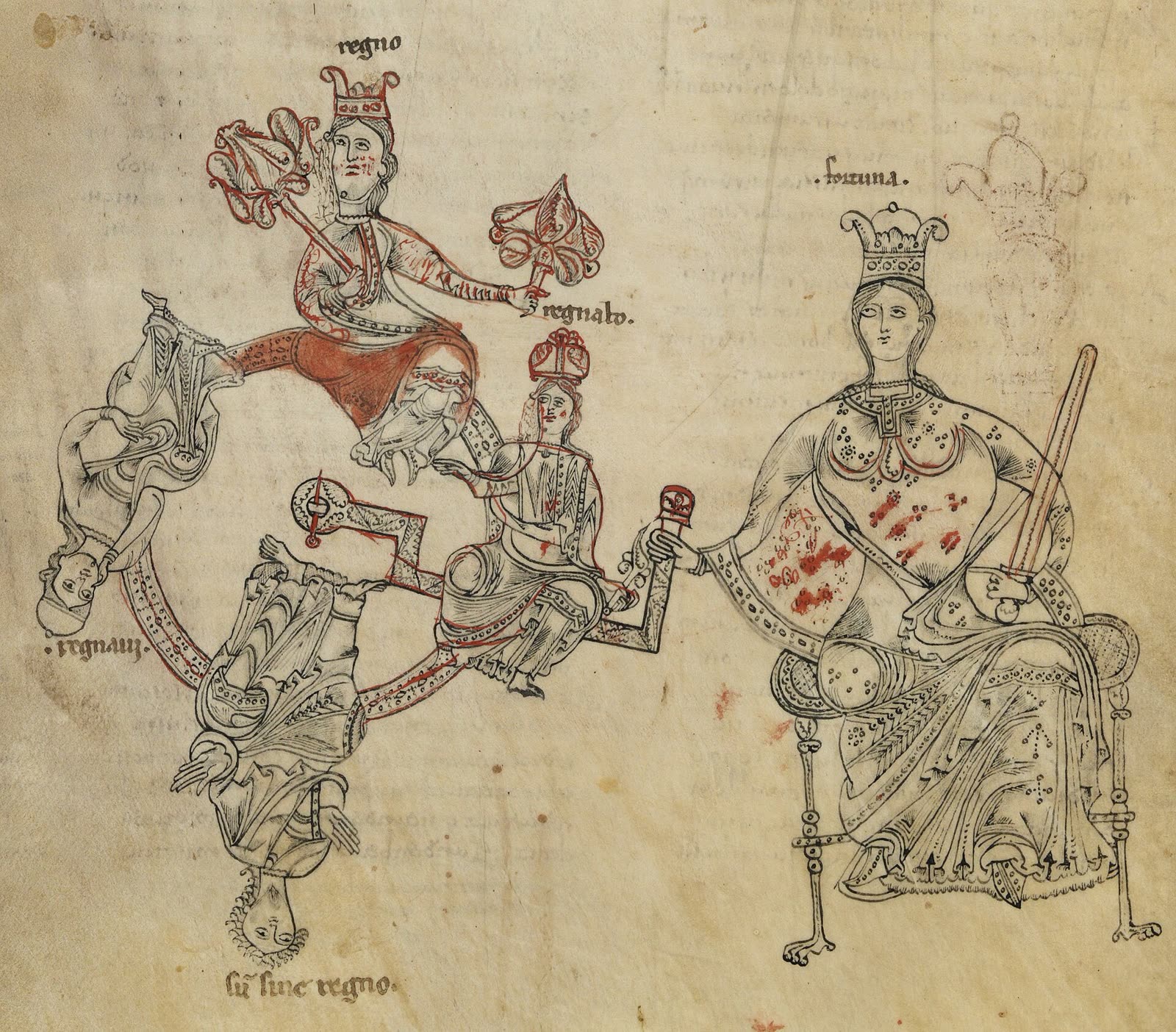
In the Middle Ages, the Wheel of Fortune is everywhere: in manuscripts, in cathedral stained glass, in poems. A king at the top, a man falling, another rising, a last one crushed beneath. The image says something simple: luck turns.
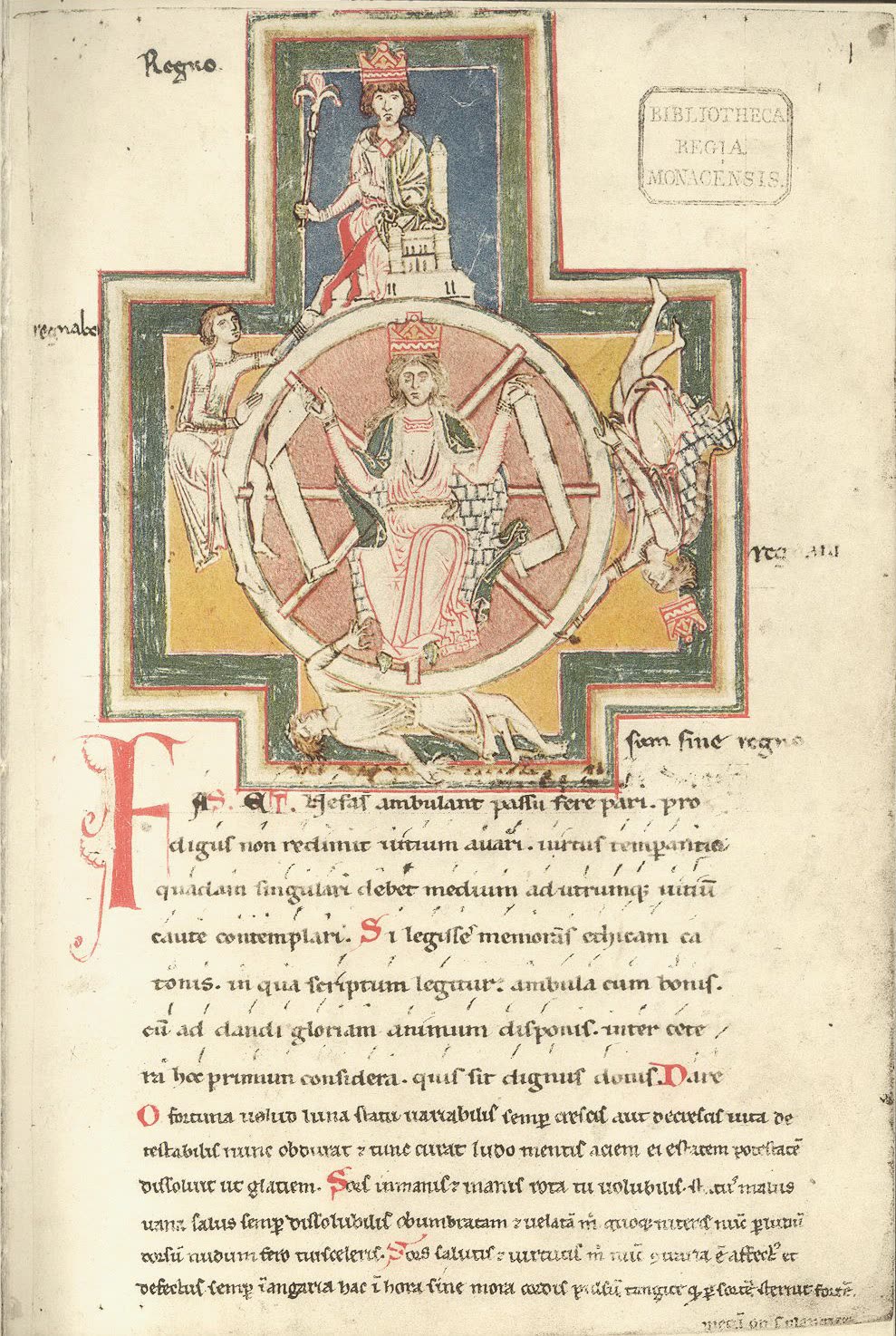
The Part of Fortune, in astrology, says roughly the same thing, with one extra piece of precision. It doesn’t just say that luck turns. It says in which area of your life it turns in your favor.
What its house says
The first thing we look at is the house where the Part of Fortune falls. The twelve houses are the twelve areas of life. Here are a few examples, so you get a feel for the idea.
- In the 2nd house: luck comes through money, possessions, the resources you build yourself.
- In the 5th house: through creativity, children, leisure, pleasure, sometimes the game of seduction.
- In the 7th house: through other people. A business partner, a spouse, a contract. Your luck rarely comes alone.
- In the 9th house: through travel, foreign countries, studies, teaching.
- In the 10th house: through career, reputation, public success.
- In the 11th house: through friends, networks, protectors. For you, an address book is worth its weight in gold.
Someone with Fortune in the 9th house who stays in the same village all their life may be missing their luck. So may someone with Fortune in the 11th house who turns down every invitation.
The ruler of Fortune
The second thing, more subtle, is the planet that rules the sign of the Part of Fortune. The ancients called it the lord of the lot.
If your Fortune falls in Taurus, Venus rules it: your luck has a taste of beauty, comfort, pleasant relationships. In Capricorn, it is Saturn: a slow luck, built up, that comes with age and perseverance. In Sagittarius, it is Jupiter: a generous luck, often linked to foreign countries or to knowledge.
And that ruler, in turn, is somewhere in your chart. In a house, in relation to other planets. It is a thread you pull, and it tells the whole story of your relationship with luck.
The years when Fortune lights up
This is our favorite part.
The Part of Fortune is not just a fixed point of your birth. It switches on at certain moments in life: when a slow planet comes to touch it, when your solar return puts it on an angle, when the year of your age points to it, according to an ancient technique called profections.
Some years, your luck point is lit like a stage under the spotlights. Other years, it is in the shadow. Knowing which ones means knowing when to put in double the effort.
The other parts
The Part of Fortune has sisters. The Arab astrologers of the Middle Ages calculated dozens of them: the Part of Spirit, the Part of Love, the Part of Marriage, the Part of Commerce, the Part of Journeys… Each one is built from three points of the chart, and each one sheds light on an area.
The most useful, in our view, are the Part of Spirit, which completes Fortune by showing what you do on your own initiative, and the Part of Love. But start with Fortune. It is the mother of all the others.
A word of caution
We write this to be clear: the Part of Fortune is not a magic ticket.
It shows an area of life where luck, in the broad sense, meets you more easily: opportunities, encounters, things that come easily. It is then up to you to go and get them. The luck you wait for sitting down rarely arrives. The luck you go looking for in the right place, much more often.
And now, you
Your Part of Fortune has existed since your first second. It is somewhere in your chart, in a precise house, in the keeping of a precise planet.
If you want to know where it is, what it asks of you, and the years when it lights up, the workshop calculates it and explains it to you.
Frequently asked questions
What is the Part of Fortune?
It is a calculated point of the birth chart, built from the Sun, the Moon and the Ascendant. Since Antiquity, it has shown the area of life where luck meets the person.
How is it calculated?
You carry, from the Ascendant, the distance that separates the Sun from the Moon. According to the Hellenistic tradition, the calculation is reversed for nighttime births.
Do I need my time of birth?
Yes. The Part of Fortune moves with the Ascendant: a few minutes’ difference can change its degree, sometimes its house.
What are the Arabic parts?
They are points calculated the same way as the Part of Fortune, developed by medieval astrologers: the Part of Spirit, of Love, of Marriage, and many others.