One gives birth to two, two gives birth to three, and three gives birth to the ten thousand beings.
Laozi
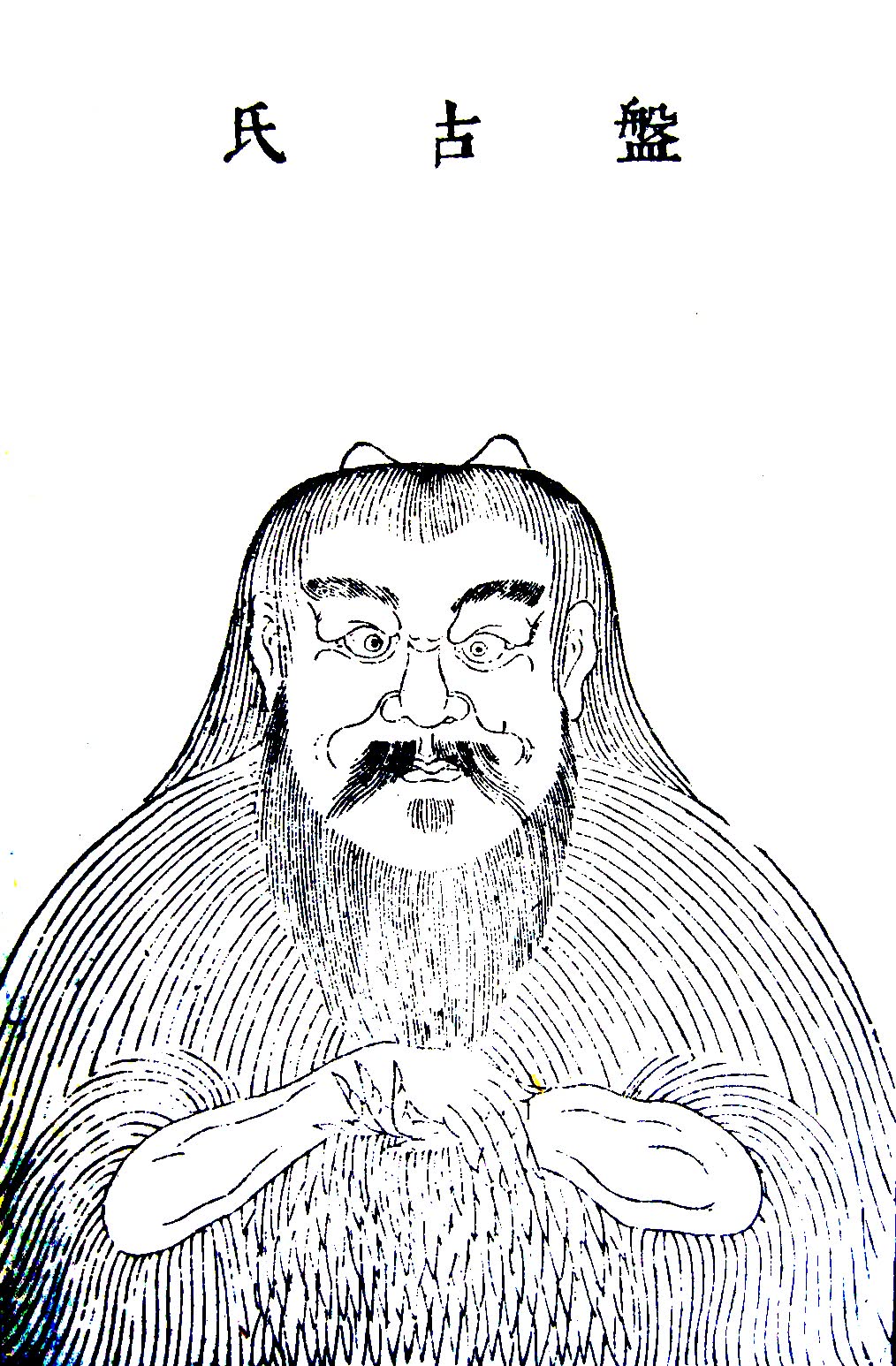
Before the world existed, a very old Chinese legend says, there was only an egg. Inside the egg, mixed together, were Heaven and Earth. And between them, asleep, a giant: Pangu.
For eighteen thousand years, Pangu grew in the dark. Then, tired of the darkness, he broke the shell with a blow of his axe. The egg split in two. The light, clear part rose: it became Heaven, the yang. The heavy, dense part sank: it became Earth, the yin.
Antoine opened his card on egg magic with this legend. For him, it says everything: the egg is the shape of birth. The birth of the world, and the birth of a wish.
The giant who became the world
The legend, recorded in the time of the Three Kingdoms, tells what happened next. Pangu held Heaven up above Earth for a long time, growing every day along with them. And when he died, his body became the world.
His breath became the clouds, and his voice the thunder. His eyes became the Sun and the Moon. His body formed five great mountains, his blood the rivers, his muscles the fields. His hair and beard became the stars, his skin the meadows. His marrow crystallised into pearls and jade, and his sweat fell as dew and rain.
From the yin and yang that came out of the egg, Chinese tradition then derives the eight trigrams, then the sixty-four hexagrams of the I Ching, and on to the Lo Shu of the sacred turtle. Everything starts from the egg.
Two kinds of egg magic
First of all, Antoine made a distinction he considered essential. There are two great families of magic eggs, and they are not used in the same way at all.
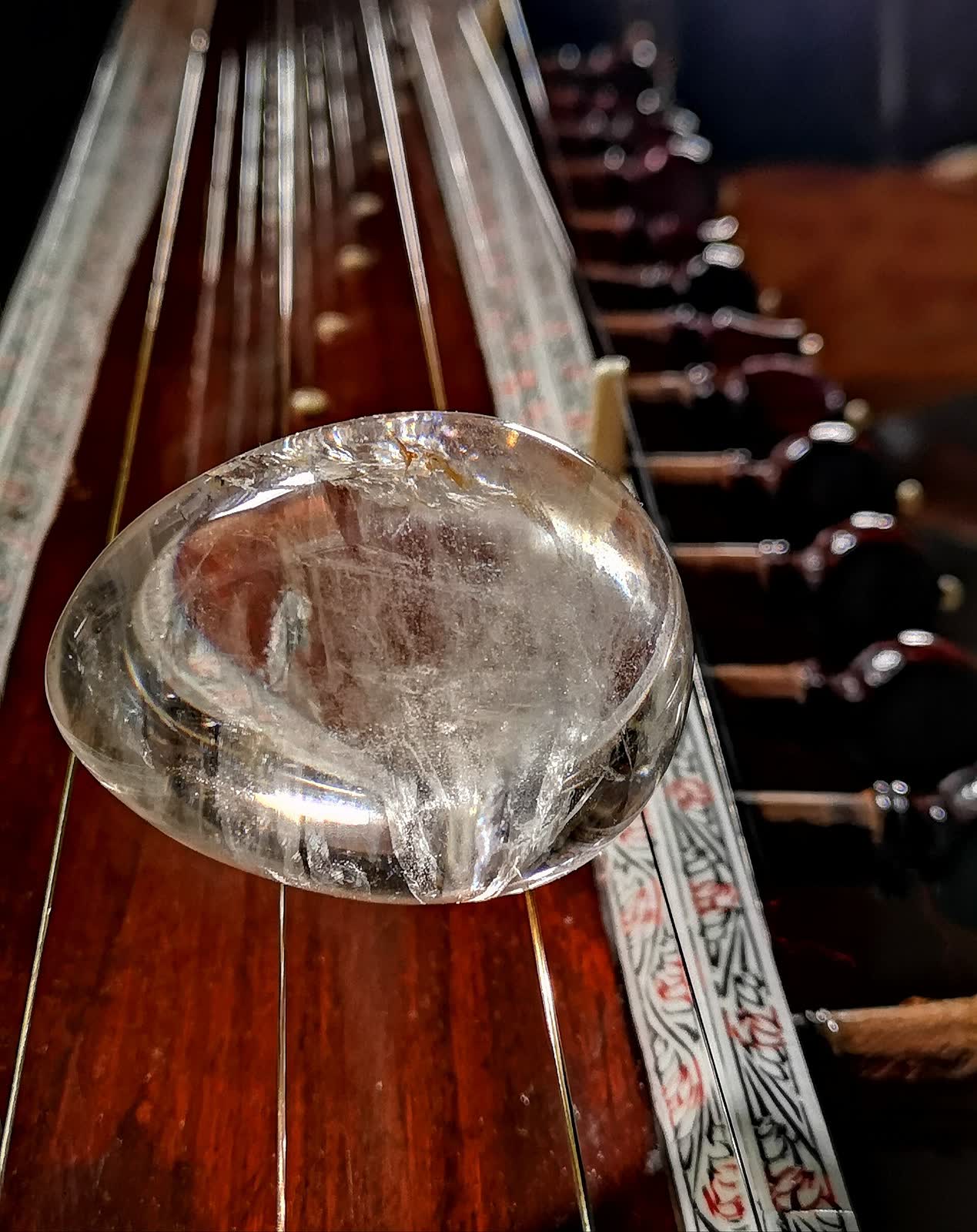
Dynamic magic. This concerns natural, uncarved eggs: an egg of organic origin, or an egg cut from water crystal, that is, rock crystal. Here there is movement: of the person performing the rite, of the egg, or of both.
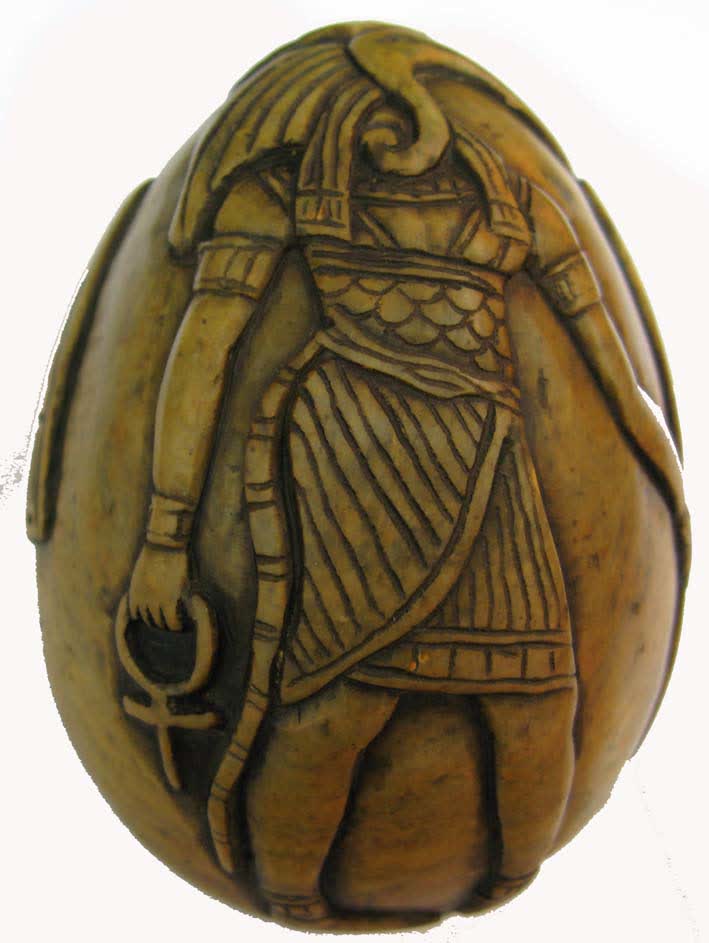
Static magic. This concerns carved eggs of mineral origin, sculpted and decorated. Here nothing moves: neither the person nor the egg. You set it down, and it does its work.
The stone egg: capturing ki
The magic of the carved mineral egg, Antoine wrote, lies in capturing ki, the beneficial energy so often mentioned in feng shui, the breath that flows through the house.
The gesture couldn't be simpler:
Place a carved mineral egg in the middle of each windowsill. According to Antoine, it spreads a feeling of quiet and serenity inside the room.
And he added something he considered important: an egg carved by hand from a chosen stone gives the messages you place in it a special strength in bringing the wish about.
The crystal egg: waterfall magic
The second kind of magic is the most spectacular. Antoine held it to be the most powerful of all egg magic.
Why? Because its effect is, he said, threefold. It depends on three things at once: the molecular structure of the crystal, magnetism, and the force of the flowing water. Hence the names given to it: dam magic, waterfall magic, roaring magic.
Water crystal, he explained, has an extraordinary quality: it very easily absorbs everything around it, and above all the subtle fluids of the person holding it. It locks in the intention of the person performing the rite, then releases it all at once, multiplied, on violent contact with very turbulent water.
The three gestures
Antoine described the rite in three steps, to be followed carefully.
- Charge the egg. Hold the crystal egg between your two hands, and think very hard about your wish for one minute.
- Throw it. Throw it with all your strength at the top of a waterfall or a dam bridge, into the most turbulent water, and only during the Moon phase that suits your wish.
- Seal it. Place your right index finger in your right ear and your left index finger in your left ear, close your eyes for a few moments, and press the tip of your tongue to the roof of your mouth.
Do this safely: from a bank or a bridge open to the public, never leaning over or climbing a barrier, and only where it is allowed.
The Moon decides the day
The throw isn't made just any time. Antoine relied on what he called the decisive influence of the Moon: the four stages of the lunar month, each with its Hermetic name.
| Phase | What it favours | Hermetic name |
|---|---|---|
| From New Moon to First Quarter | Vitality, enthusiasm, what you undertake | Fire-Yod |
| From First Quarter to Full Moon | Love, loving others and yourself | Water-He |
| From Full Moon to Last Quarter | Intelligence, learning, persuading, getting a job | Air-Vav |
| From Last Quarter to New Moon | Growth of wealth, material possessions | Earth-He |
These are the same stages as Antoine's four Moon windows. And he added a rule: nothing should be undertaken during the last three days of the lunar month, and it is better to wait three days after the New Moon before starting.
The Colonster dam bridge
Antoine had his place. He mentioned it with a smile: the Colonster dam bridge, in Angleur, on the Ourthe, on the edge of Liège. “The legendary reputation of this dam bridge is well established,” he wrote.
To get there from Liège, he said, take the Ardennes motorway towards Tilff, leave at Embourg, cross the bridge, then follow the signs for Tilff for about a kilometre and a half.
The egg, again and again
The egg comes back elsewhere in Antoine's work. In his list of objects that draw prosperity, he mentioned the egg of prosperity and abundance, alongside the Star Gate and the medal of wealth. And the same idea appears in the Saint Ambrose ritual: the wax that seals the cell, like the shell that guards the seed.
An egg is a closed promise. You keep it warm on the windowsill, or you release it all at once into roaring water. Either way, something is being born.
Would you like to know which egg to choose for your wish, and at which Moon phase to entrust it to the water? Write to the workshop.
Frequently asked questions
What is Magicum Ovum?
The name Antoine gave to egg magic. He distinguished two kinds: the static magic of the carved stone egg, which you set down, and the dynamic magic of the crystal egg, which you charge with a wish and then throw into the water.
Where should I place a mineral egg?
In the middle of each windowsill. According to Antoine, it captures ki and spreads a feeling of quiet in the room.
How is the crystal egg rite done?
Hold the egg between your two hands while thinking of your wish for one minute, throw it into the turbulent water of a waterfall or dam during the right Moon phase, then seal it with the gesture of the index fingers in the ears, eyes closed. Always from a place open to the public, without leaning over or crossing a barrier.
At which Moon phase should I throw the egg?
From New Moon to First Quarter for drive, up to Full Moon for love, up to Last Quarter for intelligence and work, and up to New Moon for wealth. Never during the last three days of the lunar month.
Which place did Antoine recommend?
The Colonster dam bridge, in Angleur, on the Ourthe, on the edge of Liège.
Free guide · Alchimixe GPS
The Right Moment
The three clocks of tradition, to know when to act.
Get the free guide