The Chinese Lo Shu square lets you make an energetic good-luck charm meant to help us face all our everyday troubles.
Antoine de Saint-Christophe
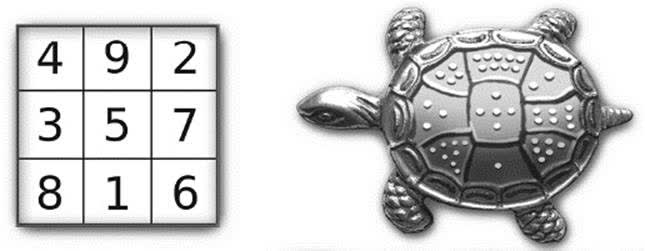
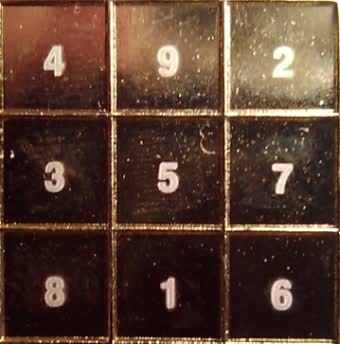
It fits in the palm of your hand. Nine cells, three by three, and the numbers 1 to 9 arranged so that every row, every column and each of the two diagonals gives the same total: 15.
This is the Lo Shu, the oldest known magic square. The Chinese also call it the diagram of the nine halls. For more than two thousand years it has been used to orient houses, to read time, and to make good-luck charms. Antoine saw it as the square of serenity and luck.
The turtle of the Luo river
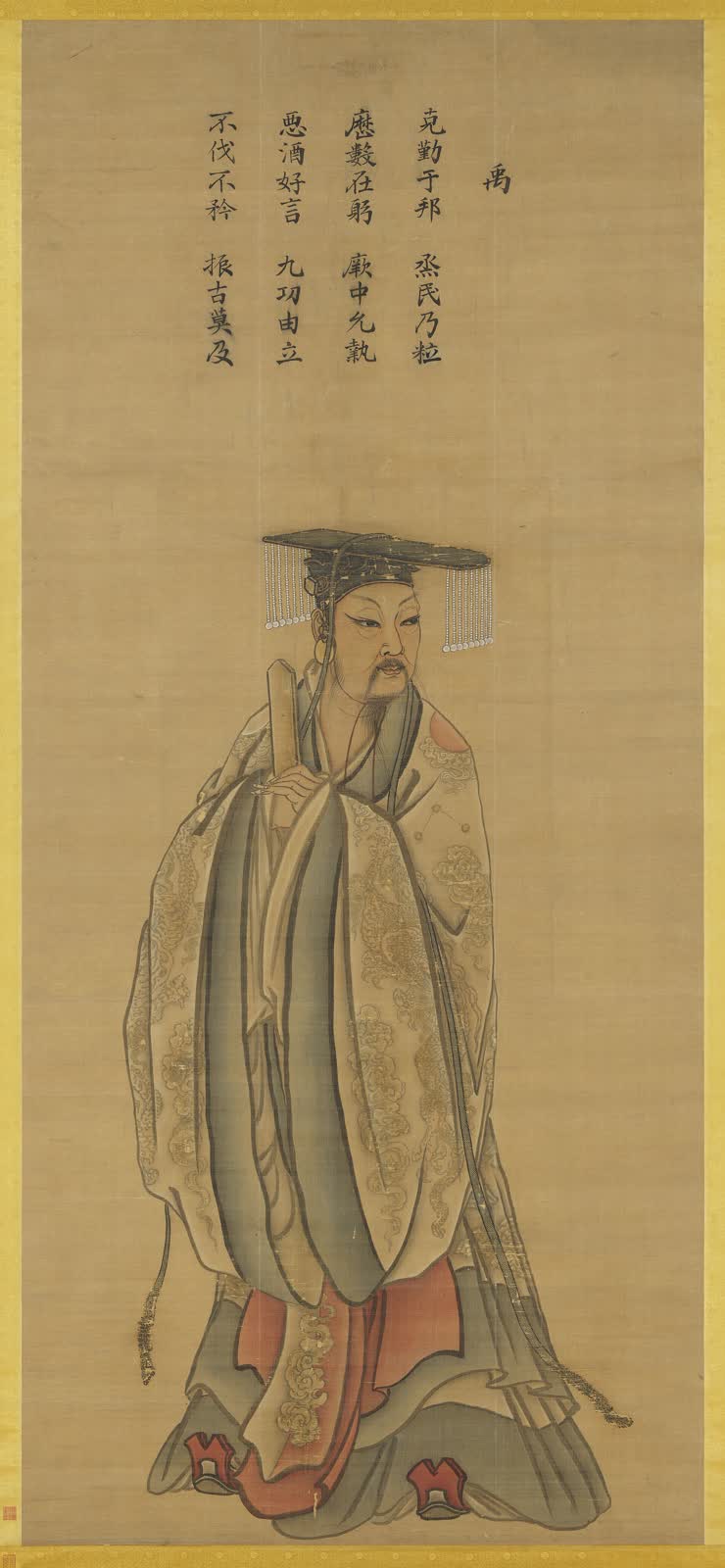
The legend takes place in the time of the great floods. The rivers of China burst their banks, villages are drowned, and one man is given the task of taming the waters: Yu the Great, the legendary founder of the first Chinese dynasty. He spends thirteen years digging canals without ever going home, it is said, even when he walked past his own door.
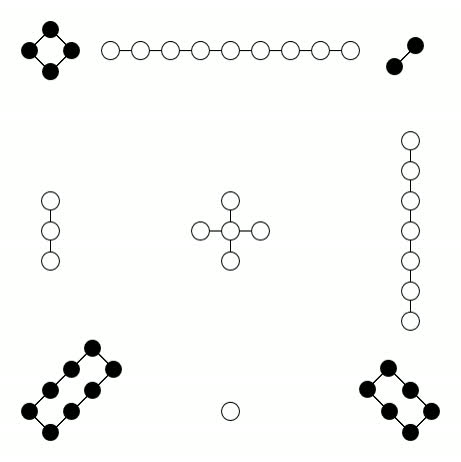
One day, as he walks along the Luo river, a sacred turtle comes out of the water. On its shell, dots form nine groups, set out in three rows of three. Yu counts them: everywhere, the total is the same. The figure was named Luo Shu, “the book of the Luo”, often written Lo Shu (or Lo Chou in French).
Another version, which Antoine liked to tell, is more popular. During a flood, the people brought offerings to the river god to calm his anger. Each time, a turtle came out of the water and walked around the offerings, and the god stayed angry. One day, a child noticed the patterns on its shell. Then everyone understood that they had to bring fifteen offerings. The flood stopped.
Tradition also links the Lo Shu with Fu Xi, the first mythical ruler of China, who is credited with another diagram, which came out of the Yellow River on the back of a dragon-horse: the Ho Tu, “the river map”.

Heaven and earth on a shell
On the shell, the numbers are not written as digits but as dots. The odd numbers, 1, 3, 5, 7 and 9, are white dots: this is yang, the masculine, day, heaven. The even numbers, 2, 4, 6 and 8, are black dots: this is yin, the feminine, night, earth.
And they are not placed just anywhere:
- the five odd numbers form a cross in the centre;
- the four even numbers take the four corners;
- the 5, in the centre, holds the balance of the whole.
So the Lo Shu brings heaven and earth together in a single figure. For the Chinese, it is the very image of the harmony of the universe.
Fifteen in every direction
| 4 | 9 | 2 |
|---|---|---|
| 3 | 5 | 7 |
| 8 | 1 | 6 |
Do the count. The rows: 4 + 9 + 2, 3 + 5 + 7, 8 + 1 + 6, all equal to 15. The columns: 4 + 3 + 8, 9 + 5 + 1, 2 + 7 + 6, 15 again. The two diagonals: 4 + 5 + 6 and 2 + 5 + 8, still 15.
The Lo Shu has other secrets:
- It is the only possible magic square of three cells by three with the numbers 1 to 9. You can rotate it or flip it as in a mirror, which gives eight versions, but it is always the same square, with 5 in the centre.
- Two numbers facing each other, on either side of the 5, always make 10: 4 and 6, 9 and 1, 2 and 8, 3 and 7. And 10 is precisely the number of the Ho Tu, its twin diagram.
- The 15 is not chosen at random: it is the number of days in each of the 24 solar terms of the Chinese year, which have divided the calendar since ancient times.
The compass of the nine halls
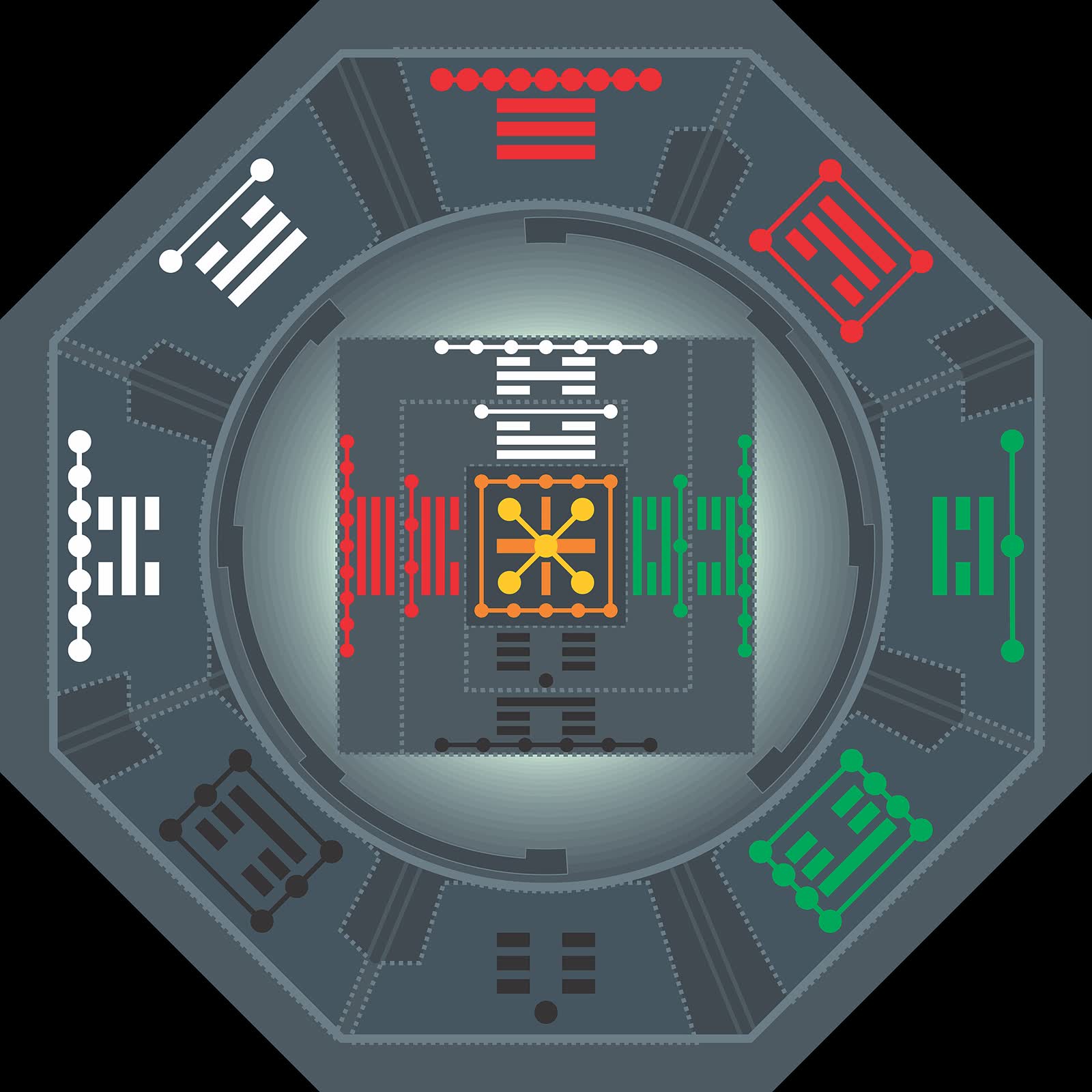
The Lo Shu is also a map. Each cell is a direction, and on Chinese maps south is at the top: 9 is south, 1 is north. Around the centre sit the eight trigrams of the I Ching, the Book of Changes, each with its element.
| Number | Direction | Trigram | Element |
|---|---|---|---|
| 1 | North | Water | water |
| 2 | South-west | Earth | earth |
| 3 | East | Thunder | wood |
| 4 | South-east | Wind | wood |
| 5 | Centre | earth | |
| 6 | North-west | Heaven | metal |
| 7 | West | Lake | metal |
| 8 | North-east | Mountain | earth |
| 9 | South | Fire | fire |
This is why the Lo Shu is one of the pillars of feng shui, literally “wind and water”, the art of placing things so that qi, the breath, flows through the house. You lay the grid over the floor plan: each room falls into one of the nine halls, and each hall calls for its colour, its material, its element.
The journey of the square
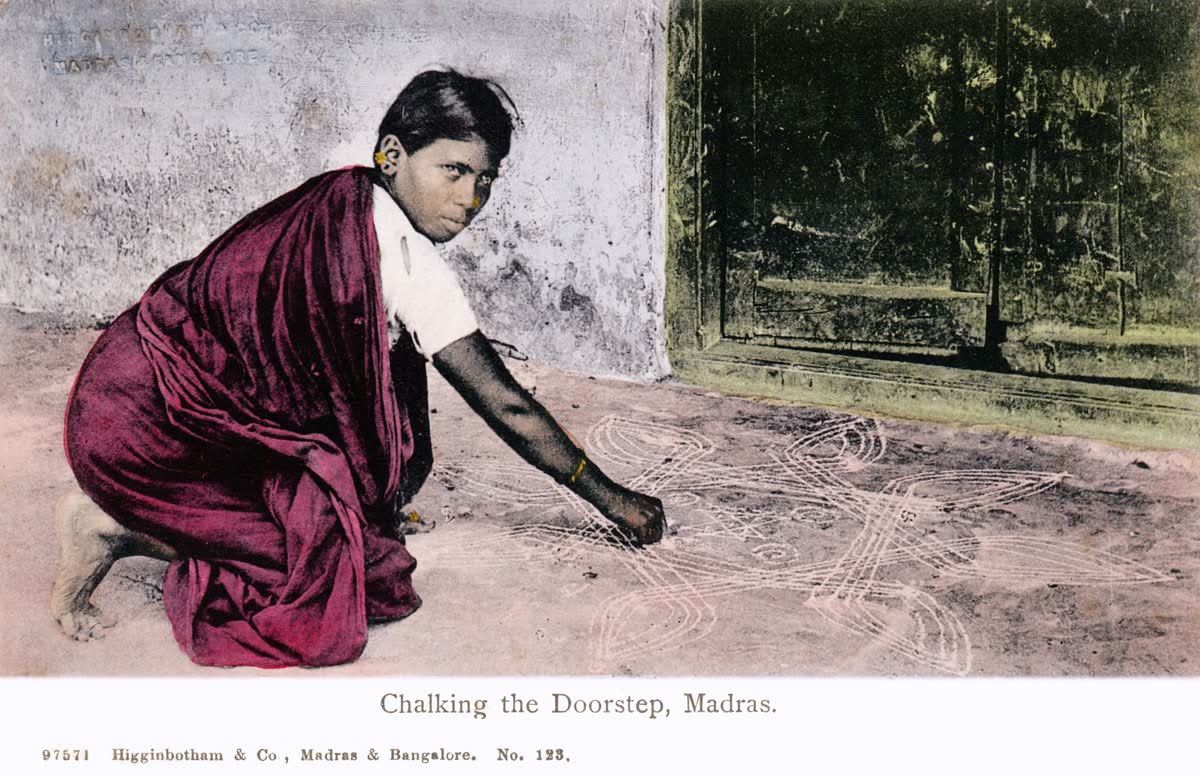
The Lo Shu did not stay in China. Over the centuries it reached India, where, with 19 added to each cell, it became the Kubera Kolam, the square of wealth, which gives 72 in every direction. Antoine summed it up in one phrase: the Kubera Kolam is the Lo Shu on the third octave. And 72 is 7 + 2 = 9, the number of fulfilment.
Then it passed to the Arab astrologers, who used it from the 9th century, and arrived in Renaissance Europe, where it became the square of Saturn, the first of the seven planetary squares. It was then engraved on lead medals, lead being the metal of Saturn.
The three-date talisman
Here is Antoine's favourite application, the one he presented as a good-luck charm to face everyday troubles. All you need is a sheet of paper, a pencil and three birth dates.
- Write three dates one after another, in this order: your mother's, your father's, then yours.
- Remove all the zeros.
- Keep only the first appearance of each digit, and cross out all the following ones.
- Join the digits you are left with, in order, on a Lo Shu you have drawn on a piece of card.
- Rub out the grid. Only a line is left: that is your talisman. Carry it with you.
Antoine gave this example. Paul was born on August 18, 1967. His mother was born on October 20, 1942, his father on March 31, 1945.
- The three dates one after another, written day-month-year as Antoine did: 20 10 1942, 31 03 1945, 18 08 1967.
- Without the zeros: 2 1 1 9 4 2 3 1 3 1 9 4 5 1 8 8 1 9 6 7.
- Each digit only once, at its first appearance: 2 1 9 4 3 5 8 6 7.
- Join 2 to 1, 1 to 9, 9 to 4 and so on up to 7. That is the line you can see above.
So every family has its own drawing, which starts from the parents and arrives at the child. For special occasions, Antoine advised copying it onto a sheet of vegetable parchment, with a goose quill and black ink.
One detail amused him a lot: while you trace a Lo Shu talisman, he recommended listening to “Go” by Moby. He said it was the most surprising application of all.
The Lo Chou medal
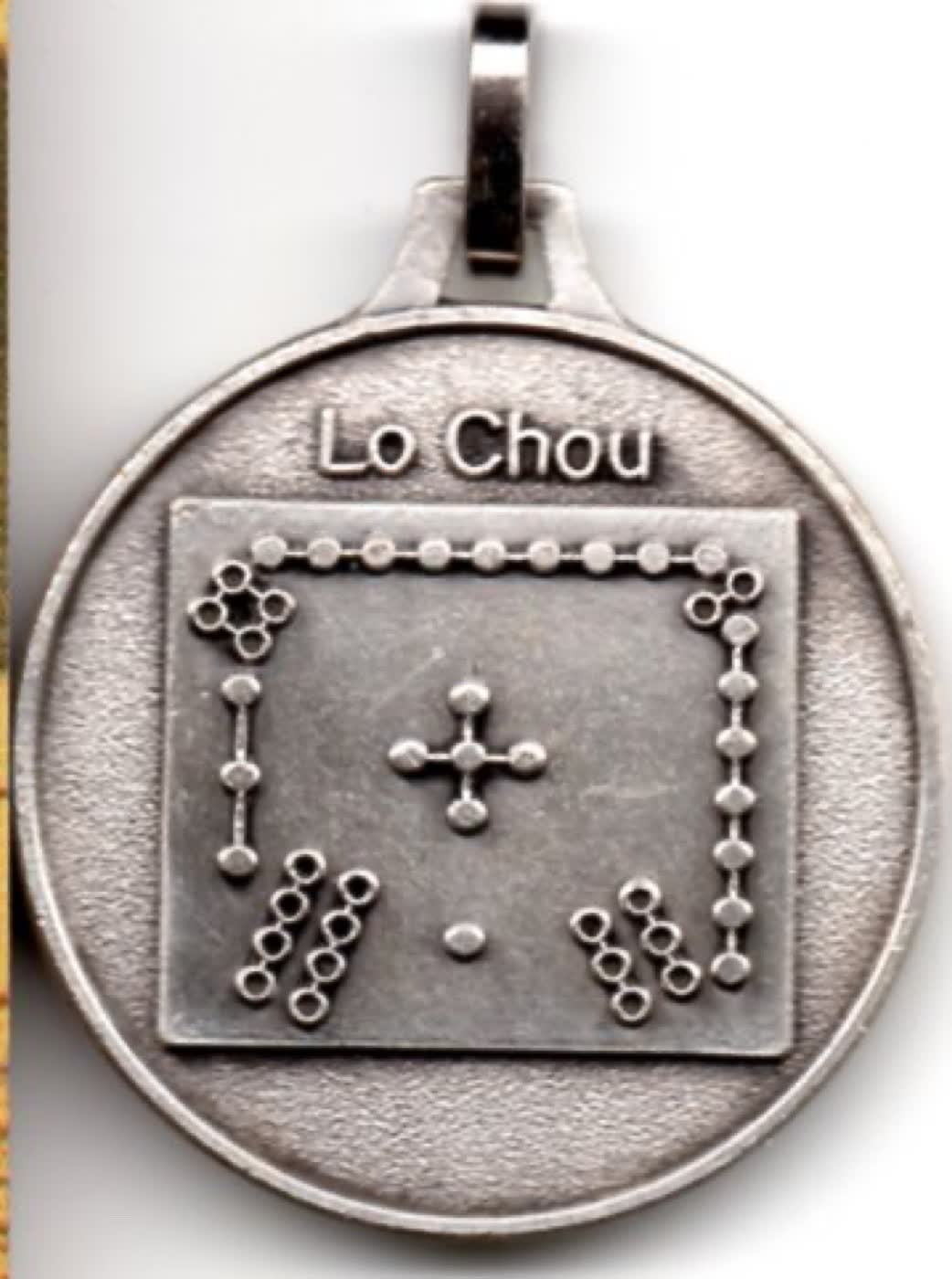
Antoine also used a Lo Chou medal of about 30 millimetres, with the turtle's nine dot figures on the back.
- Reduce your birth date to a single digit, as for your birth number. For January 1, 1955: 1 + 1 + 1 + 9 + 5 + 5 = 22, and 2 + 2 = 4.
- On the medal, find the dot figure that matches your digit. For 4, it is the four-dot figure, in the top left corner.
- Touch it regularly with your fingertip, through the day.
Antoine advised wearing it on a chain of 108 beads, and rather on your back than on your chest. He compared this gesture to the mantra Ek Ong Kar, which is said to turn an unfavourable situation around.
Front and back: bipolarity
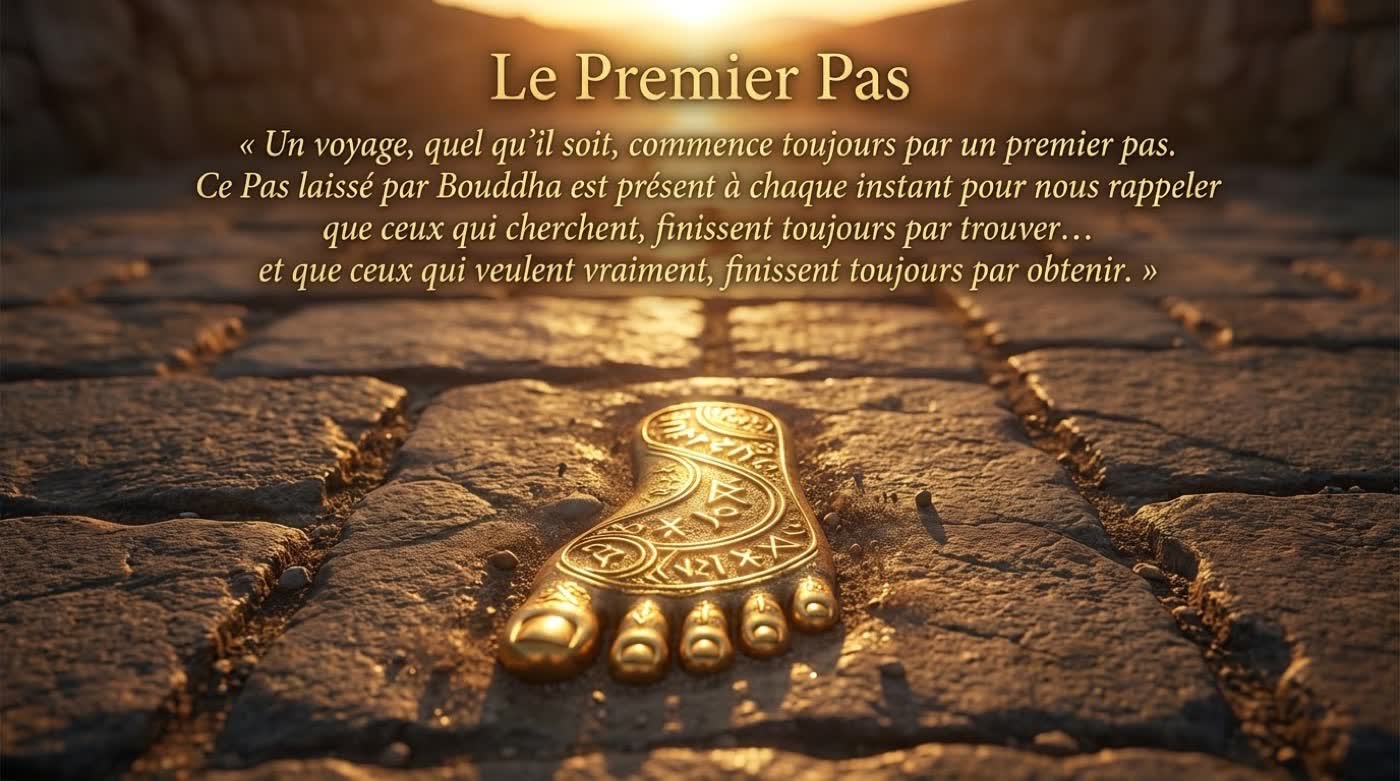
Why on your back? Because the front stays free for a second talisman. Antoine called this bipolarity: one symbol on the chest, another on the back, as the nobles of imperial China did, he said. Depending on the pair you choose, the effect changes:
- the Buddha Foot in front, the Lo Chou behind: this was his favourite pairing, the one that creates, in his words, a zone of outrageous luck and protection;
- an Om in front, the Lo Chou behind: a zone of easy living and stability;
- the Ho Tu and the Lo Chou together: never. The Ho Tu is a warrior pentacle, the Lo Chou a pentacle of serenity and luck. Wearing them together, Antoine said, creates complete chaos. Those who like the Ho Tu often use a softened version, whose bottom row has five dots instead of six: it gives energy and initiative without pushing towards a fight.
The Lo Shu works for everyone. For a talisman that works for you alone, Antoine replaces it with your personal square, calculated from your birth date.
Frequently asked questions
What is the Lo Shu?
The oldest known magic square, from China: nine cells, the numbers 1 to 9, and the same total everywhere, 15. It is the only possible magic square of three cells by three.
Where does it come from?
Legend says a sacred turtle came out of the Luo river in front of Yu the Great, the tamer of the floods, with these nine numbers drawn as dots on its shell.
What does it have to do with feng shui?
Each cell of the Lo Shu is a direction, with its trigram and its element: 9 is south, 1 is north, 5 is the centre. You lay the grid over the floor plan of the house to know what to place in each area.
How do I make the three-date talisman?
Write your mother's birth date, your father's and your own one after another, remove the zeros, keep the first appearance of each digit, then join them in order on a Lo Shu. The line you get is your talisman.
How do I use the Lo Chou medal?
Reduce your birth date to a digit from 1 to 9, then regularly touch the matching dot figure on the back of the medal. Antoine advised wearing it on your back, on a chain of 108 beads.
Can I wear the Lo Chou with other talismans?
Yes, with the Buddha Foot or an Om on your chest. Never with the Ho Tu, a warrior pentacle that works against the serenity of the Lo Chou.
What is the link between the Lo Shu and the Kubera Kolam?
The Indian Kubera Kolam is the Lo Shu with 19 added to each cell. Its magic total goes from 15 to 72.
Free guide · Luck
Stack the Odds in Your Favor: a bad patch has a shape, and a calendar to get out of it. Our short guide, free by email.
Get the free guide →