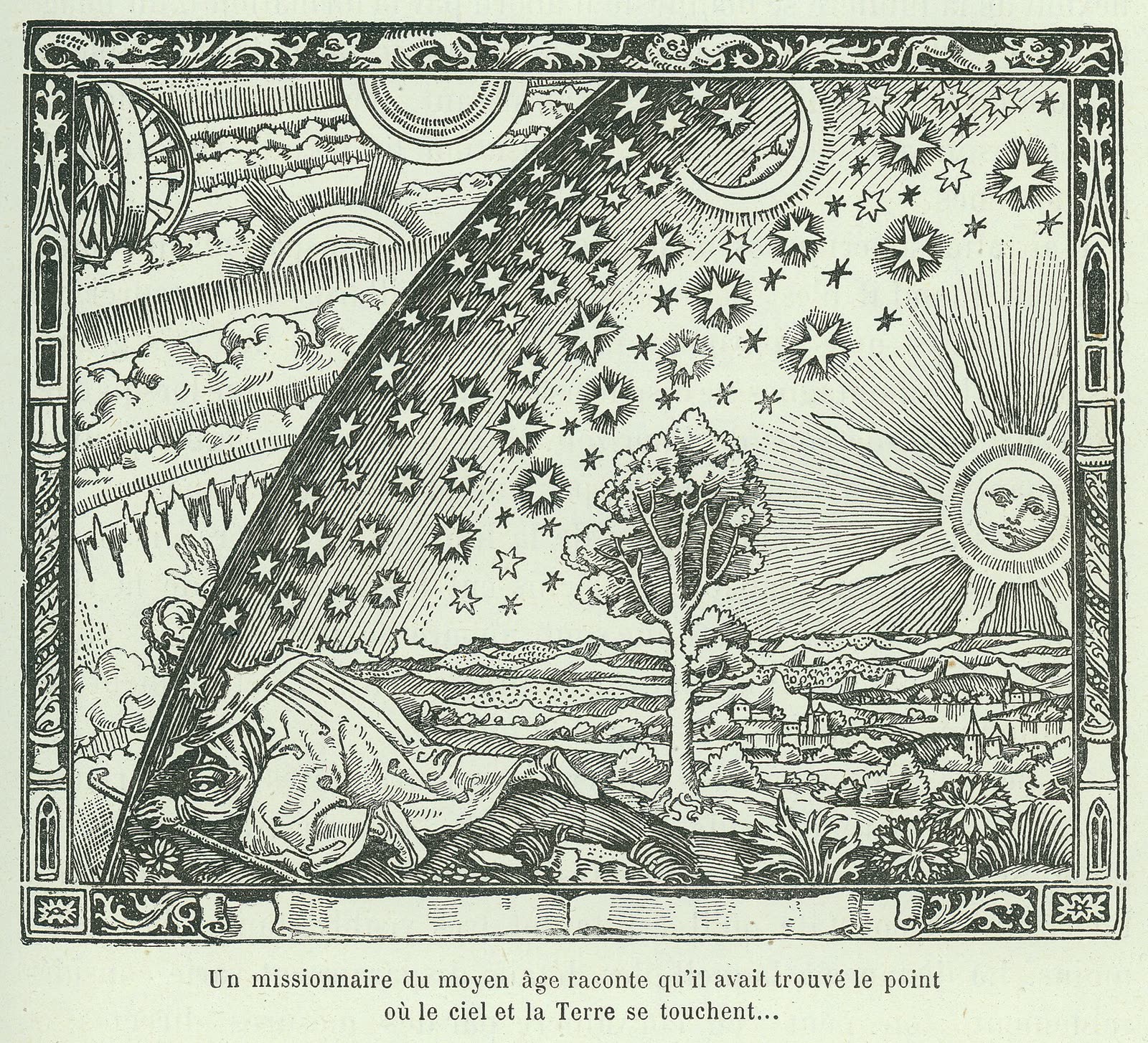
We picture Carl Gustav Jung in his Zurich consulting room, pipe in hand, listening to his patients’ dreams.
We picture him less often bent over sky charts.
And yet. In a 1911 letter to Sigmund Freud, Jung writes that he devotes his evenings to astrology, and finds astonishing things in it. Later, he would have charts drawn up for certain difficult patients, to understand them better.
Jung was not an astrologer. He was a physician, a scientist, a demanding mind. That is exactly why his view of astrology is so interesting.
The beetle at the window
Let’s start with the most famous story.
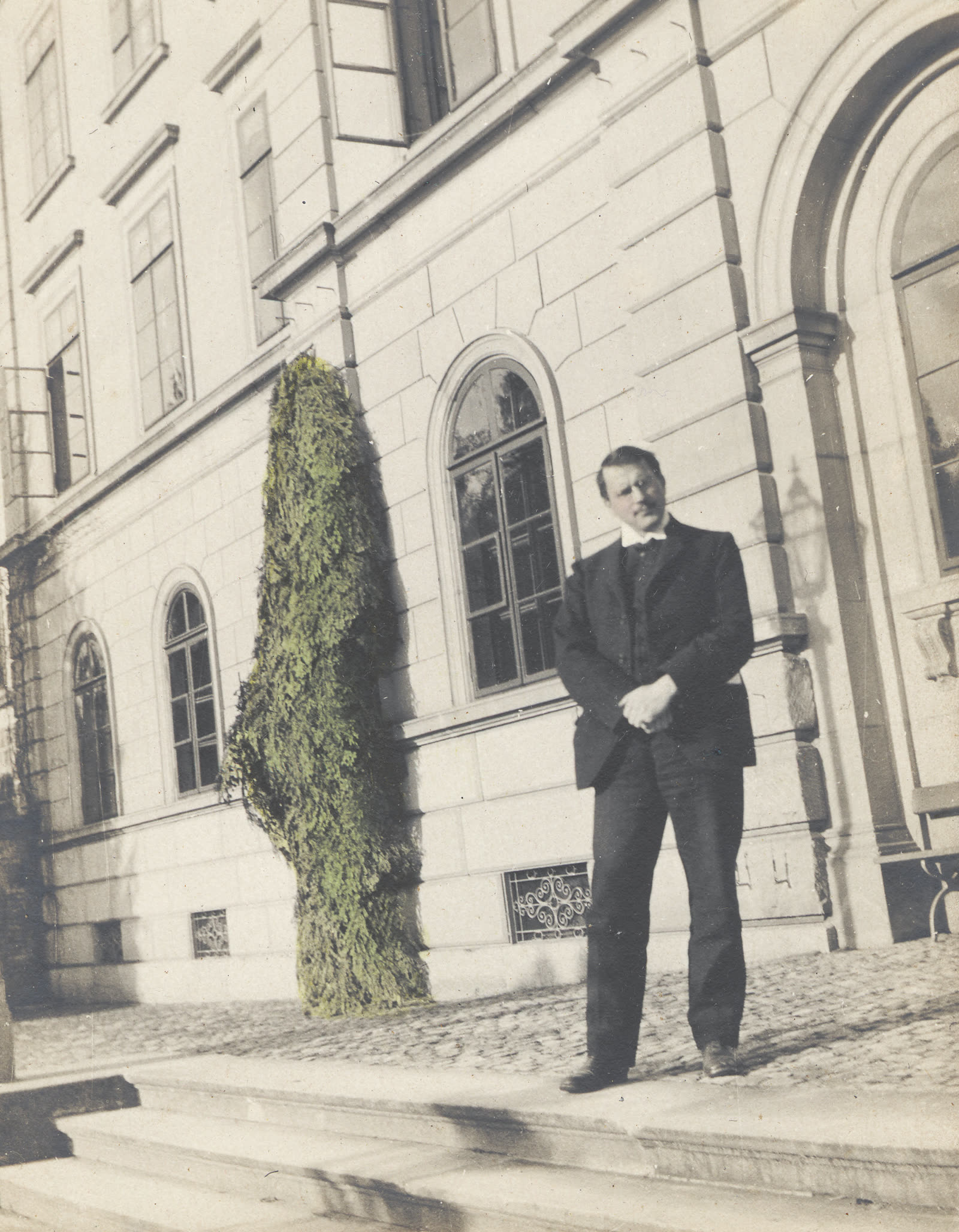
One of Jung’s patients is at a dead end. Highly rational, she resists any kind of inner work. One day, she tells him a dream: she was given a golden scarab, a precious jewel.
While she is talking, Jung hears a light tapping against the window. He turns around. An insect is knocking at the pane. He opens the window and catches it in flight: it is a rose chafer, the beetle that, in our latitudes, comes closest to the golden scarab of her dream.
He hands it to his patient: “Here is your scarab.”
According to Jung, that moment cracked his patient’s shell, and the work could finally begin.

Synchronicity
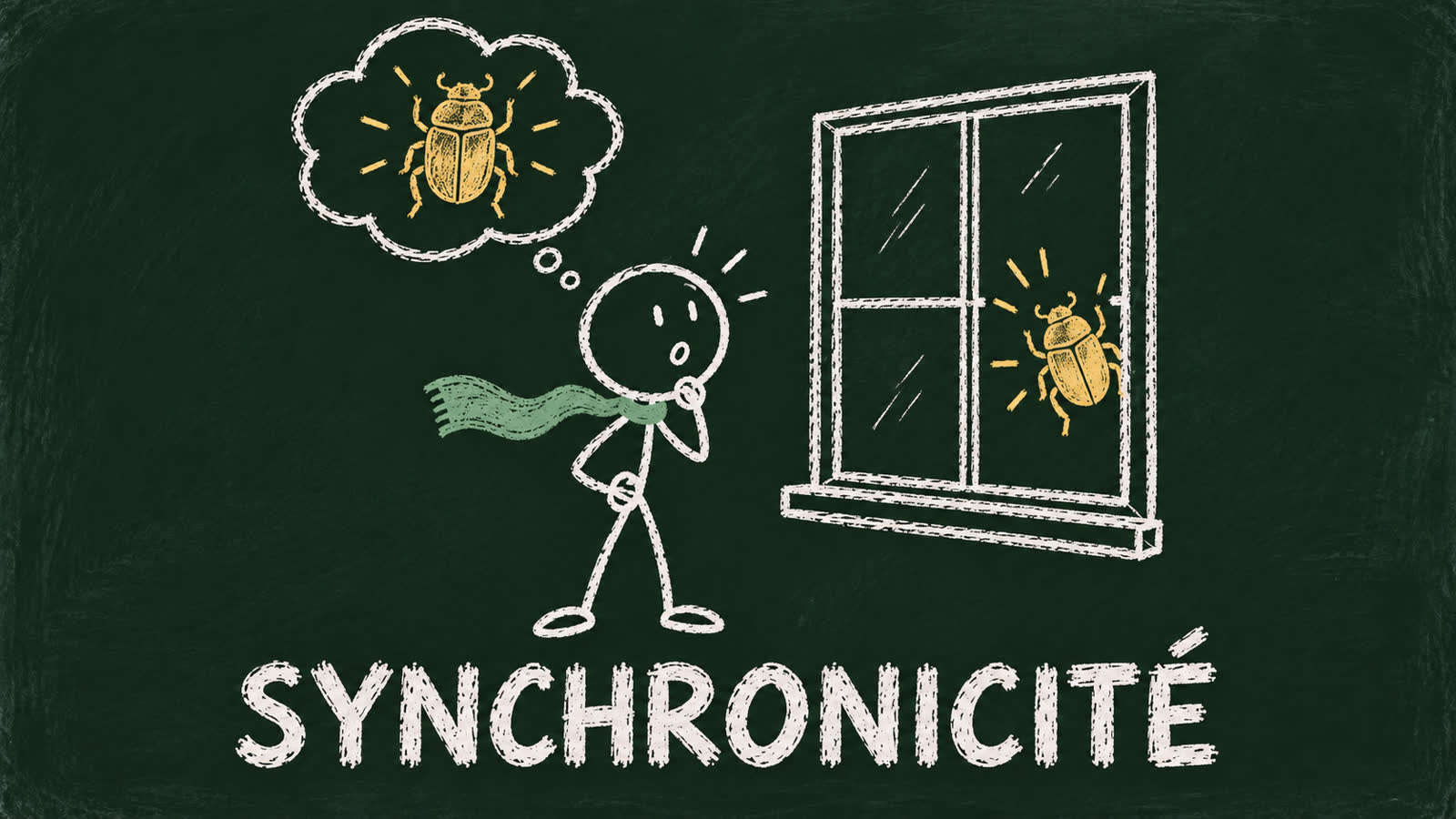
To describe this kind of event, Jung coined a word: synchronicity.
A synchronicity is a meaningful coincidence. Two events that are not linked by a cause, but answer each other, and whose meeting strikes the person living it. A dream and an insect. A thought and a phone call. A question and a book falling off a shelf.
Jung believed these coincidences reveal a hidden order, where inside and outside, psyche and world, touch. And for him, astrology is a special case of synchronicity: the sky at the moment of birth and a person’s character are not linked by a physical force, but they correspond.
He had a fine way of putting it: we are born at a given moment, in a given place, and like great vintages, we carry the qualities of the year and the season in which we were born.
The married couples experiment
Jung did not settle for ideas. He wanted to count.
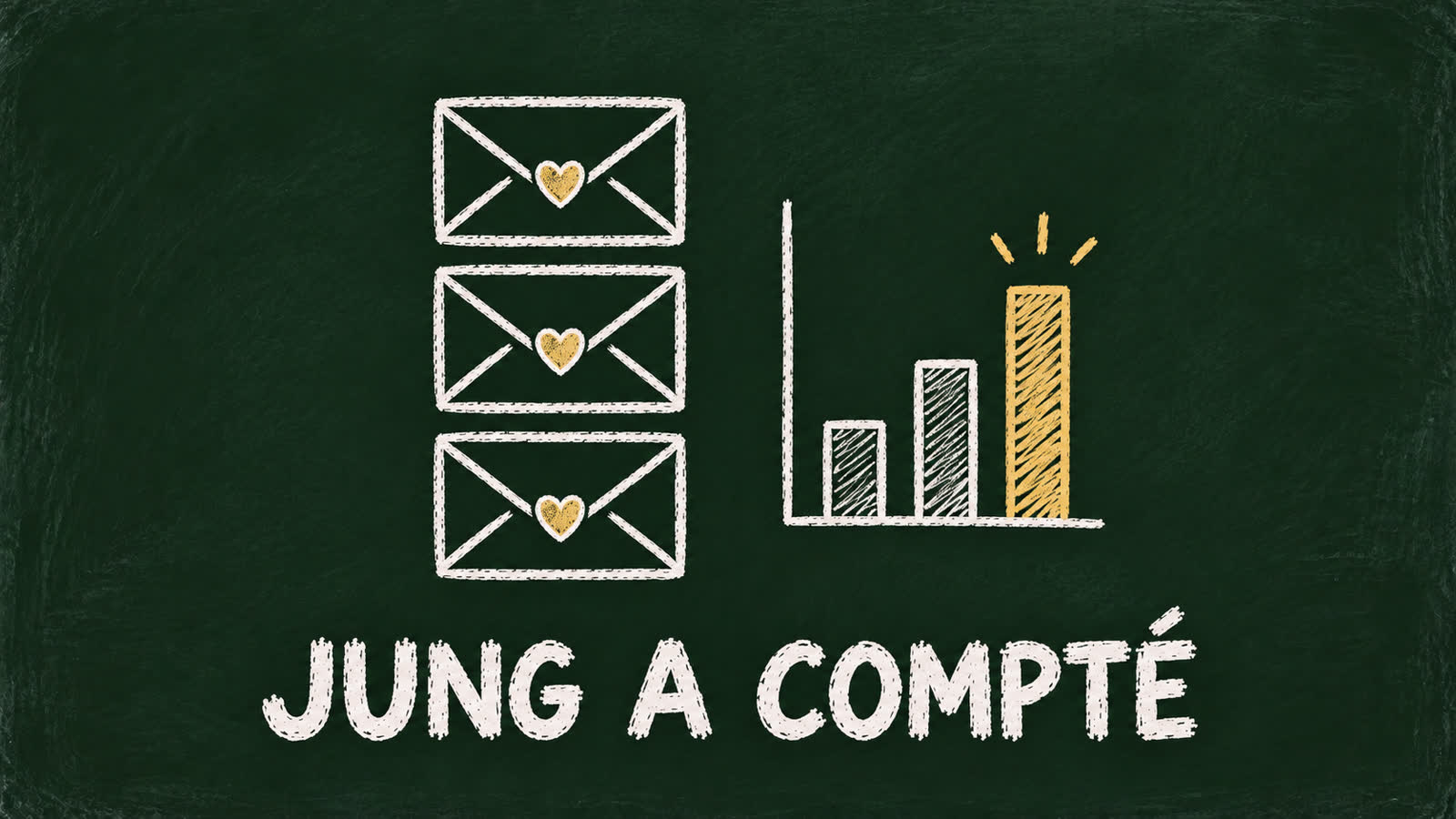
He gathered the birth dates of married couples: first 180 couples, then 220, then 83. Four hundred and eighty-three couples, nearly a thousand charts. He looked at whether the aspects tradition associates with marriage appear more often among them than among couples paired at random. In particular, the conjunction of one partner’s Sun with the other’s Moon, the classic aspect of union since Ptolemy.
The result is unsettling. In the first group, it is precisely the Sun-Moon conjunction that comes out on top. In the second, the Moon-Moon conjunction. In the third, the Moon and the Ascendant. Three lunar aspects that tradition associates precisely with marriage.
But Jung is honest. He calculates the probabilities, and admits that, statistically, these results are not clear enough to prove anything. He draws a surprising conclusion from it: the experiment itself may be a synchronicity, as if the result had “answered” the experimenter’s expectation.
You may find this conclusion brilliant or frustrating. We mostly see in it the mark of a real researcher: he publishes his figures, his doubts and his intuitions, without cheating.
The Nobel Prize winner and Kepler
In 1952, Jung published his essay on synchronicity in a joint book with a physicist: Wolfgang Pauli, Nobel Prize in Physics in 1945, one of the fathers of quantum mechanics.
Pauli contributed a long study of Johannes Kepler, the astronomer who drew up charts and sought the harmony of the world. That one of the greatest physicists of the 20th century agreed to publish alongside Jung on these questions says something about the era, and about how seriously the question was taken.
What we take from it
We take three things from Jung, and they guide our practice.
1. The sky is a mirror, not a machine. We don’t believe Venus “sends” love like a radio wave. We observe that the sky of a moment and what is born at that moment correspond, often in an unsettling way. That is what Jung called synchronicity.
2. Couples are read in pairs. The aspects between two charts, one person’s Moon on the other’s Sun, are among the most telling things you can show two people who love each other, or who are looking for each other.
3. Honesty above all. Jung published his doubts. We do the same: astrology is not an exact science, and we will never tell you otherwise. It is a map, often astonishingly accurate, to be used intelligently.
Synchronicities can’t be ordered up. But you can learn to see them, and that is often where luck begins. We talk about it in synchronicities.
And now, you
Try Jung’s experiment on your own scale. Take your birth date and that of the person who shares your life, or who matters to you. Calculate your two Moons and your two Suns with the calculator in your natal chart.
Is one person’s Sun in the same sign as the other’s Moon? Are your two Moons in the same sign? If so, you now know what Jung would have looked at first.
And if you want the full comparison of your two charts, the workshop does it for you.
Frequently asked questions
Did Jung believe in astrology?
He took a serious interest in it all his life, drew up charts or had them drawn up, and saw astrology as an example of synchronicity, without considering it a physical science.
What is synchronicity?
It is the name Jung gave to meaningful coincidences: two events with no causal link, which nevertheless answer each other for the person living them.
What was Jung’s astrological experiment?
He studied the charts of 483 married couples to see whether the traditional aspects of marriage, such as the Sun-Moon conjunction, were more frequent among them. The lunar aspects came out on top, but Jung judged the results statistically inconclusive.
Who was Wolfgang Pauli?
An Austrian physicist, Nobel Prize winner in 1945, who published a book with Jung in 1952 combining the essay on synchronicity and a study of Kepler.
What is a couple chart?
It is the comparison of two birth charts, called synastry: you look at how one person’s planets touch the other’s.