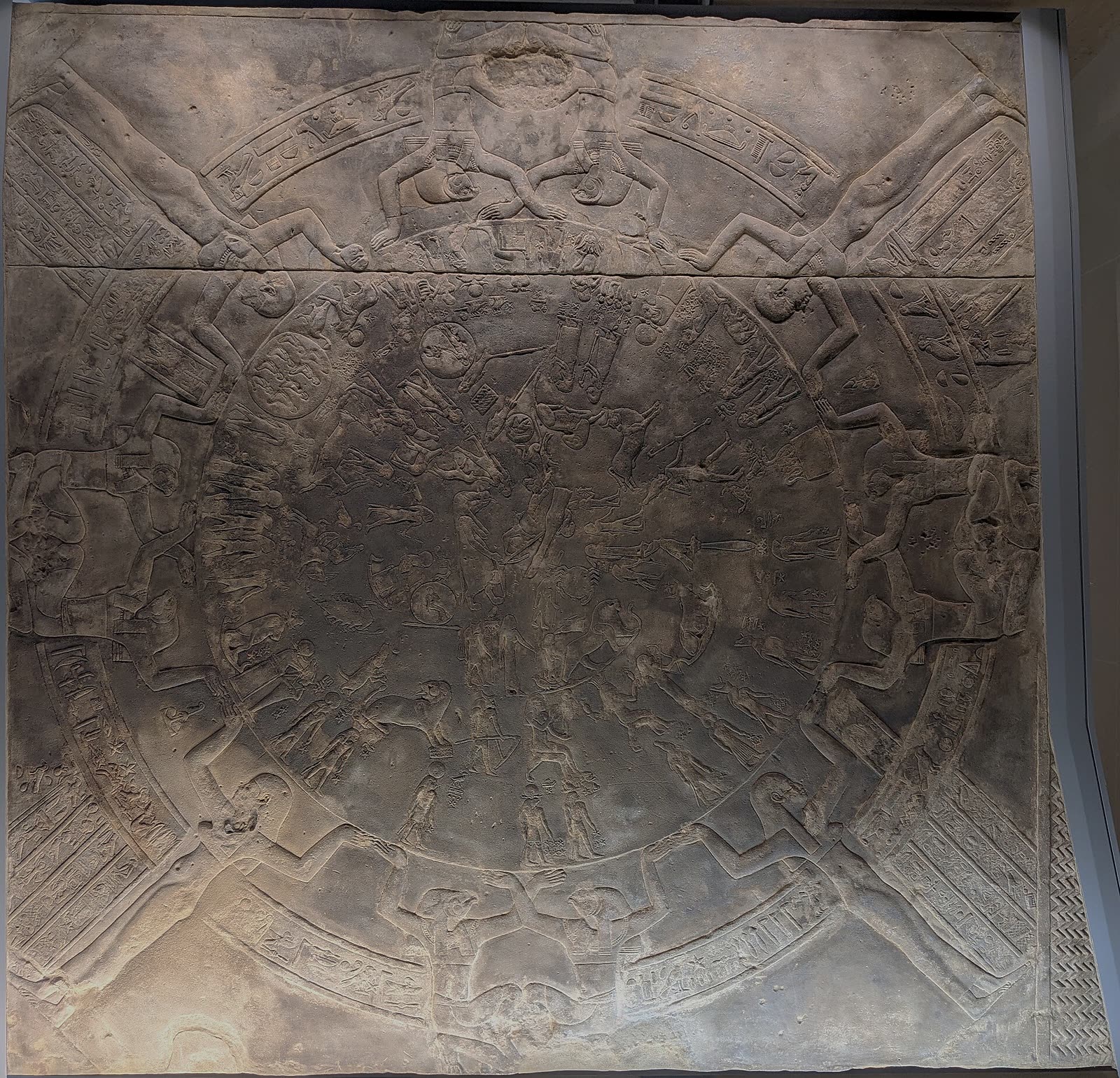
About one human in twelve was born under the same sign as you.
That’s a lot of people. More than six hundred million, today alone. And that is why sign horoscopes are so vague: they are talking to a crowd.
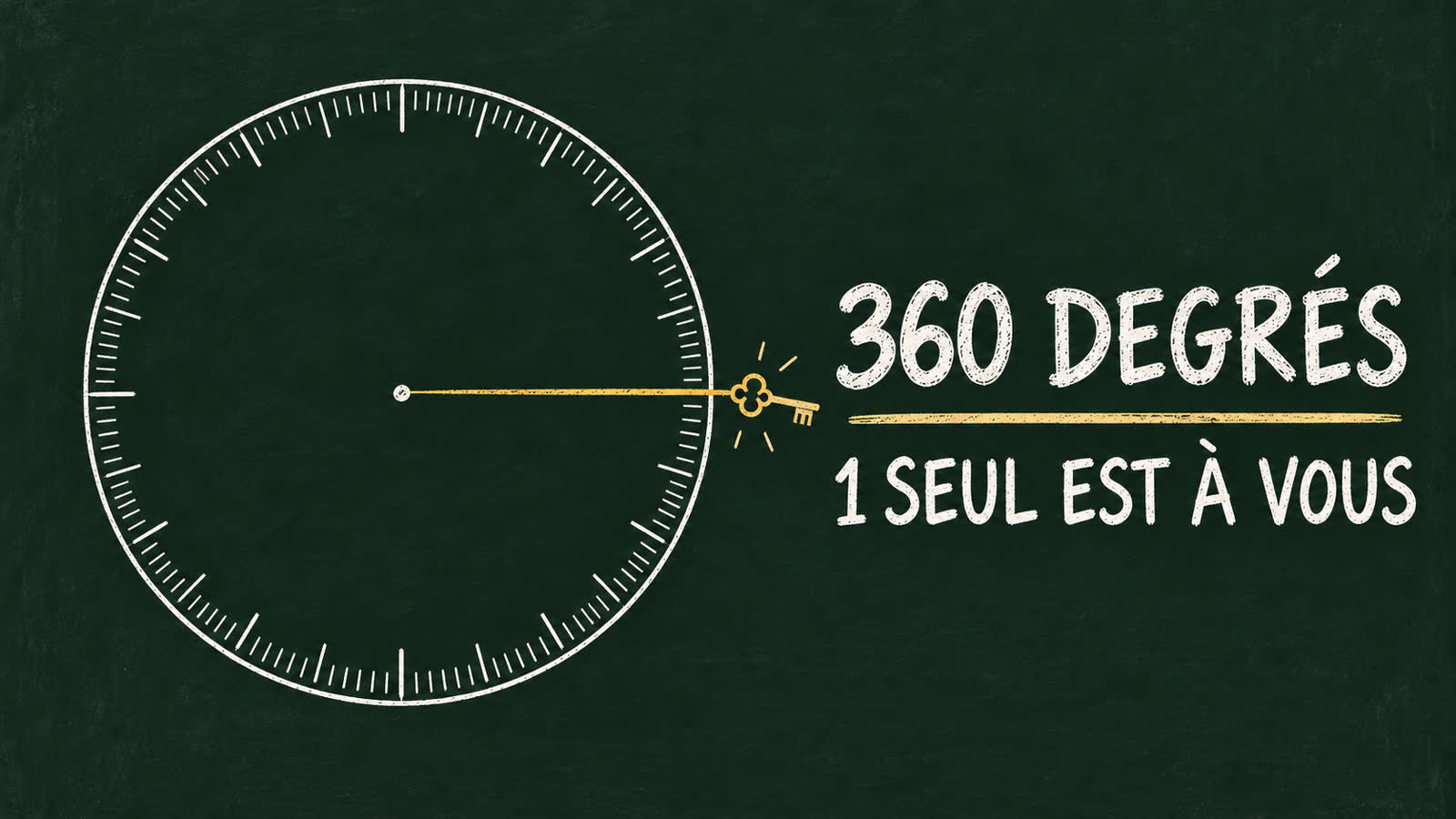
But your Sun, at your birth, didn’t occupy “a sign”. It occupied a precise point in that sign. One degree, out of the thirty it contains. And the old astrologers never treated that degree as a mere number.
The 36 faces of the sky
It all begins in Egypt.
The priest-astronomers of ancient Egypt observed thirty-six groups of stars that rose one after another on the horizon, about ten days apart. They used them to measure the hours of the night. They came to be called the decans.
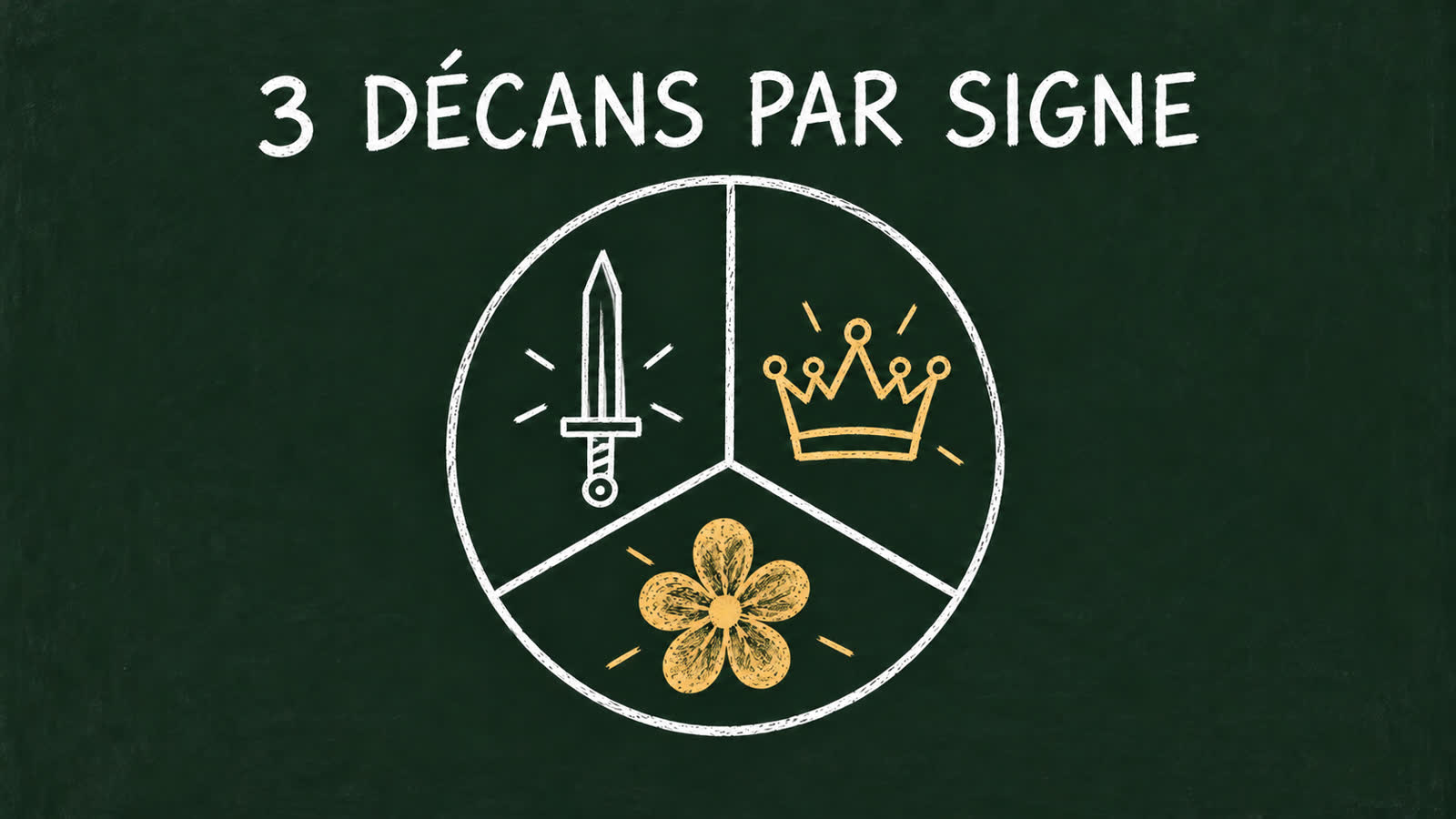
When Greek astrology was born in Alexandria, it inherited these thirty-six decans and placed them in the zodiac: three per sign, ten degrees each. Each decan was given a ruling planet, in a very old order called the Chaldean order: Mars, the Sun, Venus, Mercury, the Moon, Saturn, Jupiter, and round again.
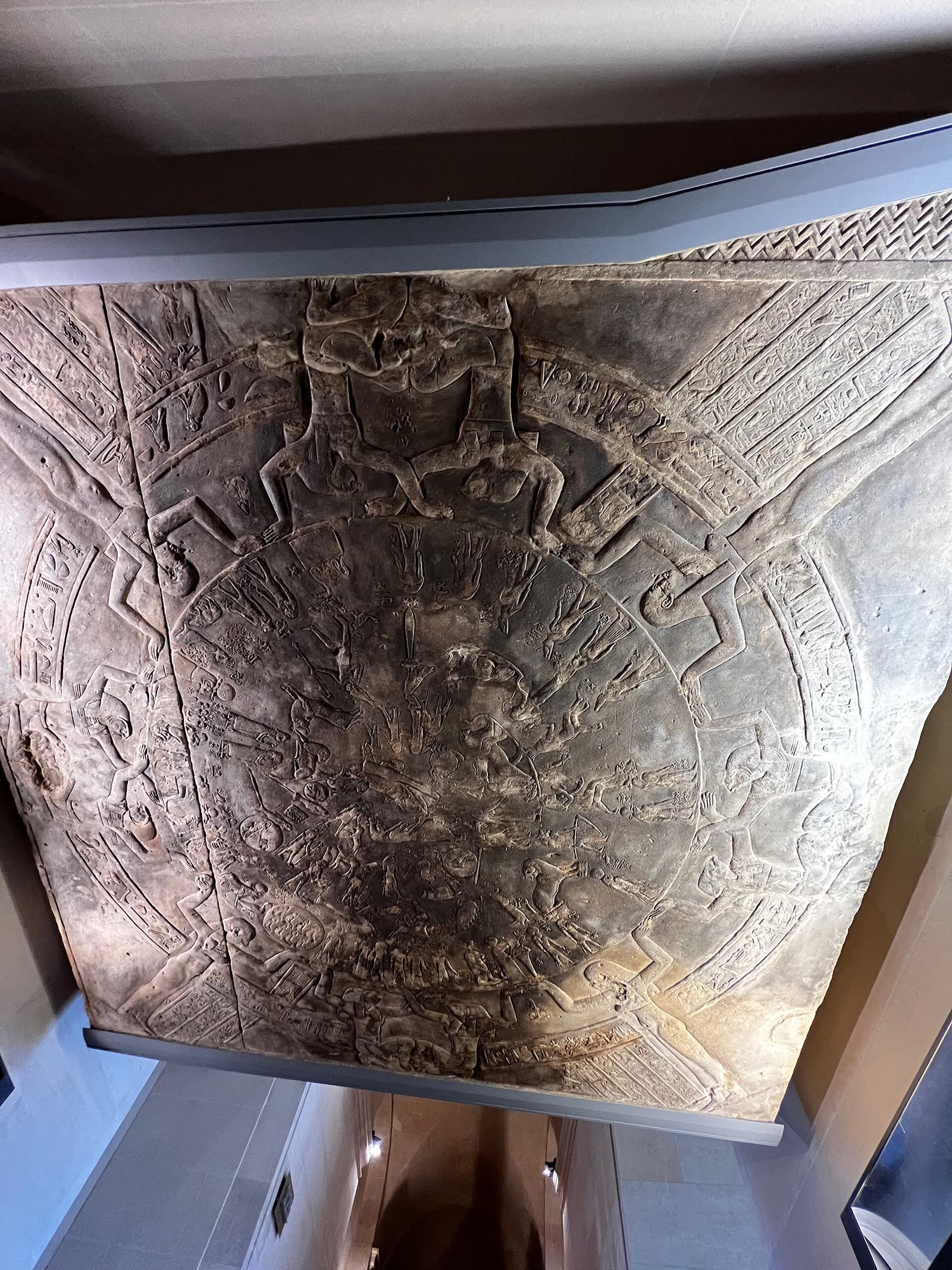
The zodiac carved into the ceiling of the temple of Dendera, in Egypt, now at the Louvre, shows the signs of the zodiac and the Egyptian decans together. It is one of the most beautiful depictions of the ancient sky.
The terms: five territories per sign
The Egyptians and the Greeks added a second division, finer and more mysterious: the terms, or bounds.
Each sign is shared out into five territories of unequal size, each ruled by a planet. The oldest tables of terms are called “Egyptian”, and Ptolemy passed them on in his Tetrabiblos in the 2nd century.
Why unequal sizes? No one knows for sure. Historians still debate it. But the astrologers of Antiquity and the Middle Ages used them constantly, notably to judge the strength of a planet and for predictions.
Then came the degree
Later, some astrologers took the logic all the way: an image for each of the 360 degrees.
In the 19th and 20th centuries, several famous series appeared. In England, those of Charubel and Sepharial. In France, that of Janduz, in 1938. In the United States, in 1925, the astrologer Marc Edmund Jones and a clairvoyant, Elsie Wheeler, wrote the famous Sabian symbols in a single day in San Diego; they have become the most widely used in the world.
Each series offers a scene for each degree, an image, like a miniature tarot card. They don’t always agree. But they share one conviction: the exact degree of a planet has something to say.
Your degree, your decan, your term
Here is the exact degree of your Sun, with its decan and its term.
For entertainment and self-reflection.
You can see that with the same sign, you don’t necessarily have the same decan as your neighbor, or the same term. Two Leos born twenty days apart can have a Sun ruled, at the level of the decan, one by Saturn and the other by Mars. They are not the same Leos.
How we use it
We never read a degree on its own. That would be like reading a single sentence of a novel.
But when an important planet, the Sun, the Moon, the ruler of the Ascendant, sits on a particular degree, we look at it closely. And above all we look at:
- the ruler of the decan: it adds a color to the sign. A Sun in Capricorn in Jupiter’s decan doesn’t have the same ambition as a Sun in Capricorn in Mars’s decan;
- the ruler of the term: it acts as a discreet adviser to the planet;
- the sensitive degrees: the first and last degree of a sign, the degrees where great fixed stars sit, such as Regulus in the heart of Leo or Spica, the Ear of Wheat in Virgo;
- the degrees that answer each other between two charts, when we compare two people.
These fine points are often what makes someone say: “how can you know that?”. The answer is simple: by looking very closely.
One degree, one image
For each of the thirty-six decans, Antoine has composed a personal image, a symbol that sums up the spirit of that decan as he understands it after years of readings. A blade in the morning sun. A lighthouse on the night sea. An iron crown. A fishing net coming back full.
These images, and their reading, are reserved for Alchimixe members. They don’t replace a full reading, but they often give you a thread to pull, a sentence you keep in mind.
Your sign says which family you belong to. Your degree says who you are within that family.
And now, you
- Write down the exact degree of your Sun, with the calculator above.
- Remember its decan and its ruler. It is like a middle name for your sign.
- If you know your time of birth, ask yourself what the degrees of your Moon and your Ascendant are. That is where the reading becomes truly personal.
And if you want the full reading of your degrees, with their images and what they say about your path, the workshop does it for you.
Frequently asked questions
What is a decan?
It is a ten-degree division of the zodiac, so three per sign and thirty-six in all. The decans come from the groups of stars observed by Egyptian astronomers.
What is a term in astrology?
It is a division of each sign into five unequal parts, each ruled by a planet. The most widely used table, called Egyptian, was passed on by Ptolemy.
What are the Sabian symbols?
A series of 360 images, one per degree of the zodiac, written in 1925 by the American astrologer Marc Edmund Jones with Elsie Wheeler.
Who was Janduz?
A French astrologer who published, in 1938, a book devoted to the 360 degrees of the zodiac, illustrated with an image for each degree.
Do I need my time of birth to know the degree of my Sun?
No: the Sun moves about one degree per day, so the date is almost always enough. For the Moon and the Ascendant, the time is essential.