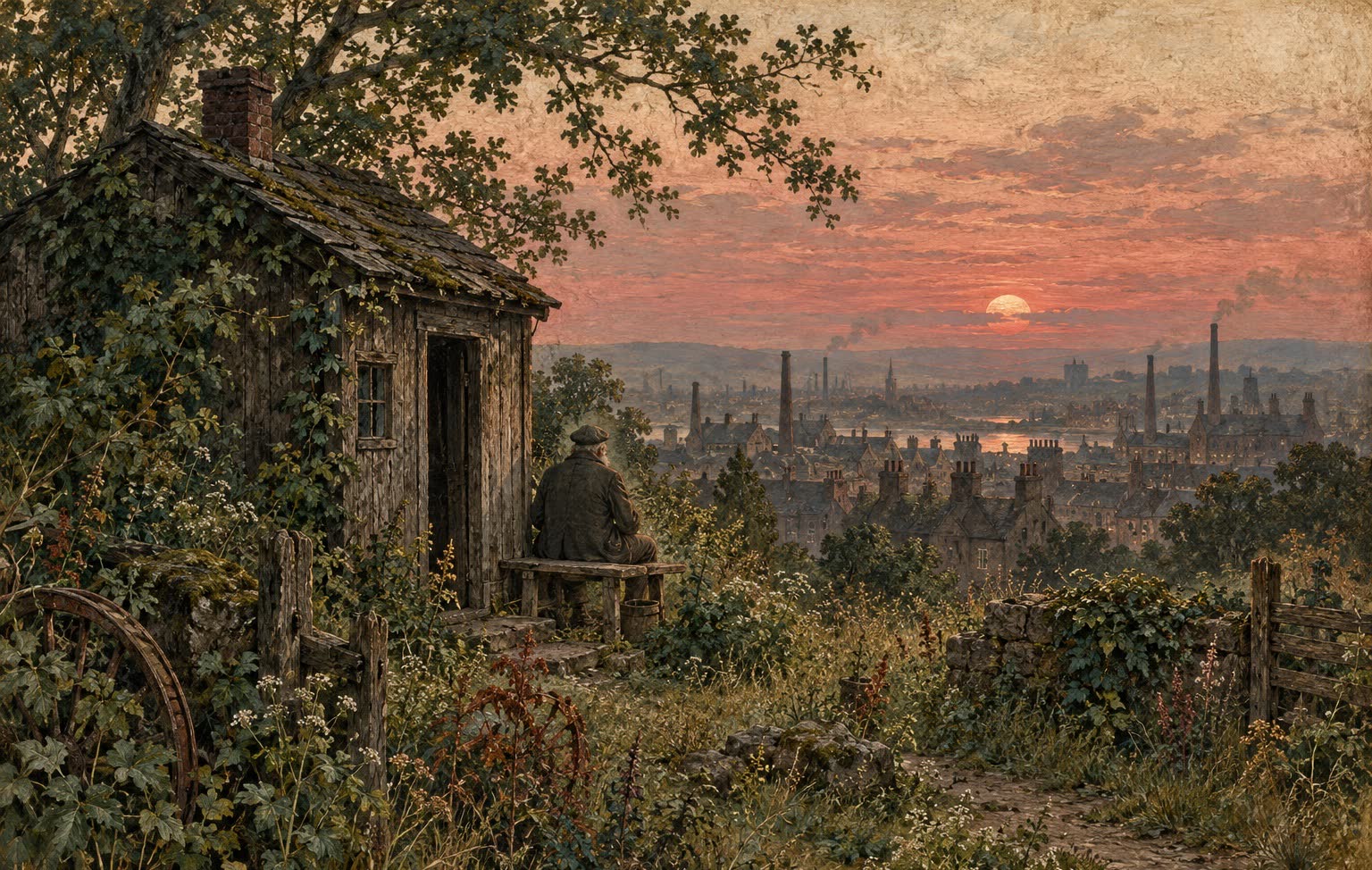
In Herstal, people call on Denis for everything, it's as simple as that, and judging by the plaques, it doesn't lie.
Entry 2-540003, Antoine de Saint-Christophe
Of all the departed in his catalogue, there was one Antoine placed above the others. Above even Monsieur Hawarden, the tomb reputed to be "more than magic, above all others, in every area of life".
That man is Jean Denis Randaxhe. Born on May 6, 1881 in Cerexhe-Heuseux. Died on June 20, 1955 in Liège. Buried in Herstal, a few streets from the workshop.
And Antoine added, with a smile: since he himself lives near the Croix-Jurlet neighbourhood, the "stronghold" of Herstal's mediums and old fortune-tellers, he would not dwell on it.
The meeting of April 5, 2006
Antoine wanted to know more. On the evening of Wednesday, April 5, 2006, he went to see a man who had known Denis well: Richard Bastin, then the alderman for social affairs of the municipality of Herstal.
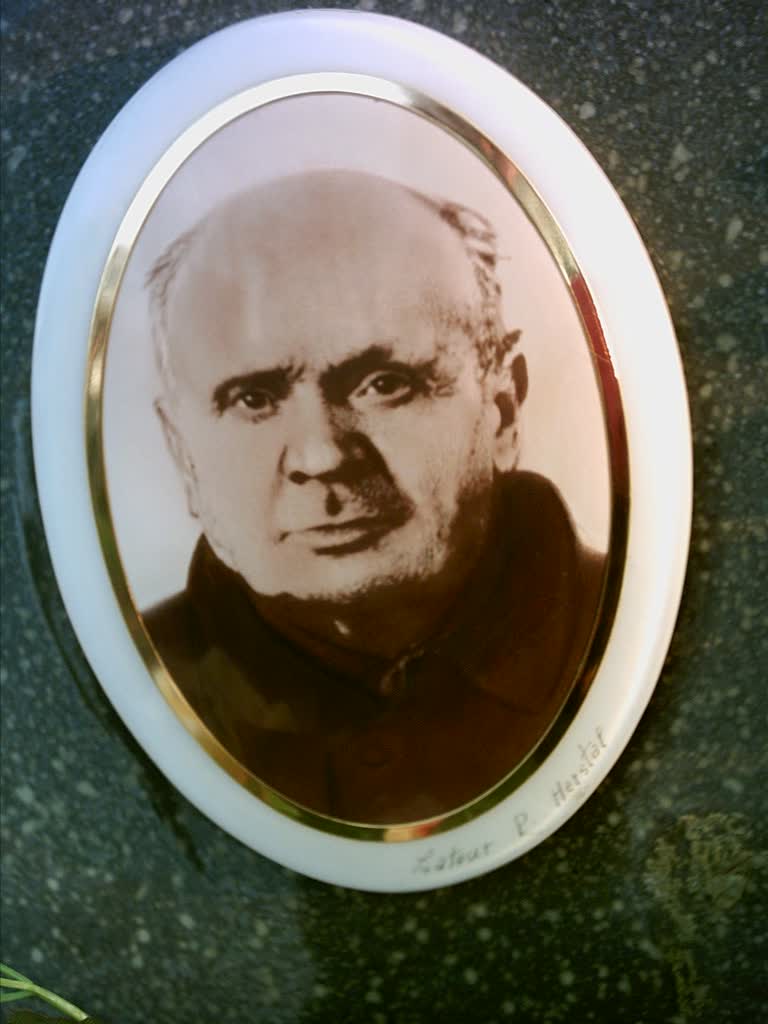
Before telling anything at all, Richard made a gesture Antoine never forgot. He set down in front of him a little frame with Denis's photo. As if Denis were still there.
And he told his story.
A hut in the "Sahara desert"
Denis had worked in the mine from a very young age. When Richard knew him, in his own youth, he was probably a retired miner.
He lived above what is now rue du Doyard, in a spot Richard laughingly called "the Sahara desert", so empty was the area back then. His house was a hut on bare earth. No window. No door on its hinges. No number. No water or electricity. A corrugated-iron roof held down by a few stones.
His furniture? Fruit crates picked up here and there. And on his only table, a large statue of Joan of Arc. His only fortune. He never parted with it.
He lived with a few goats and a white and brown dog. He slept on a simple straw mattress.
The café preacher
Denis would sometimes "come down" into the streets of Herstal with his goats. He would put on a long black tunic, then begin his round of the cafés. And he would preach, out loud, in a language no one fully understood: a mix of Latin, French and above all Walloon, the everyday language.
He ate whatever he was given and drank genever all the time, the famous pèkèt of the day. And the more he drank, the better he preached. So much so, Richard said, that he took on the voices of the departed. He got in touch with the dead, and spoke in their place.
People in Herstal still remember his round. He started at the café "Al Vî Bon Dju" (Walloon for "The Old Good Lord"), run by Richard's grandmother, where he preached at the foot of the crucifix, and sometimes even climbed up on it. Then the chip shop at Fine's, on the corner of rue Louis Demeuse. Then the café "Aux Trois Fauches". And he finished across the street, at the big café at Deflandre's.
When he was found lying in the gutter, kind souls would walk him home, arm in arm. And barely home, he was already back at the Old Good Lord, where they poured him the most to drink.
What he was not
Richard insisted on a few points.
- Denis belonged to no religious movement.
- He didn't smoke.
- He prescribed nothing, advised nothing.
- He had no money, and didn't want any.
And yet, in the middle of the war, fine ladies in furs often came to visit him by taxi, all the way to his hut.
Everyone in Herstal knew him, and everyone liked him very much.
The stories people still tell
Richard told Antoine several anecdotes. Antoine wrote them all down.
The clod of turf. One day when Denis was drunk near the little bridge, at the corner of rue des Monteux, a local boy threw a clod of turf at him. The next day, Denis announced in the cafés that whoever had thrown the turf would have a broken arm. The day after, the boy had a broken arm.
Five o'clock. Richard's grandmother was dying. Denis insisted so much on having his pèkèt that they let him in. He told Richard, in Walloon: "She'll go at five o'clock." At five in the morning, she passed away peacefully in her bed.
The tanks. During the Second World War, it is said that Denis stopped a column of German tanks, at the corner of rue Clawenne and rue Crucifix, by preaching and brandishing his statue of Joan of Arc.
The shell. At the end of the war, a shell fell between Denis's hut and the house next door. Everything was destroyed. Except Denis's hut. A real miracle: the people of Herstal couldn't believe their eyes.
The dog. One day, a bailiff turned up at Denis's place to collect the tax on his dog. Denis answered: "Wait, I'll call my dog…"
Many people in Herstal always claimed they had been under his protection throughout the German occupation.
Antoine de Saint-Christophe
The last years
Towards the end of his life, Denis "settled" with the Forvilles, undertakers on rue Croix-Jurlet, who still carried the dead on a simple wooden cart mounted on two motorbike wheels. During the war, all of Herstal went there to have its grain ground, so much so that the house had become a stronghold of the Resistance.
Isabelle Forville had been arrested and deported to Germany. When she came back from captivity, she looked after Denis, body and soul. She took him to the old Bavière hospital in Liège, where he passed away, and she paid for his entire funeral.
Years later, it was Richard Bastin who, after long months of paperwork, had Denis's grave granted in perpetuity. "So that Denis stays among us."
Antoine ended his entry with a wish: that one day, a building bearing the name of Denis Randaxhe would take in the poorest and the homeless of Herstal. As Denis himself had been.
How to find his grave
Denis rests in the Rhées cemetery, rue de Milmort, in Herstal.
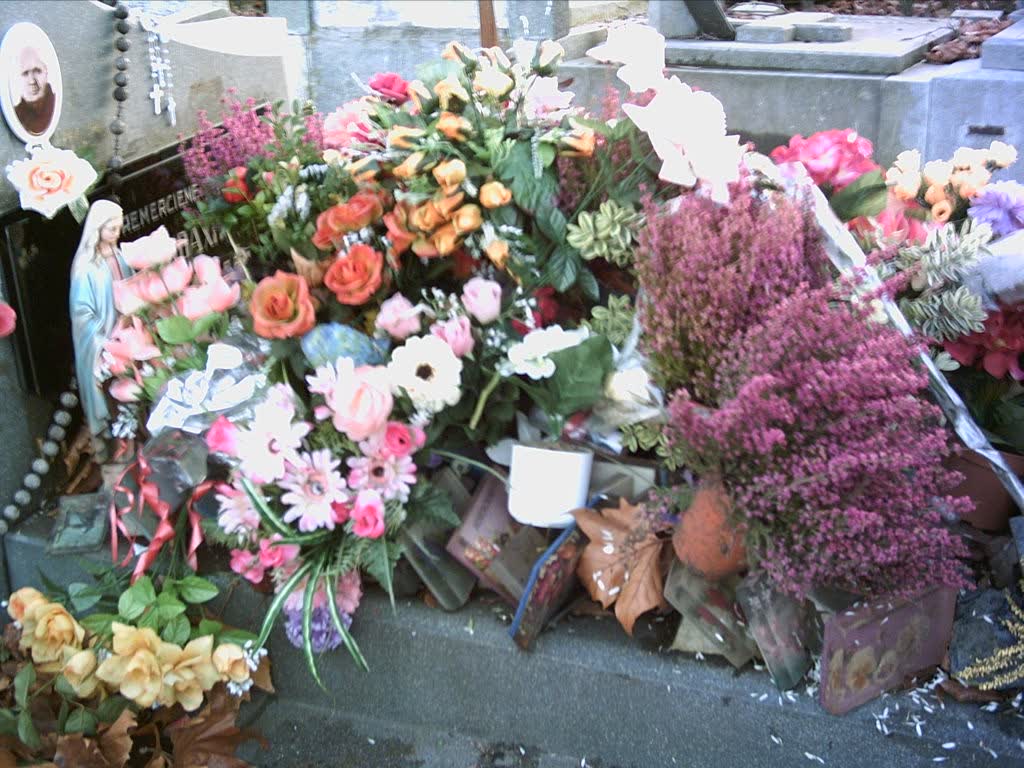
- At the main entrance, carry straight on to the back wall. Halfway along, you pass the bed dedicated to the veterans of the 1914-18 war.
- Once you face the brick wall, walk along the hedge on your left for about fifty metres.
- Denis's grave is on your left. You can't miss it: it is full of flowers and thank-you plaques for graces received.
On one of them, a sentence comes back in one form or another: "Merci Denis, merci pour tout" ("Thank you Denis, thank you for everything").
His neighbour: Pierre Vilette
In the same Rhées cemetery lies another famous figure of Herstal: Pierre Vilette, who died on April 30, 1950. His grave, in the vault of the Vilette and Hardy families, is at the foot of a tree, about fifty metres to the left of the veterans' bed. Some twenty ex-votos cover it.
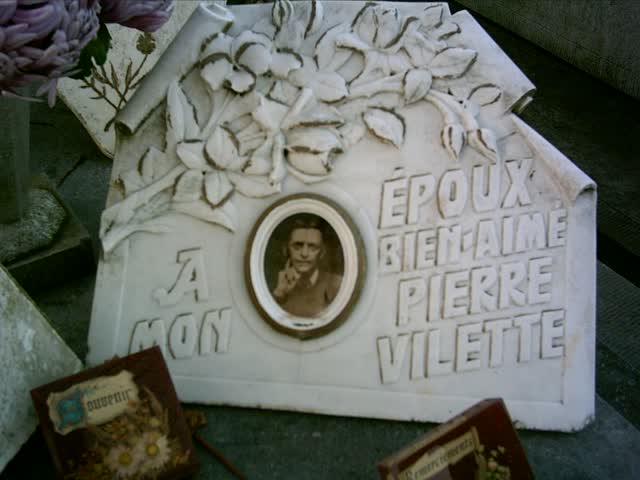
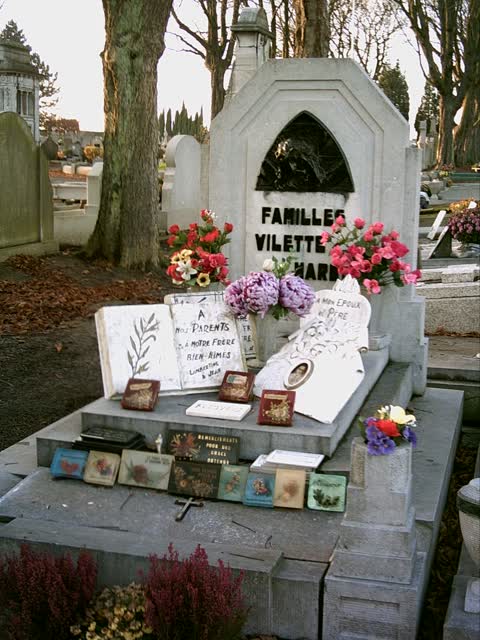
In Herstal, his name was linked with stomach troubles. And an old quarrel still divides the regulars of the café de la Gare in Milmort, especially around All Saints' Day: is it Denis or Pierre who has the legendary power to make so many people slimmer? For some, it's Pierre, since he didn't drink. For others, it's Denis. Popular wisdom settled it in its own way: better visit both.
In fact, many only go to see Pierre after stopping at Denis's grave.
These are local legends, not medical advice. For any medical concern, see a doctor.
Antoine's advice
As with every emissive tomb, take a miniature bottle of verbena with you.
Antoine de Saint-Christophe
Back to the map of places of luck
Did you know Denis Randaxhe, or would you like to entrust him with a request? Write to the workshop: we are still collecting memories of the mage of Herstal today.
Frequently asked questions
Who was Denis Randaxhe?
A former miner from Herstal, near Liège, who lived in a hut on bare earth and preached in cafés wearing a long black tunic. He belonged to no religious movement and wanted no money. Antoine considered him even stronger than Monsieur Hawarden.
Where is his grave?
In the Rhées cemetery, rue de Milmort, in Herstal. From the main entrance, carry straight on to the back wall, then follow the directions in the article.
Who lies near him?
Pierre Vilette, another famous figure of Herstal, who died in 1950, in the vault of the Vilette and Hardy families, at the foot of a tree in the same cemetery.