Tell me and I will forget. Show me and I will remember. Involve me and I will make it happen.
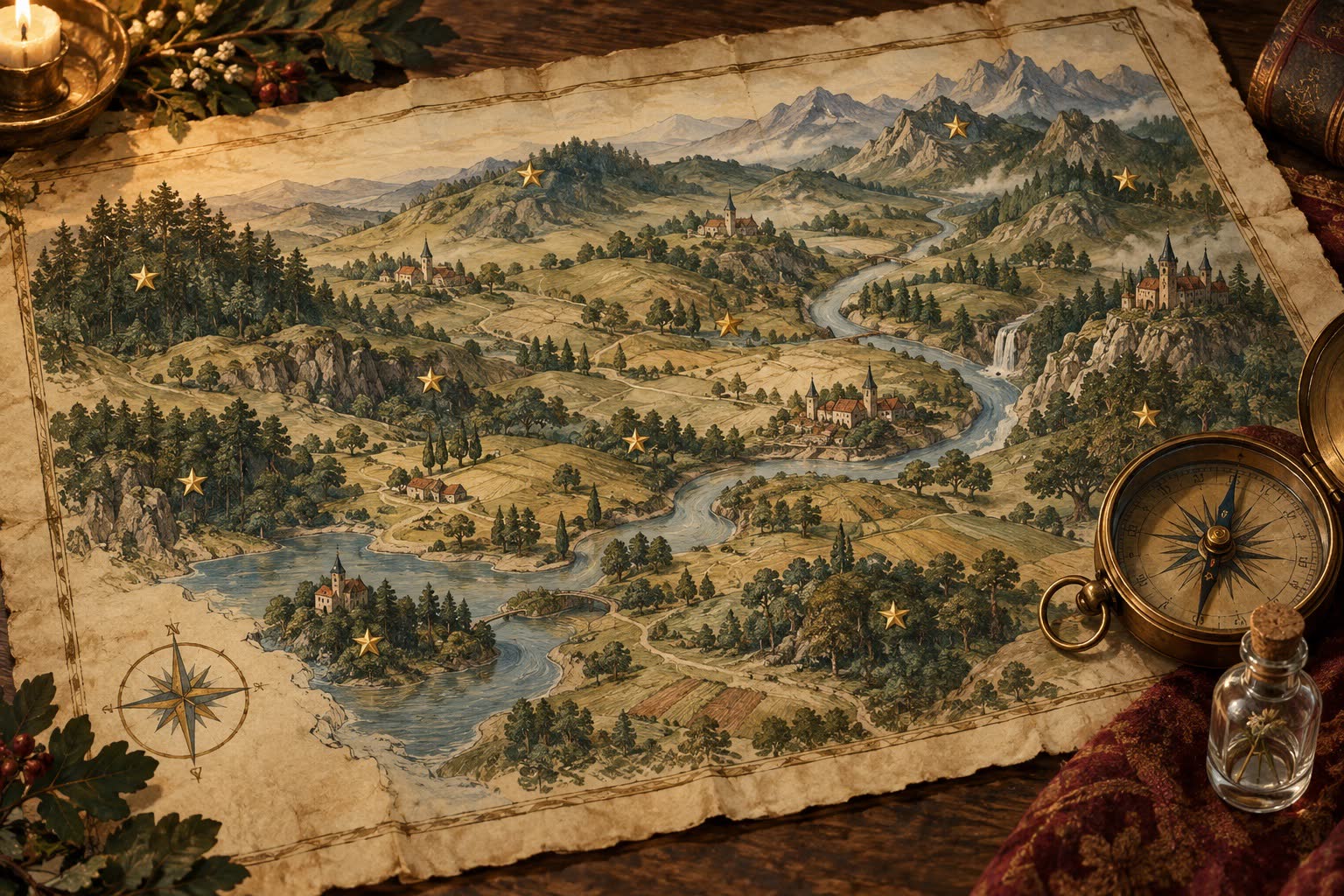
The motto that opened Antoine's catalogue of places
Some luck is worn, like a medal. Some luck is calculated, like a magic square. Some luck is waited for, like a lucky day.
And some luck has to be gone out and found.
For forty years, Antoine de Saint-Christophe travelled across Wallonia (French-speaking southern Belgium), Limburg, the Ardennes and the south of France, notebook in hand. He noted the cemeteries where graves are always covered in flowers, even though no one from the family is still alive. The chapels people travel far to reach, in silence, and leave with a changed face. The trees where thousands of nails have been driven in since the Middle Ages. The wells that pilgrims empty, litre after litre.
From all this he built a whole catalogue, which he called "Your happiness through a place". Thirty-three entries, sorted by theme: power, influence, protection, well-being, love, money, property. Each entry gave the story of the place, the exact path to get there, the rite to perform, the best moment, and Antoine's advice.
These are the entries we are opening here, one by one.
What is an "emissive" place?
For Antoine, some places emit. The way an antenna sends out a wave. The way a dowsing pile gives off a radiation.
Why those places and not others? He saw three reasons, which often overlap.
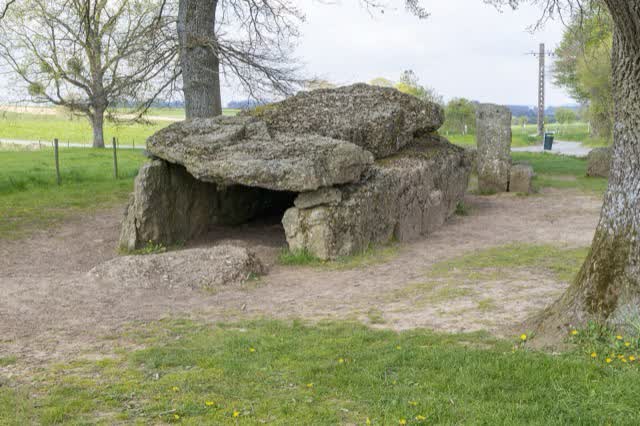
The earth itself. Some spots sit on powerful telluric currents (energy lines in the ground). The builders of Antiquity knew it: they raised their temples, menhirs and dolmens exactly where the earth "spoke". Christians later built their chapels and basilicas on those same temples. The hill of Chèvremont, above Liège, is the perfect example: a basilica, built on a fortress, itself built on a Celtic temple.
Shape. An octagonal tomb does not emit like an ordinary grave. A stone bell does not emit like a cross. That is the whole lesson of shape effects: geometry acts.
The egregore. This is the key word of the whole chapter. An egregore is the force built up by thousands of thoughts, prayers and requests all turned towards the same point, for years, sometimes centuries. The more fervently a place is visited, the more it is charged. And the more it is charged, the more it answers.
There is something stronger than death: the presence of the absent in the memory of the living.
Epitaph noted by Antoine in the cemetery of Sainte-Walburge, Liège
With or without a quest for grace
Antoine sorted his places into two large families.
Places of a quest for grace. You come with a precise request, addressed to someone: a village wise man, a medium, a saint, a benefactor whose grave has become a place of contemplation. You ask, you give thanks, you come back. The ex-votos and thank-you plaques covering some graves say clearly how many favours have been granted.
Places without a quest for grace. Here you ask nothing of anyone. You come to pick up a vibration, make a gesture, and leave. That is the case of the tomb of Monsieur Hawarden, "where everything seems to work without asking for anything". It is the case of the Mont des Géants, where people come for the right decision.
Antoine's rules
From one entry to the next, the same rules come back. Together they form a real method.
The path matters as much as the place
What matters is not asking, but how you ask. What matters is not going, but how you go.
Antoine de Saint-Christophe
Antoine always said which way to come in. At the Mont des Géants, you must climb from the bottom of the mound, in the direction of the Way of the Cross, never from the top. At Mohiville, what counts is the initial of the first name of the person who drives you there. The place is only half of the rite. The other half is the path.
The right moment
Picking up the energy, Antoine wrote, "flows" more easily when the negative ionisation of the air rises: at daybreak, at dusk, at night, in the rain, and better still during a thunderstorm.
Some places have their own day. May 31, the feast of the Visitation, belongs to Maggy and Renée. The Sunday before June 24 is the day of the Mohiville pilgrimage. Days that are multiples of 7, or that end in 7, come back often.
The miniature bottle of verbena
This is the advice Antoine repeats in almost every entry: always take with you a miniature bottle of verbena liqueur, and drink a little before the visit. For him, verbena is a "natural link" that strengthens intention and resonance. The Celts held it to be a sacred plant. Antoine made it the password to every emissive place. Read: verbena, the lucky herb.
Film photography
Several rites call for a photograph of your face. Antoine was categorical: a real film photograph, black and white, printed from a negative, handled as little as possible, with your face appearing alone, even if you have to cut it out.
Film photography also appears in Antoine's intention devices, such as the Star of Brahma, where it is placed next to the wish.

Why? Because it is a radionic principle: for him, film photography fixes the imprint of the person much better than a digital image or a colour photo. He even noted that since colour replaced black and white, some rites have given "less spectacular" results.
But be careful: when the rite rests on an egregore rather than on radionics, as at Noblehaye, an ordinary photo is enough. Antoine always made the distinction.
The Bélier candle
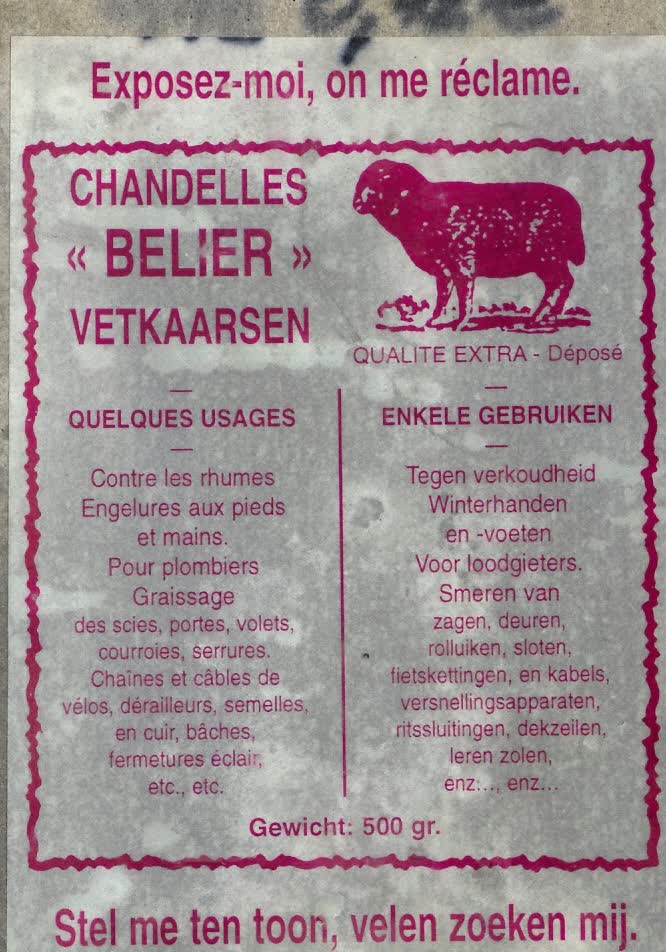
Another recurring element: the Bélier candle (a classic Belgian household candle brand, also called a Christmas candle). You keep it in the fridge before use, and let it drip or burn down on the holder the rite specifies. Antoine noted that it gives off no smell.
Adding up
Adding several set-ups, identical or different, intensifies and speeds up the energy process.
Antoine de Saint-Christophe
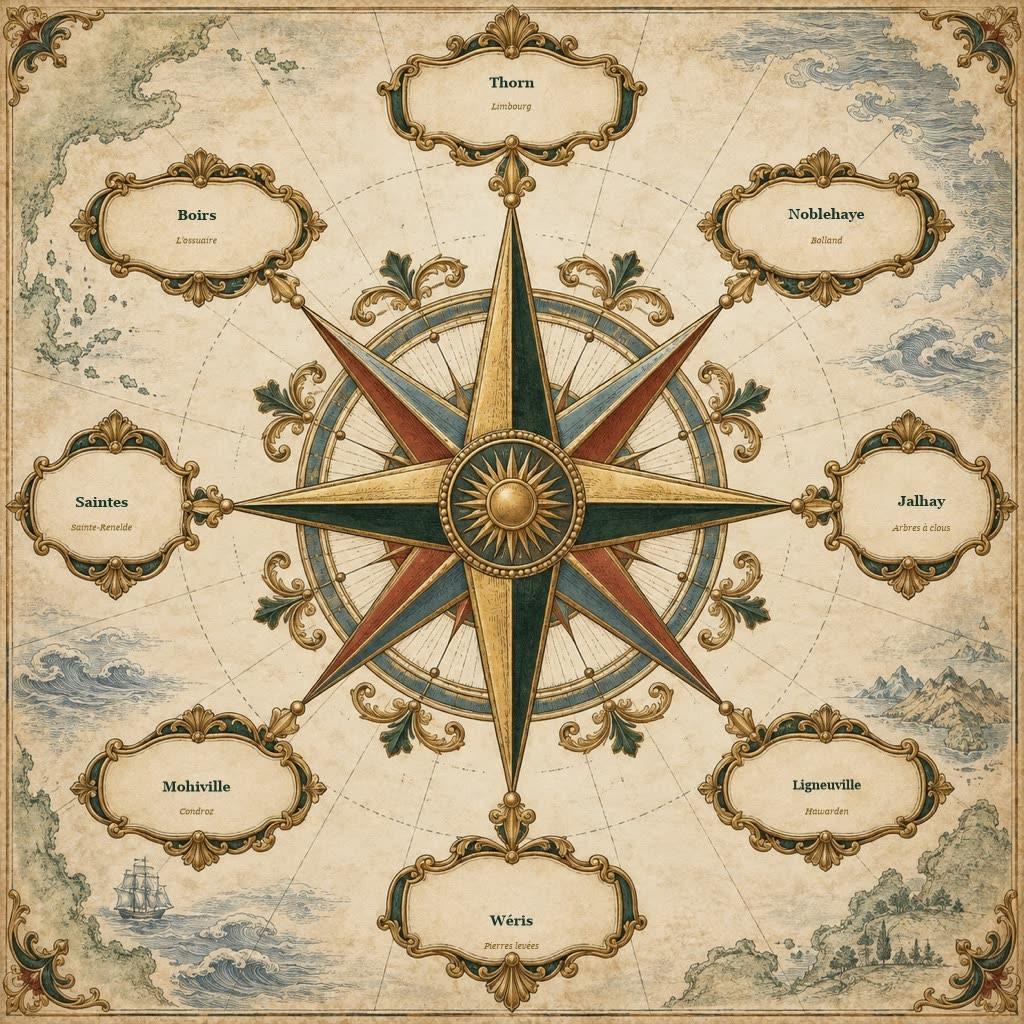
Places strengthen one another. After the Mont des Géants, you walk past the Pierpont family tomb. After Denis Randaxhe, you go and see Pierre Vilette. Antoine thought in networks: for him, Wallonia was a map of places linked by invisible currents, from Wéris to Chèvremont, from Chèvremont to Roche-à-Frêne.
The map, theme by theme
Here are the places in Antoine's catalogue, sorted the way he sorted them.
| Theme | Places |
|---|---|
| Power, decisions | The Mont des Géants, the Boirs ossuary, the bell of the carillon player Monjardin |
| Influence, breaking free | The tomb of Monsieur Hawarden |
| Protection, graces | The Mohiville chapel, Notre-Dame de Bonne Nouvelle in Liège, the nail trees, Father Antoine |
| Well-being | The Liège benefactors, Denis Randaxhe, Henri Lacroix |
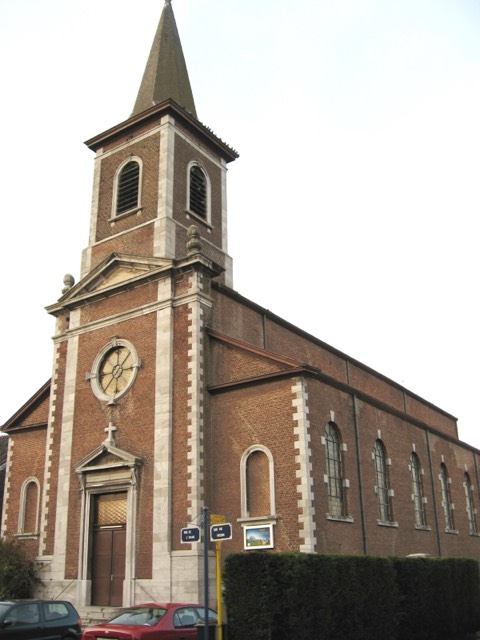
| Love | The Noblehaye chapel, Maggy Lekeux |
| Money | Renée Remacle |
| The great places | The Saint-Renelde well, Wéris, Thorn, Brocéliande, Rocamadour, Rennes-le-Château |
Respecting the places
One last thing, which Antoine often reminded people of in his own way. These places are cemeteries, chapels, private properties, listed sites. You come discreetly, during opening hours, without damaging anything, without taking anything the rite does not call for. Some families ask that nothing be left on their loved ones' graves: respect their wishes.
That is the condition for the place to keep answering.
Speak to the earth, and it shall teach thee.
Book of Job 12:8
Can't travel? For several places, Antoine had planned a rite from a distance. Write to the workshop and tell us what you are looking for: we will point you to the place that suits you and how to connect with it.
Frequently asked questions
What is an emissive place?
A place that emits, the way an antenna sends out a wave. Antoine saw three reasons, often overlapping: the force of the earth at that spot, the shape of the monument, and the egregore, the force built up by thousands of requests turned towards the same point.
What is the difference between a place with and without a quest for grace?
In a place of a quest for grace, you come with a precise request addressed to someone: a wise man, a saint, a benefactor. In a place without a quest for grace, you ask nothing of anyone: you come to pick up a vibration, make a gesture, and leave.
What is the best time to visit a place of luck?
Picking up the energy is easier when the negative ionisation of the air rises: at daybreak, at dusk, at night, in the rain, and better still during a thunderstorm. Some places also have their own day, such as May 31.
Can you connect with a place from a distance?
For several places, Antoine had planned a rite from a distance. Write to the workshop and tell us what you are looking for: we will point you to the place that suits you.