Do you really want to feel good?
Entry 2-590005, Antoine de Saint-Christophe
That question opened one of the richest entries in Antoine's catalogue: ten pages devoted to a single place. Thorn, in the Netherlands.
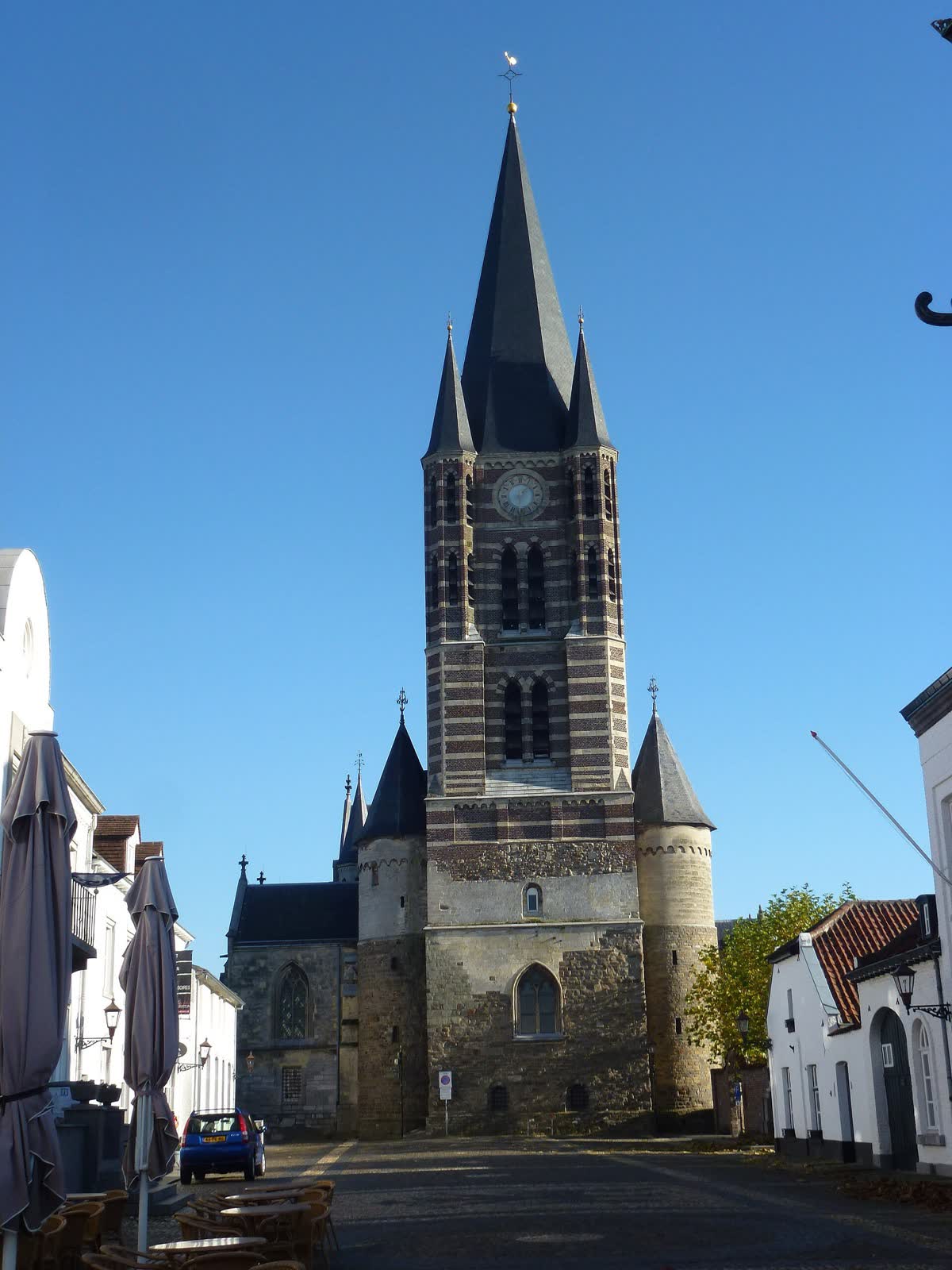
A little town in Limburg, a few kilometres from the Belgian border, between Maaseik and Roermond. All its houses are painted white. Its streets are paved with pebbles from the Meuse. It is called "het witte stadje", the little white town. For more than eight centuries, it was ruled by the abbesses of a wealthy abbey of noble ladies, until the French Revolution.
And it is from those abbesses that the whole secret comes.
The last two abbesses
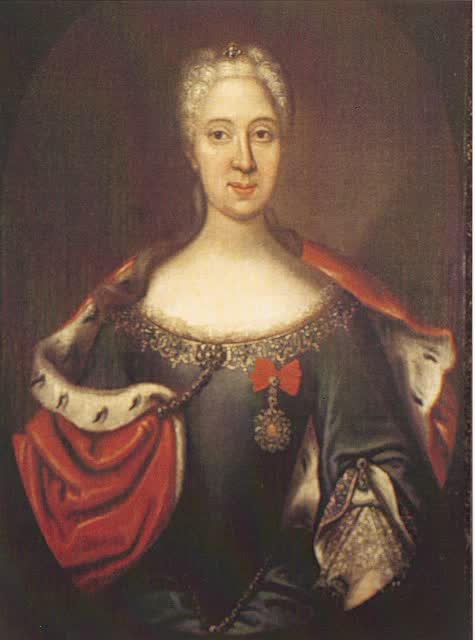
The abbey church of Thorn displays the portraits of the last two abbesses.
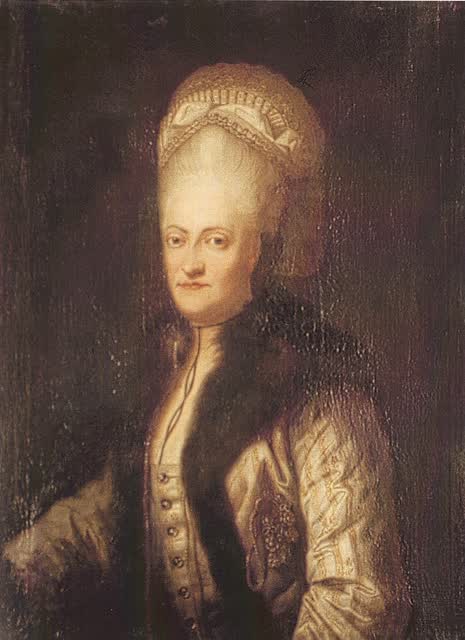
Francisca Christina, of the Palatine house of Sulzbach, abbess from 1717 to 1776.
Maria Cunegunda, Princess of Saxony, abbess from 1776 to 1797.
Two great ladies, two princesses. Antoine immediately noted the resemblance with other places in his catalogue: the two saints Abdon and Sennen of Arles-sur-Tech, in France, and the two young ladies of the Boirs ossuary. Force is often born of a pair.
Stronger than a photograph
Antoine knew the power of film photographs: a black-and-white photo of a human face, printed from a negative and handled little, keeps forever, in his view, the "etheric" body of the person.
But in Thorn, he wrote, there is something stronger still: the portrait itself.
If your face, alone, is photographed next to each of the two portraits, then the two photographs you get have the same powers as the legendary photograph of Saints Abdon and Sennen of Arles-sur-Tech. And in Thorn, the setting is much more powerful still, because certain egregores can be stirred there "in a way that is easy and pleasant for each of us".
Pleasant indeed. Because the Thorn rite is practised at the table.
The rite of the two abbesses
What you need: two black-and-white film photographs of your face alone, one taken next to Francisca's portrait, the other next to Maria's. Two triskelions (the three-armed Celtic spiral), charged model, without a circle. A bottle of pinot blanc (auxerrois) or pinot gris from Thorn, and a bottle of asparagus liqueur.
The preparation
- Place a triskelion on the photograph of Francisca with your face. Score one line with a knife as a marker.
- Next to it, set the bottle of pinot blanc or pinot gris from Thorn, and only from Thorn.
- Place the second triskelion on the photograph of Maria with your face. Score two lines with a knife.
- Next to it, set the bottle of asparagus liqueur.
The meal
To every thing there is a season.
Thorn entry
Eat as much asparagus as you can from each new Moon until the first quarter.
- At each asparagus meal taken at the right time, wear both triskelions around your neck.
- Drink Francisca's wine during the meal.
- Drink Maria's liqueur after the meal.
- When the meal is over, put each triskelion back on its photo.
Antoine remarked in passing that asparagus is said to be the "broom" of the gut, which is often called our "second brain".
The rules to follow
- The wine and the liqueur may never be reused for another rite.
- The connection is much weaker without the triskelions: you need two triskelions and two photos per guest.
- "Charged" triskelions serve only one person.
- The bigger the triskelion, the more it acts.
Three ways to amplify the rite
Antoine gathered three practices that strengthen this rite, which he considered "quite exceptional".
The Bélier candle. Light a Bélier candle (a classic Belgian household candle) facing the photos of Francisca and Maria while you eat the asparagus. Many people, Antoine noted, then become surprisingly eloquent. It is the same candle as in the Countess of Lannoy rite at the Noblehaye chapel.
Music. During the meal, play music by the Saint-Michel brass band of Thorn, harp music, or women's voices. For the little white town has been bound up with music since the dawn of time.
The little lock. While waiting for each new Moon, many aristocrats of the Dutch Kempen regularly drink "Maas-Sjlukske", the "little lock of the Meuse", a herbal liqueur, standing the bottle on a film photo of Maria. As if to keep a link alive.
In many castles, he added, guests also enjoy "Maaskiezel", lucky sweets shaped like Meuse pebbles, in memory of the cobbles of Thorn.
The influence of the Moon
The Thorn rite follows the Moon. Antoine attached to his entry this table of the four phases of the lunar month, each with its hermetic force.
| Period | What it favours | Hermetic name |
|---|---|---|
| From new Moon to first quarter | Vitality, well-being, enthusiasm, the success of what you undertake | Fire, Yod |
| From first quarter to full Moon | Love: loving others, yourself, your work | Water, He |
| From full Moon to last quarter | Intelligence: learning, succeeding, charming, convincing | Air, Vav |
| From last quarter to new Moon | Wealth: material goods and money | Earth, second He |
Each month, the new Moon falls in a different sign and highlights its influences. And Antoine added a rule: it is pointless to start anything during the last three days of the lunar month, and better to wait three days after the new Moon before beginning. Read also: the 4 Moon windows.
If you can't go to Thorn
Antoine had planned a version from a distance. You simply lay the film photograph of your face on a film photograph of Francisca's face, and do the same with Maria. Antoine could supply these photographs.
Mind the film. If you use black-and-white negative film, it must need traditional silver processing (T-Max type), not the chromogenic processing used for colour negatives (C-41). The success of the "Thorn rite" depends mainly on the "etheric" quality of the two photos.
The wine of Thorn
At every harvest, Antoine noted, almost the whole crop is already sold. So it is wise to reserve your own yearly supply, for two reasons.
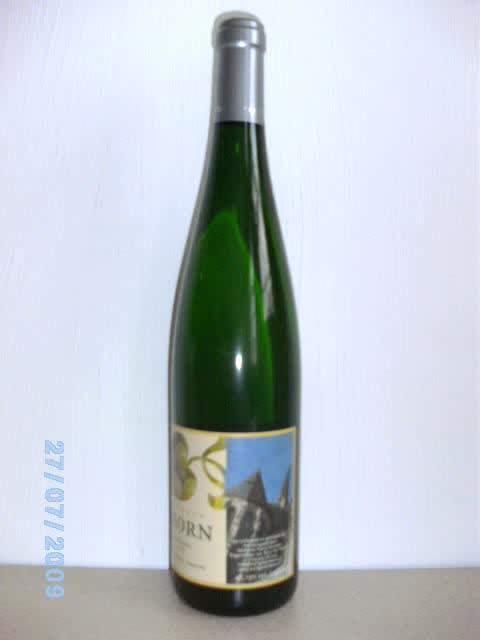
The first: the vineyards along the Napoleon road, between Maaseik and Venlo, are young, about twelve years old on average, as many as there are signs of the zodiac, and they produce a limited quantity, on a subsoil well suited to growing asparagus.
The second: many well-off Dutch families practise the Thorn rite at every lunar month of their Sun sign and ascendant, and reserve their bottles year after year. This rite, Antoine wrote, is very popular with the Dutch aristocracy, for the simple reason that it has proved itself for more than two centuries. Given the number of sumptuous castles built right in the middle of the Dutch Kempen, he added, it does raise serious questions.
The Delphi of the North
Thorn is more than its rite. Antoine loved its streets.
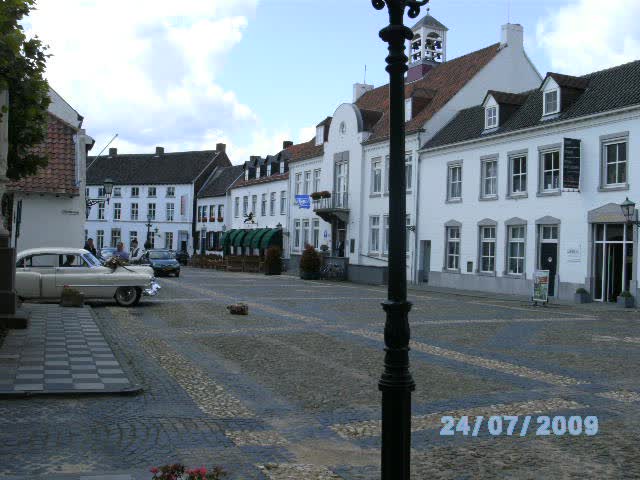
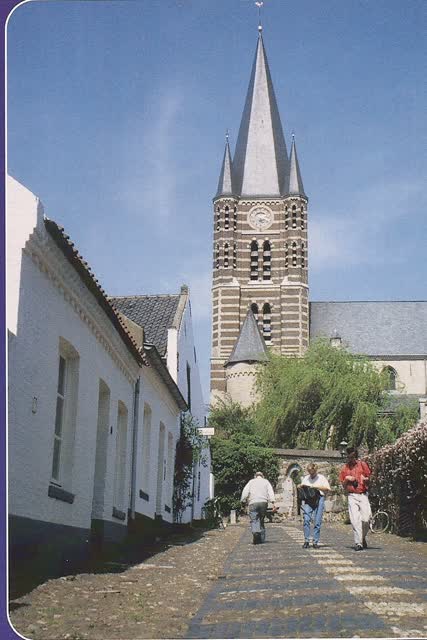
Many people, he wrote, recharge simply by walking on the pebbles of Thorn. Some don't hesitate to lie down for a few minutes on the cobbles, facing the plaques that list the thirty-two abbesses, to draw energy from the ground. Speak to the earth, and it shall teach thee.
On that very spot, near the statue of the Ram, facing the place where the Saint-Michel band often plays, many parapsychologists cast pebble-shaped runes onto the cobbles. Because they all say it: "The runes speak in this place." Some come with their psychic, just to have their cards read.
For that reason, Antoine concluded, Thorn has in recent years become "the Delphi of the North".
And he noted, mischievously, that inside the word Thorn there is Thor.
Antoine's advice
Use a glass bearing the image of Thorn, with the little lock, and keep your bottles in their little white house. In the fascinating world of catching luck, details matter a great deal.
Antoine de Saint-Christophe
Back to the map of places of luck
Would you like to prepare your Thorn rite, or get the triskelions or the photographs of the two abbesses? Write to the workshop.
Photo: Rosemoon, CC BY-SA 3.0, via Wikimedia Commons.
Alcohol: enjoy in moderation, adults only.
Frequently asked questions
Why is Thorn called the little white town?
All its houses are painted white, and its streets are paved with pebbles from the Meuse. For more than eight centuries, this little town in Dutch Limburg was ruled by the abbesses of a wealthy abbey of noble ladies.
Who are the two abbesses of the rite?
Francisca Christina of Sulzbach, abbess from 1717 to 1776, and Maria Cunegunda, Princess of Saxony, abbess from 1776 to 1797. Their portraits hang in the abbey church.
Can you do the rite without going to Thorn?
Yes. Antoine had planned a version from a distance with film photographs: yours, laid on those of the two abbesses.
Which wine should you use?
Only a pinot blanc or pinot gris from Thorn. Antoine advised reserving your bottle, as almost the whole crop is sold at every harvest.