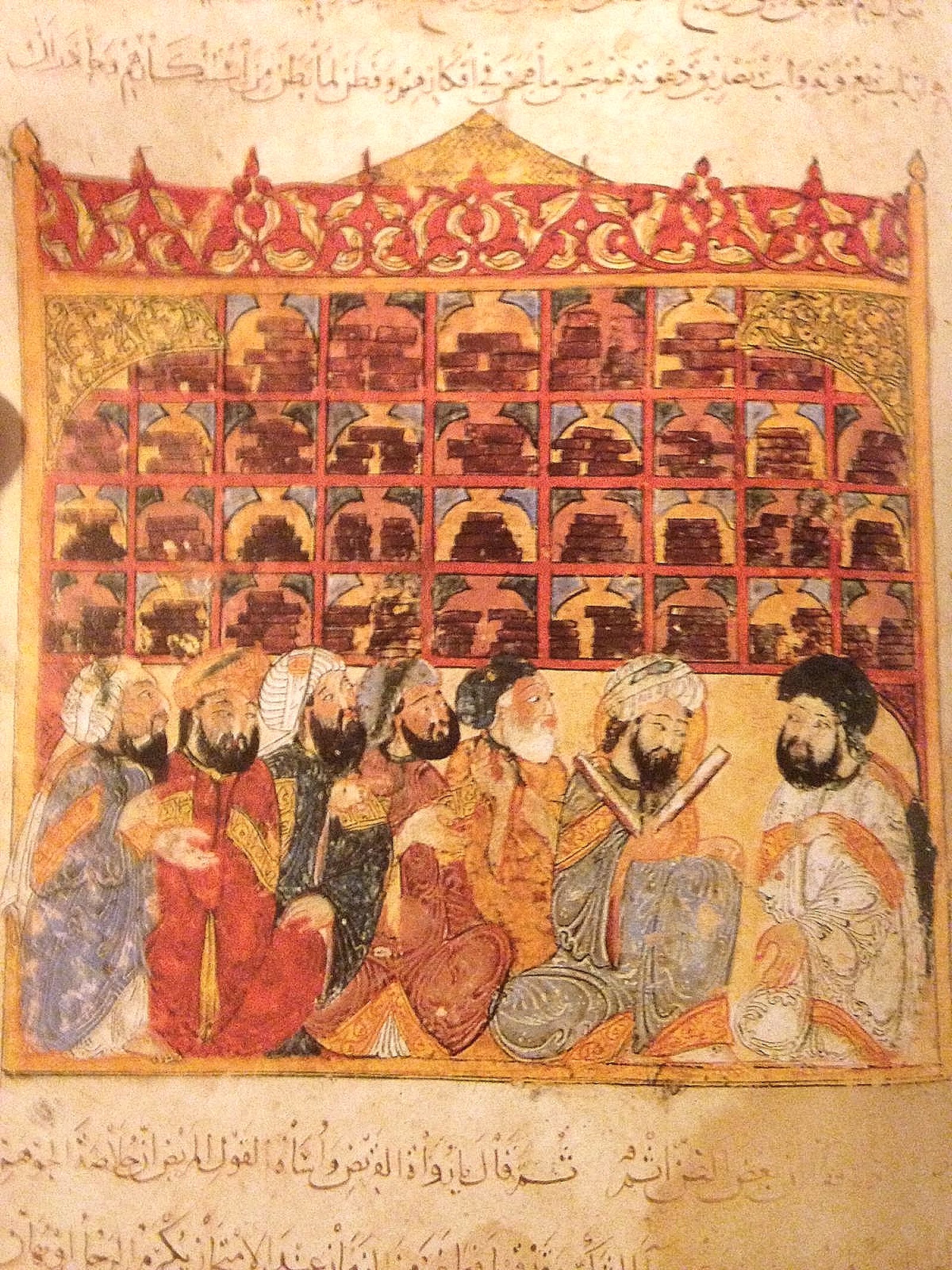
Every time we calculate a solar return, we think of a man who lived twelve centuries ago, in Baghdad. A man medieval Europe called Albumasar, and read for six hundred years as the absolute master of astrology.
His story deserves to be told. Because it begins with a refusal.
A scholar who hated astrology
His name is Abū Ma‘shar Ja‘far ibn Muḥammad al-Balkhī. He was born in 787 in Balkh, a great city of Khorasan, in present-day Afghanistan. He came to Baghdad, then the intellectual capital of the world, in the time of the Abbasid caliphs.
In Baghdad, he was first a specialist in religious traditions. And according to the great bibliographer Ibn al-Nadīm, he fiercely opposed the philosophers and astronomers, in particular the famous al-Kindī, the “philosopher of the Arabs”.
Then, still according to Ibn al-Nadīm’s account, he started studying mathematics to refute his opponents better. He discovered astronomy. He was fascinated. He changed sides. He was forty-seven years old.
We find this story wonderful. It says you are never too old to change your mind, or to begin something great.
The House of Wisdom
To understand Albumasar, you have to picture 9th-century Baghdad.

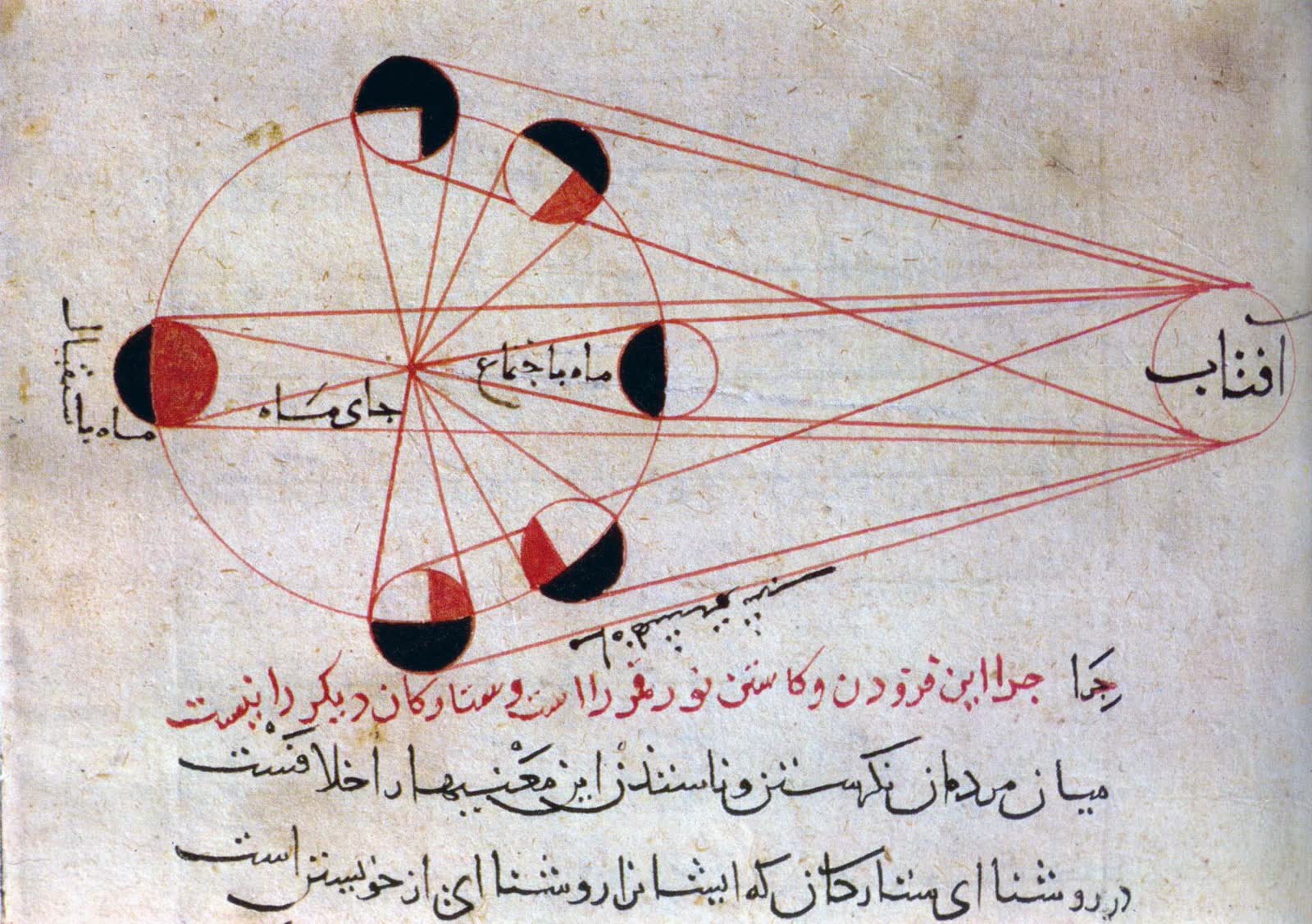
The caliphs founded the House of Wisdom there, a library and translation center. Greek scholars were translated into Arabic, Aristotle, Ptolemy, Euclid, but also Persian and Indian astronomers. Mathematicians invented algebra there. Astronomers measured the Earth.
It is in this ferment that Albumasar wrote. And he achieved something nobody had done: gathering all the known astrological traditions, Greek, Persian, Indian, into one coherent system, and giving it a philosophical foundation, that of Aristotle.
The book that convinced Europe
His major work is called the Great Introduction to Astrology, the Kitāb al-mudkhal al-kabīr. In it, he explains why the stars act on the world, and how.
To prove that the sky influences the Earth, he takes an example anyone can check: the tides. The sea rises and falls with the Moon. If the Moon can lift the oceans, he says, why wouldn’t it act on the rest of the world?
The book was translated into Latin twice in the 12th century, by John of Seville and then by Hermann of Carinthia. For many historians, it is one of the texts that introduced medieval Europe to Aristotle’s thinking on nature, even before his own works were widely translated.
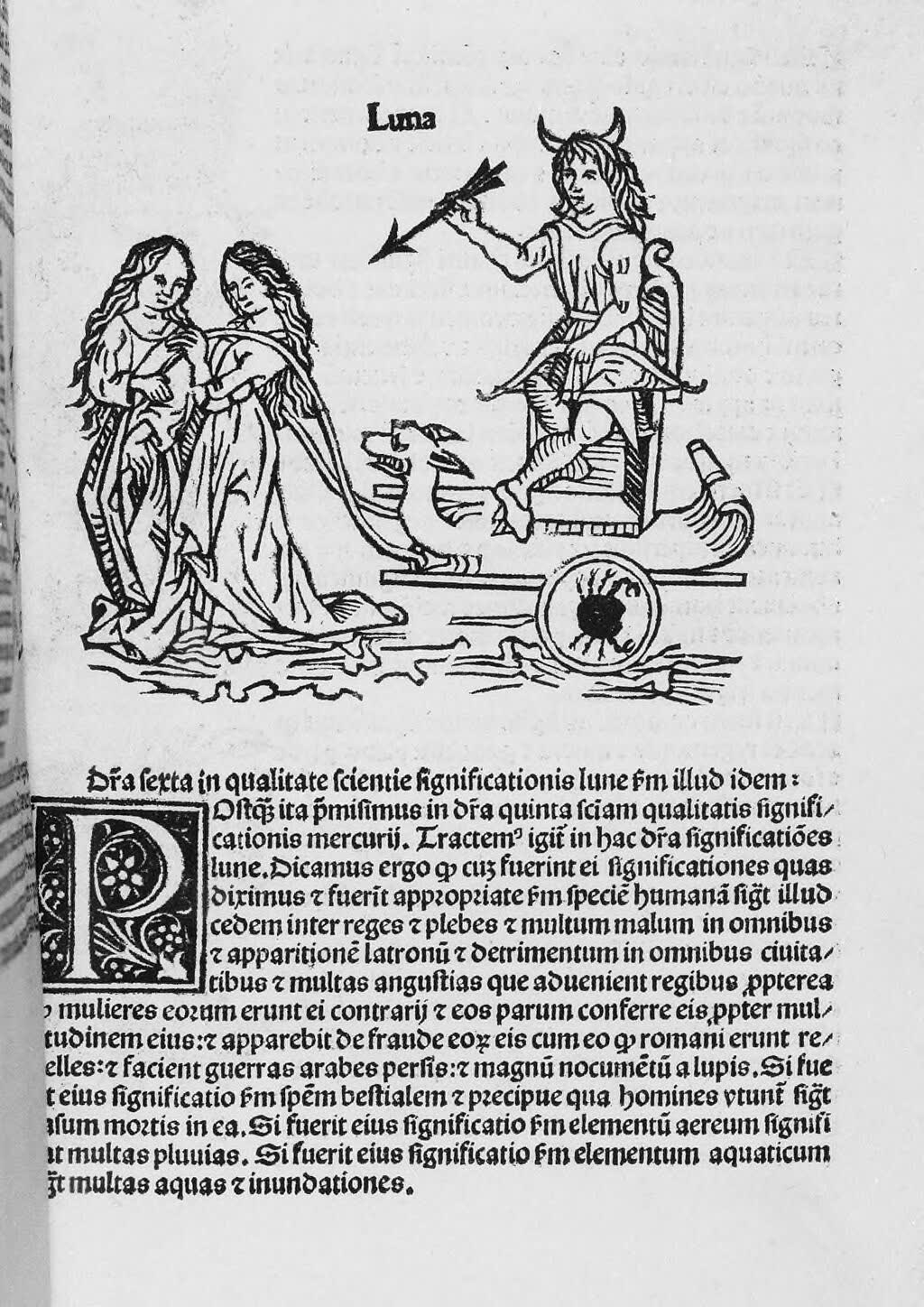
Then came printing. In 1488 and 1489, in Augsburg, the printer Erhard Ratdolt published several of Albumasar’s books, with superb woodcuts. University libraries snapped them up.

The great conjunctions: world history in the sky
Albumasar was not only interested in individuals. He wanted to read the history of peoples.
His idea: about every twenty years, Jupiter and Saturn, the two slowest planets known at the time, meet in the sky. These meetings, the great conjunctions, follow a cycle that repeats over centuries. For him, each change of cycle announces a change of era: dynasties falling, religions being born, empires shifting.
This theory had an enormous influence. For centuries, in Europe, people watched for the great conjunctions to understand their times. Kepler himself would study them.
The man who read the years
But the part of his work that moves us most is the most intimate one.
Albumasar wrote an entire treatise on the revolutions of the years of nativities: how to read, each year, the return of the Sun to its birth position. It is the direct ancestor of what we call today the solar return.
In it, he explains how each year has its “ruler”, how you look at where the planets fall in the chart of the year, how you compare it with the birth chart. He also talks about a technique called profection: each year of life activates one house of the chart, one after the other, like a hand that moves forward one notch on each birthday.
When we read a solar return for someone, we repeat, with modern tools, gestures Albumasar described twelve centuries ago.
What we take from him
We take three lessons from him, and we apply them every day.
1. You can start late. He was forty-seven. He wrote dozens of books, and he lived to nearly a hundred, according to the sources.
2. A good method brings things together. Albumasar didn’t invent one more astrology. He took the best of the Greek, Persian and Indian traditions, and made them talk to each other. That is exactly what we try to do by combining Western, Arab and Indian techniques.
3. Time has a shape. No two years are alike. Each has its own sky, its rulers, its seasons. Knowing how to read the year ahead is the key to everything else.
Albumasar didn’t teach fatalism. He taught how to read the tendencies of time, to act at the right moment. That is still what we do today.
And now, you
If the idea of reading your year the way the astrologers of Baghdad did speaks to you, start by calculating the exact second of your next solar return.
And if you want the full reading, with the ruler of the year, the profection and the strong moments, the workshop does it for you.
Frequently asked questions
Who was Albumasar?
Abū Ma‘shar al-Balkhī (787–886), an astrologer born in Balkh and active in Baghdad. His works, translated into Latin in the 12th century and printed in the 15th, made him the most widely read astrologer of medieval Europe.
What is his best-known work?
The Great Introduction to Astrology, which gives astrology an Aristotelian philosophical foundation, and the Book of the Great Conjunctions, on the cycles of Jupiter and Saturn.
Did Albumasar write about the tides?
Yes. He uses the link between the Moon and the tides as an argument to show that the stars act on the Earth.
What is the revolution of the years of nativities?
It is the reading of the sky chart at the Sun’s yearly return to its birth position. Albumasar devoted a treatise to it, the ancestor of the modern solar return.