If we don't publish things that are disturbing, we risk missing out on wonderful things.
Hubert Curien, French Minister for Research, 1989, at the head of Antoine's manual
Some sentences open a life. For Antoine de Saint-Christophe, it was this one, in German, on the cover of a battered book that a stranger had given him at the top of a little Swiss mountain train:
Kein Zufall fürs Glück.
No chance in luck.
Its author was Otto Brock. And Antoine spent forty years carrying his work forward. Read: the man on the little train.
Antoine's definition
Antoine engraved his definition of luck at the top of all his manuals, all his study sheets, all his letters. Here it is:
Luck is a cosmic vibratory impact, fixed in matter and modifiable by energies.
Antoine de Saint-Christophe
Read it again slowly, because every word counts.
A cosmic vibratory impact. Luck is not an abstract idea. It is a vibration, which comes from the sky, and which touches us.
Fixed in matter. This vibration is written into us at the moment of our birth: our date, our time, our place. It renews itself every year, at the precise moment the Sun returns to the place it held when we were born.
And modifiable by energies. This is the half of the sentence that changes everything. Because if luck is fixed, we can still act on it. Change place at the right moment. Wear the right shape. Choose the right day. All of the workshop's work lies in that second half.
95% luck, 5% talent
Antoine liked to recall the confession of Julius Rosenwald, who ran the Sears department stores in the United States. He put his success down to 95% luck and 5% talent. Many of his employees, he said, could have run the company as well as he did: the right opportunities simply hadn't come their way.
A few seconds of bad luck can wipe out years of effort. A few seconds of good luck can open up a whole life. That is why, for Antoine, luck deserves to be studied as seriously as one's trade. Read: the 4 principles of lucky people.
Cosmobiology
Antoine gave this study a name: cosmobiology.
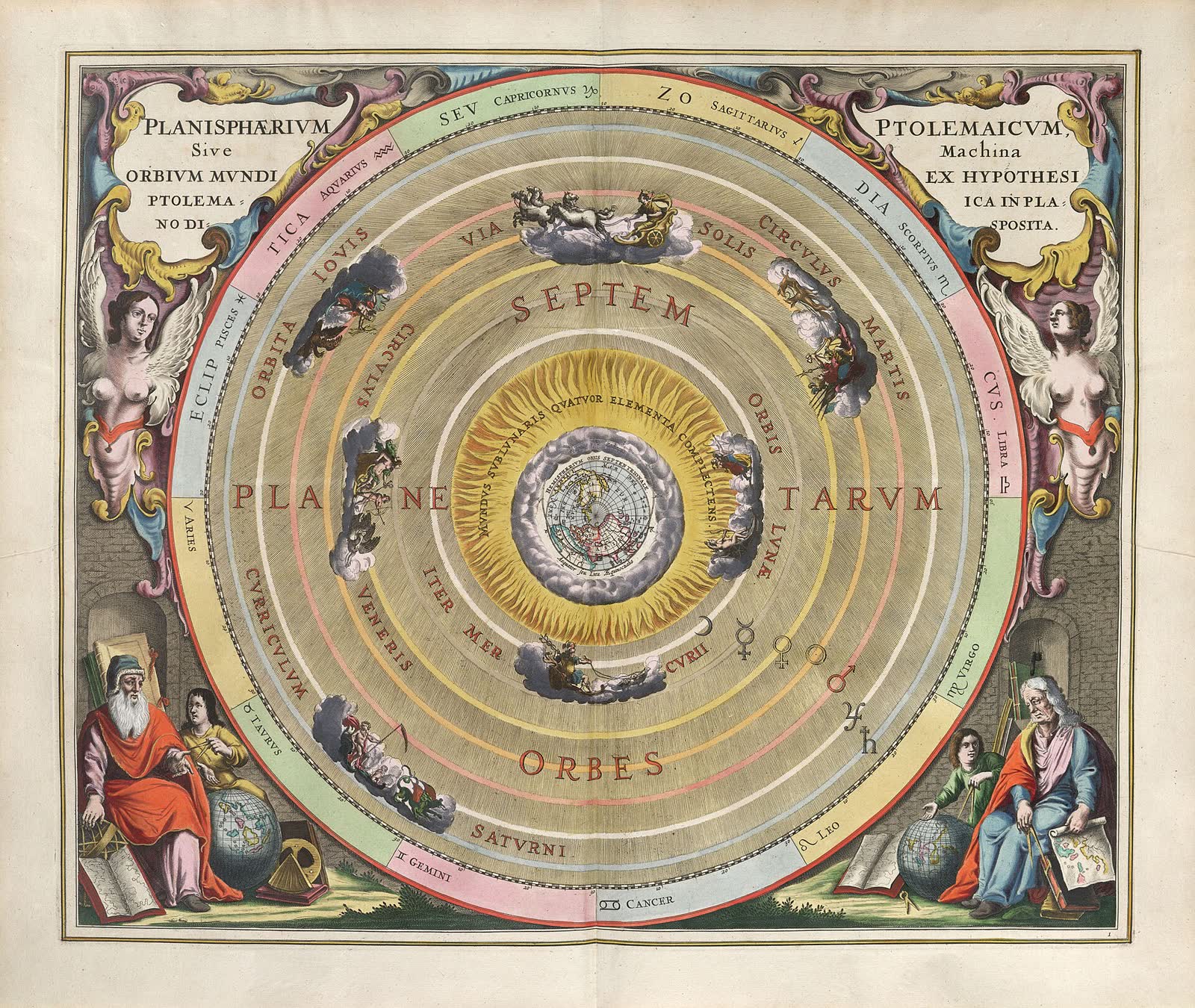
The word says it all. Cosmos, the universe. Bios, life. Logos, knowledge. Cosmobiology, he wrote, is a synthesis of knowledge and techniques that make it possible to optimise the relationship between the macrocosm of the universe and the microcosm of human life.
It brings together very old disciplines, such as astrology and dowsing, and more recent research:
- biorhythms, the study of the body's cycles;
- the micro-vibratory physics of shapes, that of Bélizal and the dowsing pile;
- planetary tuning forks, born of the mathematician Hans Cousto's work on "the cosmic octave";
- radionics;
- the bio-electronics of Louis-Claude Vincent.
For Antoine, cosmobiology is a coherent whole made of this knowledge, which tries to verify, through reproducible experiments, phenomena that are still unexplained.
A science on its way
Antoine readily admitted it: today, cosmobiology is unknown to the general public, or looked down on. Either because the vision is beyond them, or because it questions them too deeply.
But he made a comparison that gives pause. Cosmobiology, he wrote, is today where ecology was in 1950. Back then, just after the war, the job was to rebuild, produce, consume: nobody worried about the long-term consequences. Those who talked about them got smiles. We know how that turned out.
"What will no doubt become a university discipline in a few decades," he predicted. Which goes to show that everything changes, priorities included.
To reach the truth, one must once in one's life rid oneself of all the opinions one has received, and rebuild anew, from the foundations, the whole system of one's knowledge.
Descartes, quoted by Antoine
Otto Brock, the master
Who was Otto Brock?
A German cosmobiologist whom his contemporaries considered a well of knowledge. A man of many passions, an outstanding chess player, a formidable observer. He lived very richly, enjoyed all of life's pleasures, and, so it was said, never once faltered.
Antoine liked to tell of his little habits. In love, Otto Brock always crumbled a little plant amber on the nape of his neck. "It's no more complicated than that," he would say. He never parted with the Atlantean ring, which he called the ultimate weapon against bad luck. He liked to compare champagne foam to a quivering galaxy where the bubbles sparkled like stars, so much so that his friends ended up drinking nothing but his favourite vintage.
And he had a warning, which Antoine made his own:
To keep silent about the cosmic laws that govern us is to work against the evolution of humankind.
Otto Brock
Where, when, how
Otto Brock's whole method, and Antoine's after him, comes down to three questions. And three, Antoine reminded us, is the perfect number for Pythagoras, Aristotle and Lao Tzu. Plato even said it is impossible to join two things properly without a third: there has to be a link.
Where?
Where should you be on your birthday, when the Sun returns to its birth position? That is the question that set everything off for Antoine. The place where you celebrate your birthday, he said, sets the lucky periods of the whole year: that is the annual impact. Some refine the principle every month with the Moon: that is the monthly impact.
It is the secret of the birthday trip. And it is also the logic of the places of luck, the places that respond.
When?
When should you act? Some days are more favourable than others. The 52 lucky days, the 7 seasons of your year, the 4 Moon windows, the planetary hours.
And these moments can be strengthened by what Antoine called a call: a sound frequency, produced by a planetary tuning fork at a precise moment of the day. Insiders, he noted, nicknamed them "the screwdrivers of luck". An image that shows how, at the dawn of the third millennium, luck can be adjusted.
How?
How do you give your intention a shape? That is the domain of magic squares, pentacles and talismans, radionics and rituals.
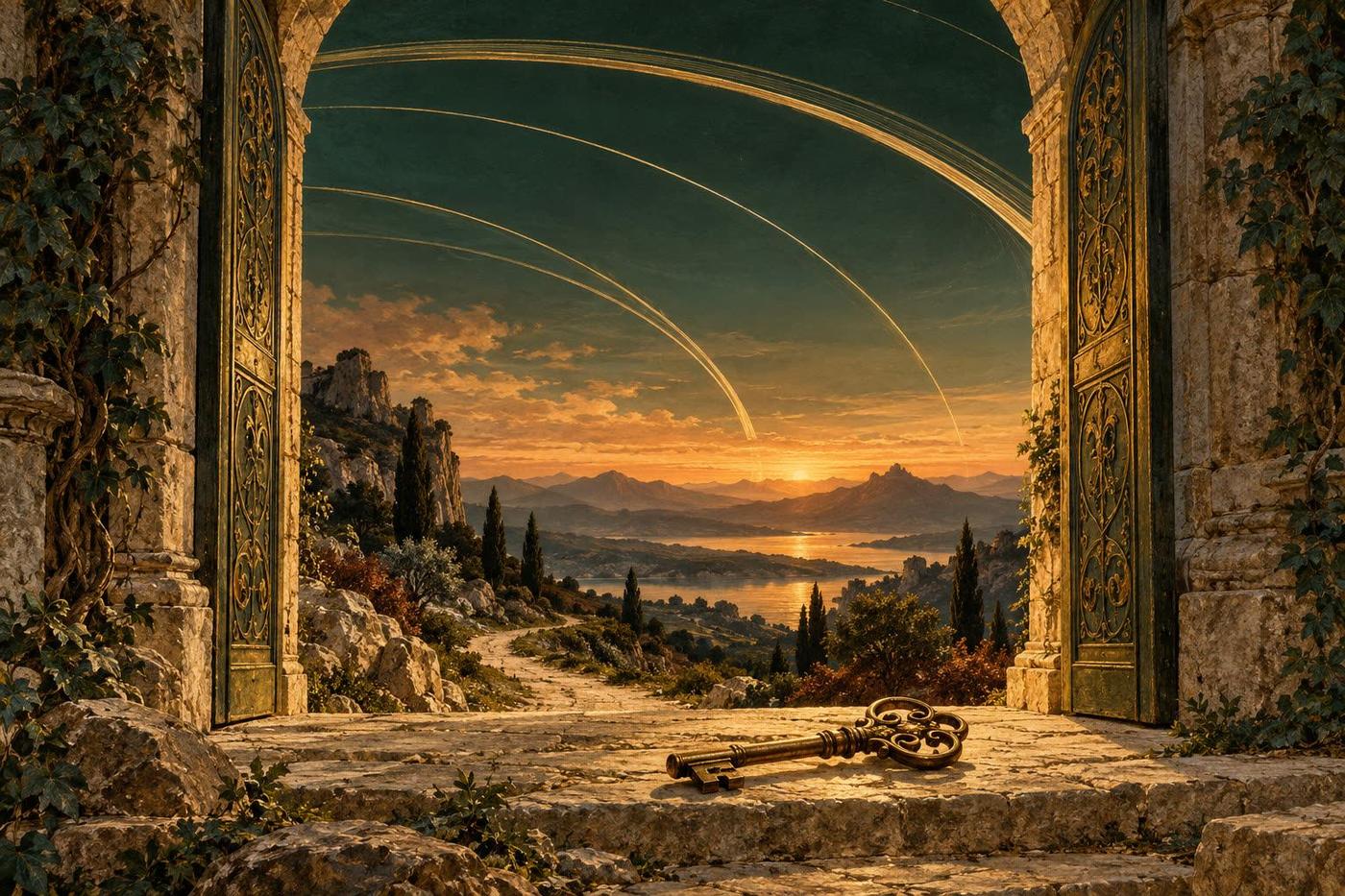
The right place and the right time, for one brief instant: that is holding the key to the great door of luck.
Antoine de Saint-Christophe, after Otto Brock
Why your birth date matters
Antoine was clear about it: to know where and when, you need your exact birth details, the date, the time and the place. They are what make it possible to calculate the Sun's return, the seasons, the favourable days.
And if you don't know your birth time? Other tools exist: your birth number and your personal magic square, which only need the date.
Nothing is chance
Antoine liked to close on this line by Jules Verne, which he often quoted:
It is false that chance plays on the human stage the part that shallow minds attribute to it. All facts are bound together by a mysterious link… a chain!
Jules Verne
And on this one by Heraclitus, twenty-six centuries old:
If you do not hope for the unhoped-for, you will not find it.
Heraclitus
The law of compensation
Finally, there is a rule Antoine repeated to everyone who came to see him, and which he had written at the top of his treatise on cosmobiology.
When luck starts turning your way, thanks to the birthday trip or the Star Gate, don't hesitate to give part of it to a charity. The cosmic law of compensation will give it back to you many times over.
Because money, he added, is a good servant but sometimes a bad master. And as the Buddha said, whom Antoine quoted: "Beings are the heirs of their deeds."
Lasting luck always belongs to those who know and who act.
Antoine de Saint-Christophe
Where to start? First choose the luck you have come for, then write to the workshop: we will tell you where, when and how.
Frequently asked questions
What is cosmobiology?
It is the name Antoine gives to the study of luck: a synthesis of knowledge and techniques that make it possible to optimise the relationship between the universe and human beings. The word brings together cosmos (the universe), bios (life) and logos (knowledge).
Who was Otto Brock?
A German cosmobiologist, considered by his contemporaries a well of knowledge. Antoine took up and continued his work on the place and the moment that set the tone of a year.
Do I need to know my birth time?
To know precisely where and when to act, yes: the date, time and place of birth. Without the time, other tools remain possible, such as the birth number or the personal magic square, which only need the date.
What is the law of compensation?
When luck starts turning your way, Antoine advises giving part of it to a charity: according to him, the cosmic law of compensation will give it back to you many times over.