Have you ever had the feeling that one decision, just one, switched your life onto another track?
A train caught at the last minute. An evening you nearly didn't go to. A move. A "yes" instead of a "no". Looking back, you can see the points very clearly. At the time, you felt nothing.
A French physicist has built a whole theory around this intuition. It's bold, debated, and it made a deep impression on me. I'll present it honestly, with what is solid in it and what remains a hypothesis.
The physicist who talks about timelines
His name is Philippe Guillemant. An engineer from the École Centrale, he made his career as a research engineer at the CNRS, the French national research centre, in Marseille, working in particular on artificial intelligence and the physics of complex systems.
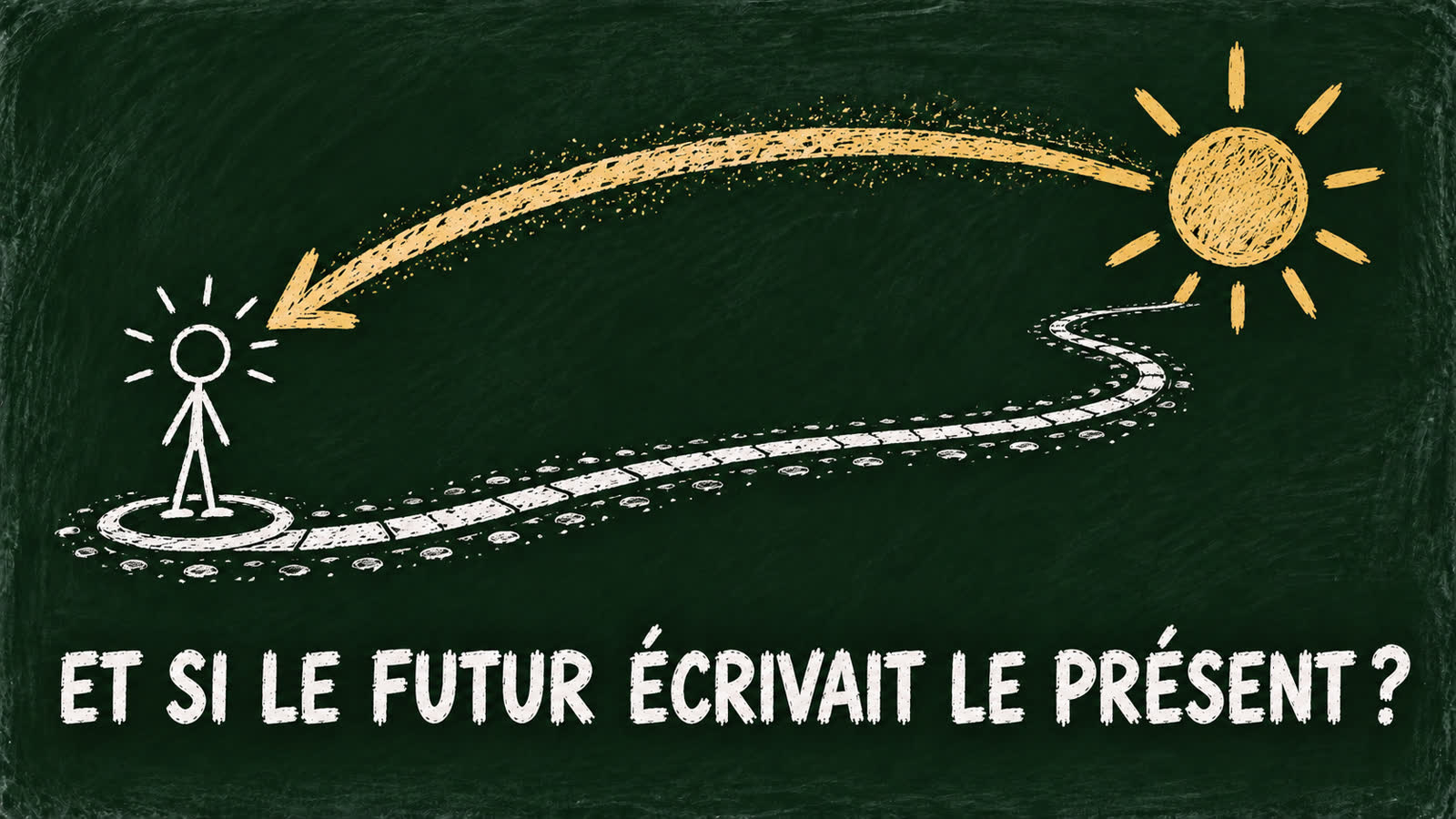
From 2010, with his book La Route du temps (The Road of Time), then La Physique de la conscience (The Physics of Consciousness), he developed an idea that strays far from the paths of classical physics: the future might influence the present.
I want to be clear from the start: the scientific community does not consider his theory proven. It's a hypothesis, defended by a serious researcher, that raises fascinating questions. I take it as such.
A future already sketched, but not fixed
Here's the idea, greatly simplified.
We usually picture time as an arrow: the past causes the present, which causes the future. Nothing exists until it has happened.
Guillemant suggests something else. According to him, the future may be partly realised already, like a landscape that exists ahead of us before we get there. And that landscape may hold several possible paths: timelines.
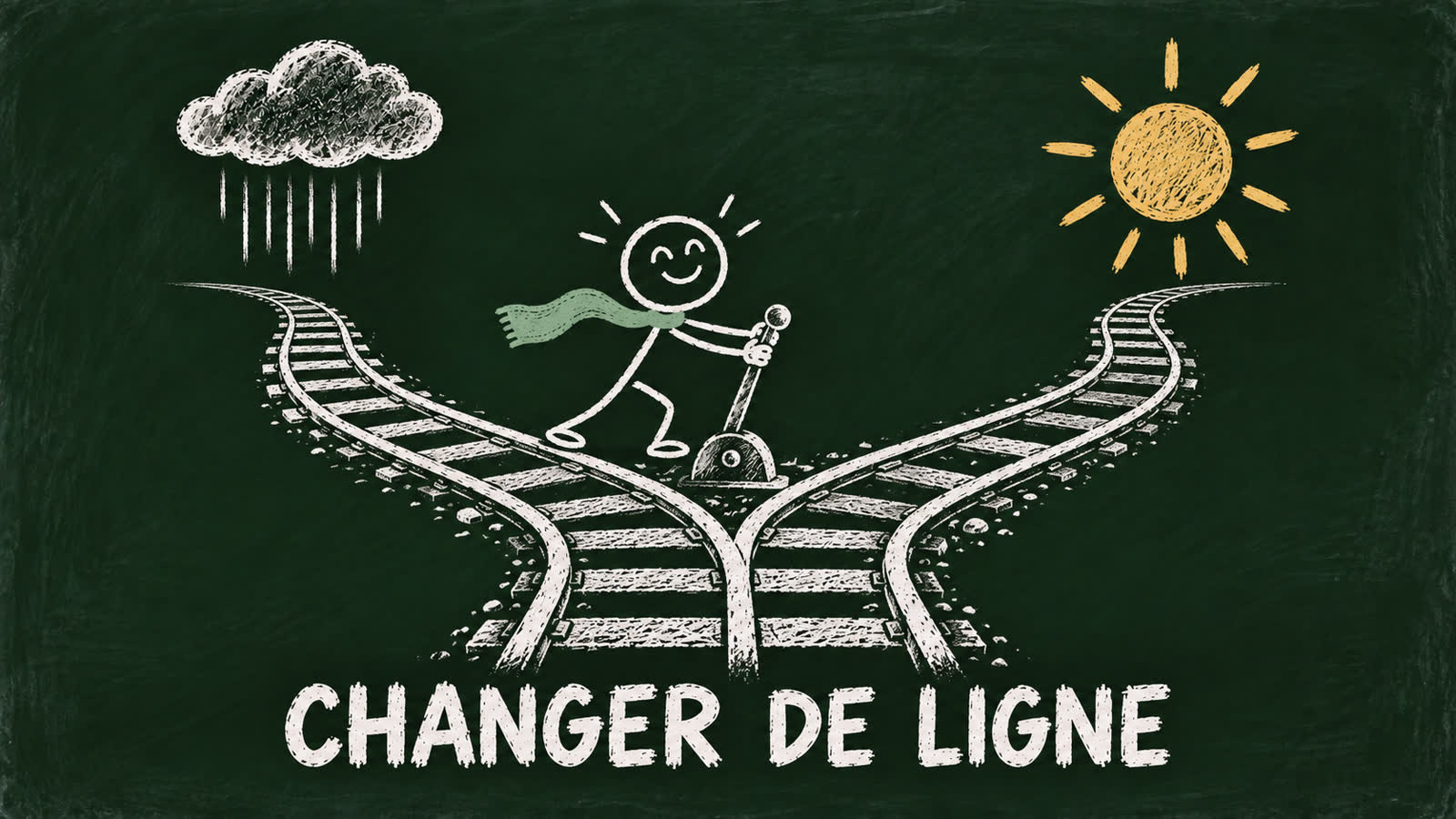
We would be on one of them. But our deepest intentions and our choices could, at certain moments, make us change line. Like a train passing over a set of points.
Synchronicities as signposts
What struck me most in his theory is the place he gives to synchronicities, those meaningful coincidences Jung already talked about.
For Guillemant, when we change timeline, reality has to "readjust". And these readjustments would leave traces: troubling coincidences, unlikely encounters, signs that repeat. Synchronicities would be, in a way, the signposts showing that a set of points has just been crossed.
You don't have to believe it. But admit it's an elegant way of looking at your life.
What I do with it, in practice
I'm not a physicist. I'm not going to settle the debate on the nature of time. But in twenty years of practice, I've made one simple observation: people who change their lives almost always go through a change of place, rhythm or company.
That's where Guillemant's theory meets, in its own way, what astrology has taught for centuries. There are moments when the points are easier to pass.
1. The moment. Your solar return is, every year, a natural set of points: the second your year starts again. What you do, where you are, what you decide at that moment weighs more than usual.
2. The place. Changing city for your birthday is, quite literally, putting yourself on another track: other streets, other faces, other chances. That's the whole idea of the birthday trip.
3. The intention. Guillemant insists on this point: you don't change line by vaguely thinking "I'd like things to change". It takes a clear intention, and actions that go in the same direction.
An intention without action remains a wish. An action without intention remains restlessness. The points are crossed when the two go in the same direction.
Three sets of points you can cross this month
No need to wait for a physical theory to try. Here are three gestures I recommend.
Change a travel habit. Take another route to work, another café, another bakery. It sounds trivial. But the psychologist Richard Wiseman showed that lucky people multiply precisely these small variations, and so come across more opportunities. I talk about it in the newspaper experiment.
Say yes to an invitation you would have turned down. A party, a talk, a dinner. The points often hide in places you didn't want to go.
Write your ideal timeline. A year from now, on your next birthday, where are you? With whom? What are you doing? Write it in the present tense, on one page. Reread it on the day of your solar return.
What I won't tell you
I won't tell you that you can "choose your reality" at the snap of your fingers. I won't tell you that quantum physics proves anything is possible. That would be dishonest, and it isn't what Guillemant himself says.
What I will tell you is this: certain moments of the year, certain places, certain decisions weigh more than others. Spotting them is putting the odds on your side. That's my job.
Now it's your turn
Think back to the last set of points in your life. The moment everything changed direction. Where were you? When was it? Was it close to your birthday?
Check whether it was near your birthday. Sometimes it's unsettling. If you want to know when and where your next set of points lies, the workshop can work it out for you.
Frequently asked questions
Who is Philippe Guillemant?
A French engineer and physicist, a graduate of the École Centrale, who made his career at the CNRS. He is the author of La Route du temps and La Physique de la conscience, in which he develops his theory of timelines.
What does his theory of timelines say?
That the future may already be partly realised in the form of several possible paths, and that our intentions and choices could move us from one to another. It's a hypothesis, not a proven theory.
What does it have to do with synchronicities?
For Guillemant, synchronicities could be traces of changes of timeline: meaningful coincidences that accompany life's forks in the road.
What does it have to do with astrology?
Antoine sees in it an echo of the idea that certain moments, such as the solar return, and certain places, such as those of the birthday trip, are more powerful sets of points than others.