Let me tell you about an experiment that fits on one page of a newspaper.
It was carried out by Richard Wiseman, a British psychologist and professor at the University of Hertfordshire. Wiseman had an obsession: understanding why some people are lucky and others aren't.
For years, he placed ads in the press: "Do you consider yourself particularly lucky, or particularly unlucky? Contact me." Hundreds of people answered. He interviewed them, followed them, tested them.
And one day, he handed them a newspaper.
Count the photos
The instruction was simple: look through this newspaper and count the number of photographs.
The volunteers get to work. Page after page, they count. The unlucky ones take, on average, about two minutes.
The lucky ones take a few seconds.
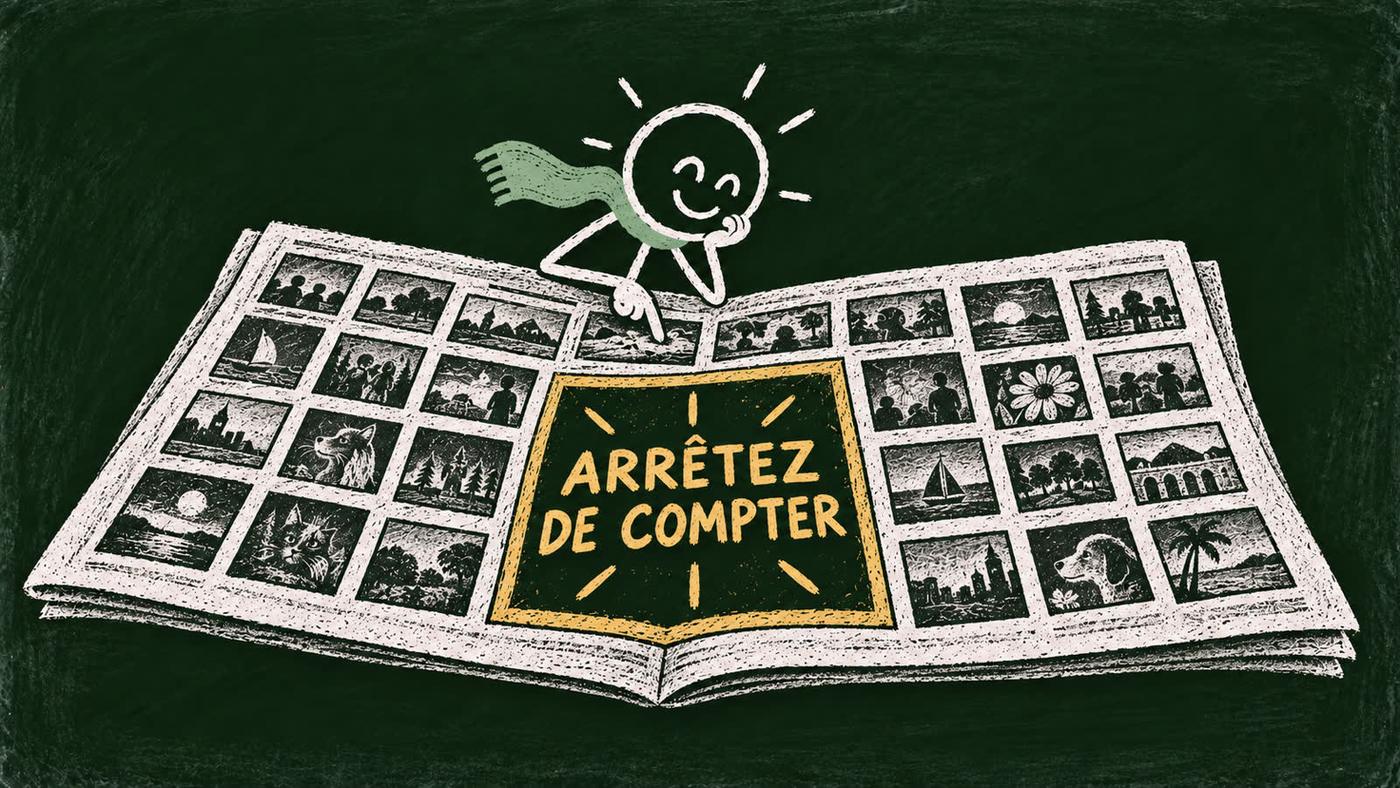
Why? Because on the second page of the newspaper, Wiseman had slipped in a large message, in letters several centimetres high:
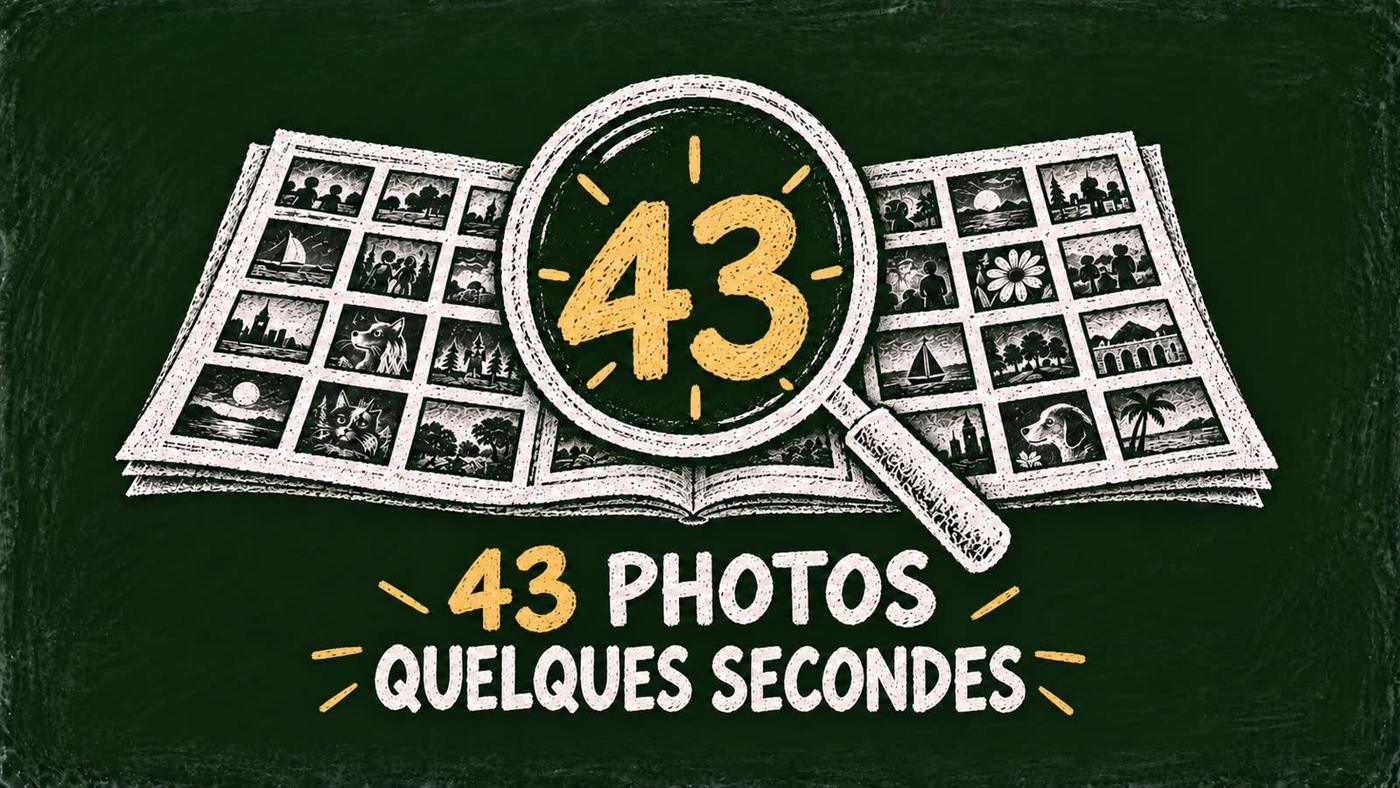
"Stop counting. There are 43 photographs in this newspaper."
The lucky ones saw it. The unlucky ones, focused on their task, went right past it.
The second message
Wiseman had planned a second surprise, halfway through the newspaper. Another message, just as visible:
"Stop counting. Tell the experimenter you have seen this and receive £250."
Once again, many of the unlucky ones missed it. They were too busy looking for photos to see the money being offered to them.
Read that sentence again. It sums up thousands of lives.
Luck is a matter of attention
Wiseman's conclusion is crystal clear: unlucky people don't lack opportunities, they don't see them.
He took the analysis further. He found that unlucky people are on average more tense, more anxious. And anxiety narrows the field of vision. In another classic psychology experiment, when people are asked to stare at a dot in the centre of a screen, those who are relaxed notice much better what appears at the edges. The anxious only see the centre.
Lucky people are more relaxed, more open, more curious. They see the centre and the edges. They notice the message, the interesting person at the party, the job ad in the corner of the newspaper.
The School of Luck
Wiseman didn't stop at the observation. He wanted to know whether people could learn to be lucky.
He created what he called a Luck School. For a month, volunteers followed simple exercises designed to help them adopt the habits of lucky people. I describe its four main principles in the 4 principles of lucky people.
The result, according to Wiseman: at the end of the month, a large majority of participants, about four out of five, said they felt luckier and happier. Those who thought they were cursed had begun to see their lives differently.
I won't tell you this is final proof. Wiseman himself presents his work with caution. But the idea is powerful: luck isn't only a gift, it's also a skill.
Three of Wiseman's exercises, my way
Here are three exercises inspired by his work. I practise them, and I recommend them to my clients.
1. The luck journal. Every evening, note one single good thing that happened to you during the day, however tiny. After three weeks, your brain starts looking for it on its own. And what you look for, you end up seeing.
2. The change of routine. Once a week, do something differently: another route, another restaurant, a conversation with someone you would never have approached. Wiseman reports that one of his volunteers set himself a rule at every party: talk to one person wearing a colour he had chosen in advance. Just to break out of his habits.
3. The page-two question. When you're focused on a problem, regularly ask yourself this question: what am I not seeing right now, because I'm too focused? It's the question that makes you see the message.

What astrology adds
You might think Wiseman and astrology are opposites. One talks about attention, the other about stars. I think they complement each other.
Wiseman explains how to see luck. Astrology helps you know when and where to look. There are days when the Moon crosses your luck point, periods when Jupiter activates your chart, places where your favourable planets are brought forward. On those days, the page-two message is perhaps a little bigger than usual.
That's exactly why I built the tools in your space: so that you know which days to open your eyes a little wider. Your favourable days are a good place to start.
Now it's your turn
Tonight, before you go to sleep, write down one good thing that happened to you today. Just one.
Tomorrow, take a different route.
And this week, when you're absorbed in a task, look up and ask yourself what you're failing to see.
Then get your free birth chart.
Frequently asked questions
Who is Richard Wiseman?
A British psychologist, professor at the University of Hertfordshire, author of The Luck Factor, devoted to his research on lucky and unlucky people.
What is the newspaper experiment?
Volunteers had to count the photos in a newspaper. A large message on the second page gave the answer: there were 43 photos. People who described themselves as lucky noticed it far more often than the others.
Why don't unlucky people see opportunities?
According to Wiseman, they are on average more tense and more focused on their task, which narrows their attention to what is happening around them.
Can you learn to be lucky?
Wiseman tested it with his Luck School: after a month of exercises, a large majority of participants said they felt luckier and happier.