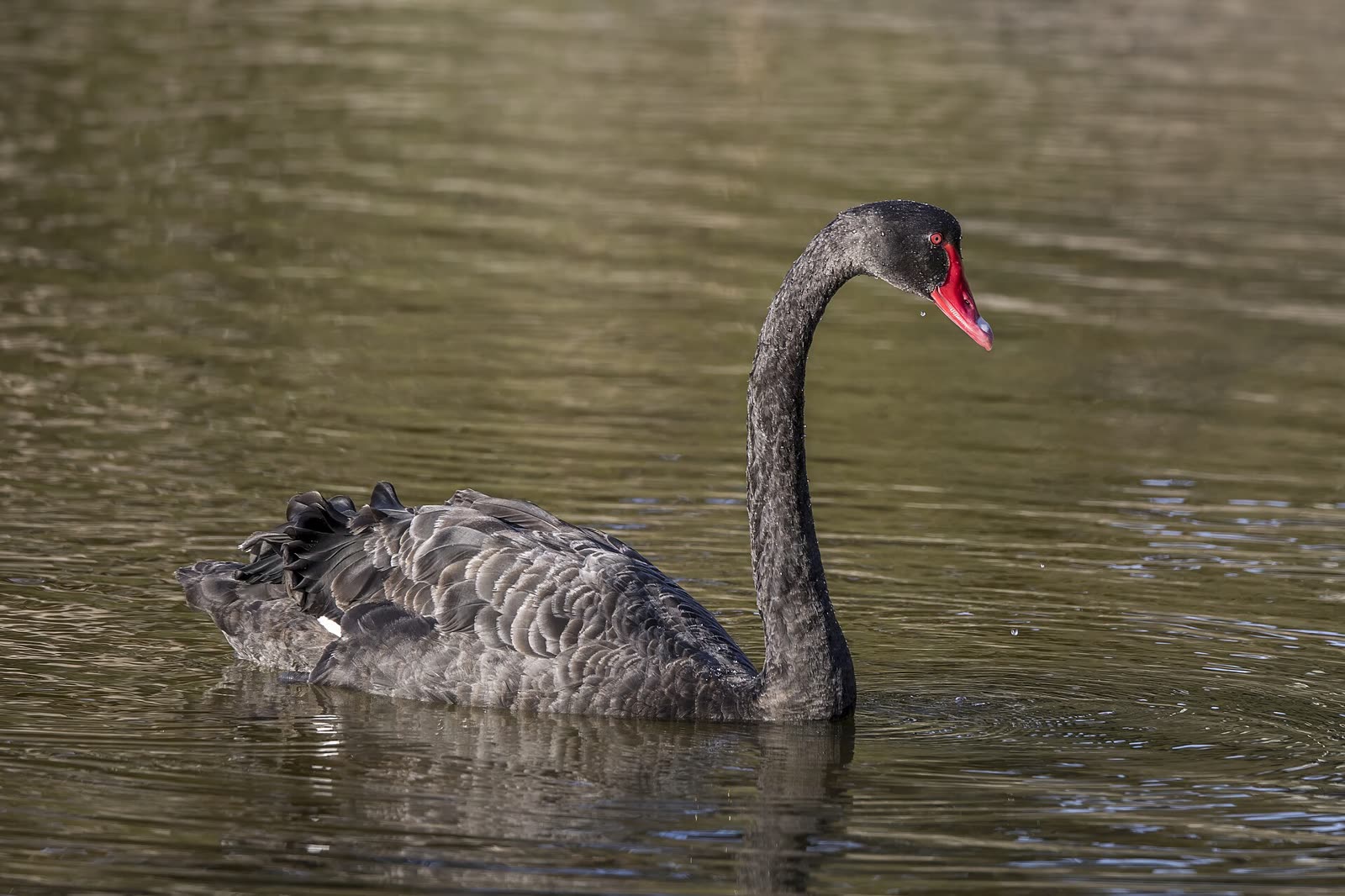
For centuries, Europeans were absolutely certain of one thing: all swans are white.
They had seen thousands of them. Not a single exception. It was a truth of experience, as sure as the sunrise.
Then, at the end of the 17th century, Dutch navigators landed in Australia. And they saw, gliding along a river, a black swan.
A single sighting was enough to overturn centuries of certainty.
Nassim Taleb's idea
In 2007, a former trader turned philosopher, Nassim Nicholas Taleb, published a book that would become a worldwide bestseller: The Black Swan.
He calls a "black swan" an event with three characteristics:
- It is unpredictable: nobody saw it coming.
- It has an enormous impact: it changes everything.
- Afterwards, we tell ourselves we could have predicted it.
Taleb shows that the history of the world, and our personal lives, are shaped far more by these rare events than by routine. A crisis, an invention, a war. And, on our own scale: a meeting, a phone call, a book opened at random.
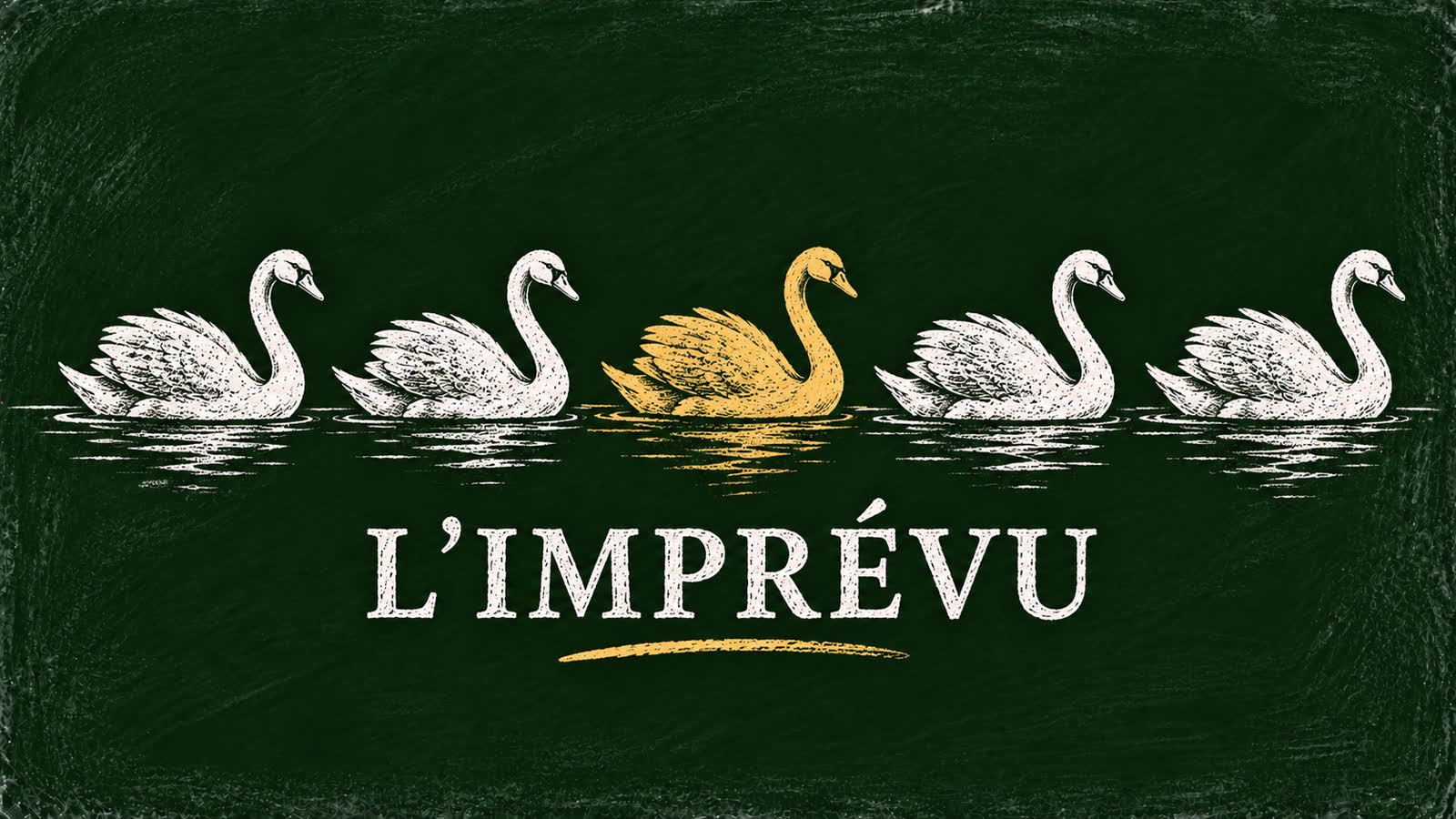
The good black swans
We often talk about negative black swans: crises, accidents. But Taleb insists on a point that struck me: there are positive black swans too.
The meeting that becomes the love of a lifetime. The message sent without much hope that leads to a project. The trip decided at the last minute. The friend of a friend who happens to know the right person.
Think of the three or four biggest happy turning points in your life. How many were planned? I ask this question often. The answer is almost always the same: none.

You don't predict. You position yourself.
This is where Taleb becomes really useful.
Since black swans can't be predicted, there's no point trying. On the other hand, you can position yourself so as to be exposed to the good ones and protected from the bad ones.
He calls this optionality: multiplying the situations where you risk little and the upside can be large. A coffee with an interesting person costs only an hour. It can change a career. Sending a project to ten people costs an evening. A single positive answer can change everything.
And he offers a simple image: the barbell strategy. On one side, plenty of security: a solid base, a stable income, a protected life. On the other, a small share of your time and energy devoted to small, bold bets, many of them, cheap, with enormous potential. What you avoid is the middle: big risks that don't bring in much.
What astrology adds to Taleb
Taleb is wary of forecasts, and he's right: nobody can predict which black swan will arrive.
But there's a question his theory leaves open: when should you multiply the small bets? If you can't try everything all the time, you have to choose moments.
That's exactly where I come in. Astrology doesn't say what will happen. It points to the periods when the wind is at your back: the months when Jupiter activates your chart, the weeks of your solar return that highlight one area of life or another, the favourable days to propose, send, meet.
Taleb tells you: multiply the small bets. I tell you: make more of them when the sky is on your side.
Your personal barbell
Here's an exercise I often give.
On the security side, list what must stay stable in your life this year: your work, your health, your family, your savings. You leave those alone.
On the boldness side, list ten possible small bets for the next three months. Actions that cost little and can bring a lot:
- write to someone you admire;
- put forward a project, even a small one;
- accept an invitation you would have turned down;
- publish what you know how to do;
- go away for two days to a city you don't know;
- sign up for a class, a club, a group;
- get back in touch with someone you've lost sight of.
Then spread those ten bets over your best days. It's simple, and remarkably effective.
What I won't tell you
I won't tell you which black swan is going to arrive. Nobody can, and be wary of anyone who claims to.
Nor will I give you investment advice: it isn't my job, and Taleb's idea can't be reduced to the stock market. What I do is help you choose the moments when it's worth daring.
Now it's your turn
Write down your ten small bets. Choose one. Do it this week.
Then look at your favourable days for the month, and place the other nine on them.
Frequently asked questions
What is a black swan according to Taleb?
An unpredictable, high-impact event that we explain afterwards as if it had been predictable. The term was popularised by Nassim Nicholas Taleb in his 2007 book The Black Swan.
Are there positive black swans?
Yes: a decisive meeting, an unexpected opportunity, an idea that changes everything. Taleb invites us to expose ourselves to them rather than try to predict them.
What is optionality?
Multiplying the situations where you risk little and the upside can be large, so as to benefit from unexpected favourable events.
What is the barbell strategy?
Combining a very safe base with a small share of bold bets, while avoiding medium risks. Applied to life, it means protecting what matters most while multiplying small attempts.