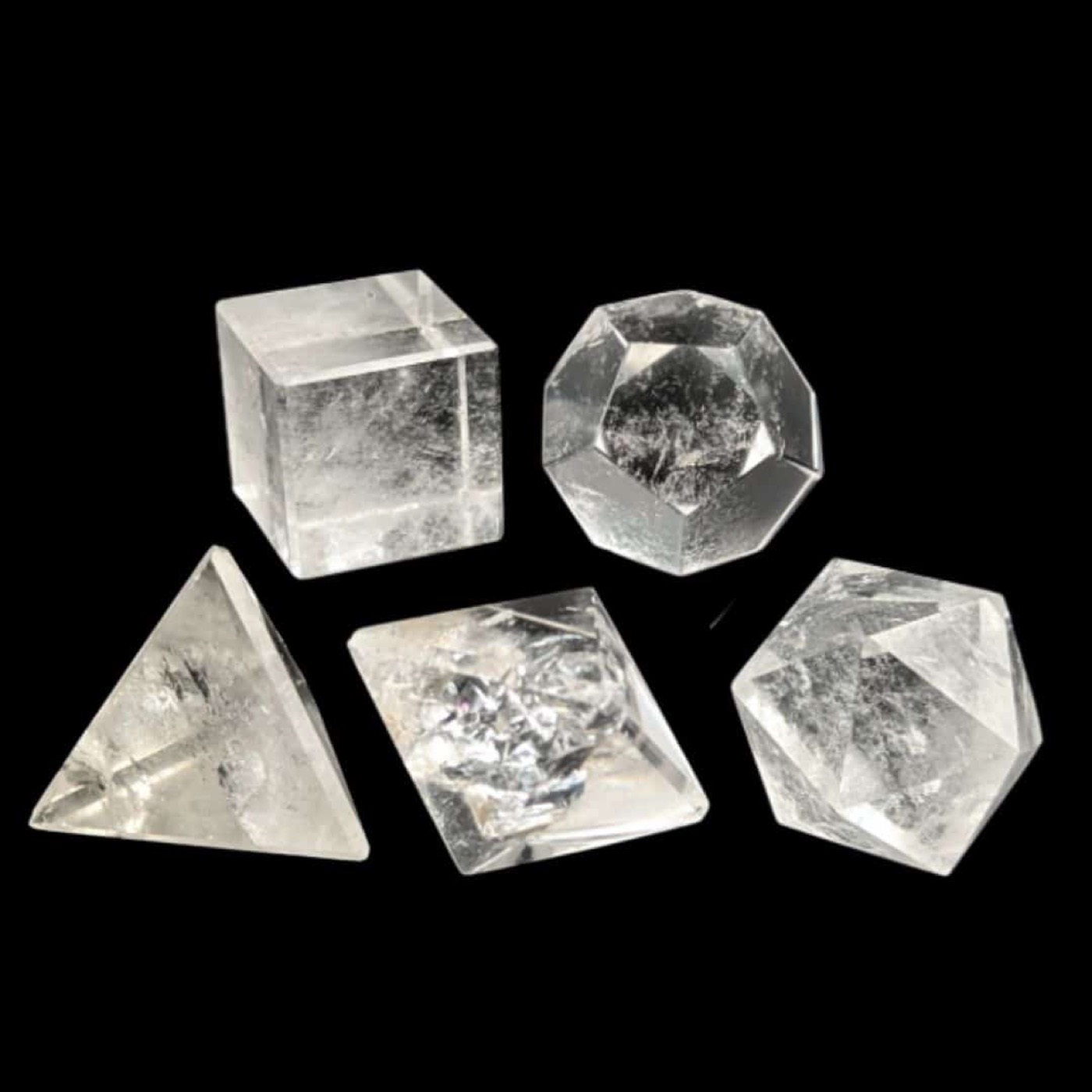
It is not an amulet. It is not magic. It is not for the superstitious. It works all the time.
Antoine de Saint-Christophe
Take triangles that are all identical, squares that are all identical, or pentagons that are all identical. Try to put them together to close a volume, with the same number of faces at every corner.
You will only manage it in five ways. Not six, not ten: five. It is a law of geometry, as firm as two plus two makes four. These five volumes are called the Platonic solids.
Five shapes, and not one more
The Greeks knew them. The mathematician Euclid, around 300 BC, devoted the last book of his Elements to proving that only five can exist. It is the crowning moment of all ancient geometry.
| Solid | Faces | Vertices | Edges | Element |
|---|---|---|---|---|
| Tetrahedron | 4 triangles | 4 | 6 | Fire |
| Hexahedron (cube) | 6 squares | 8 | 12 | Earth |
| Octahedron | 8 triangles | 6 | 12 | Air |
| Icosahedron | 20 triangles | 12 | 30 | Water |
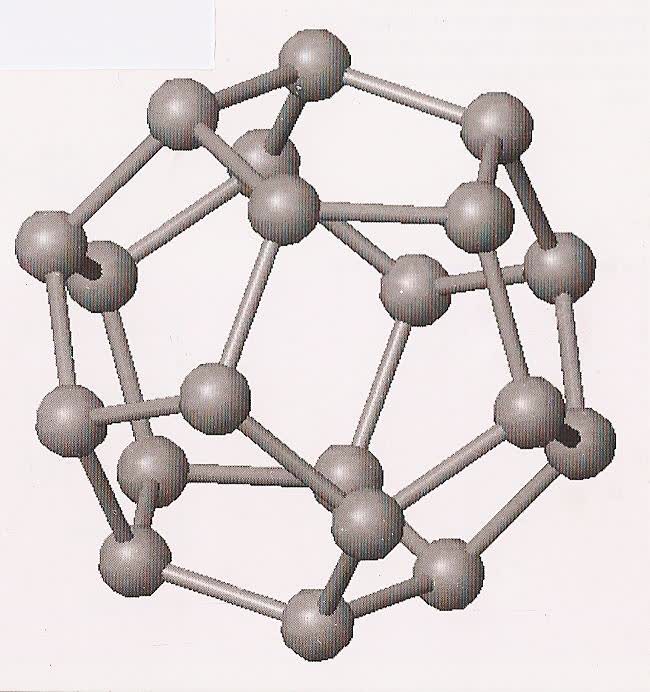
| Dodecahedron | 12 pentagons | 20 | 30 | Ether |

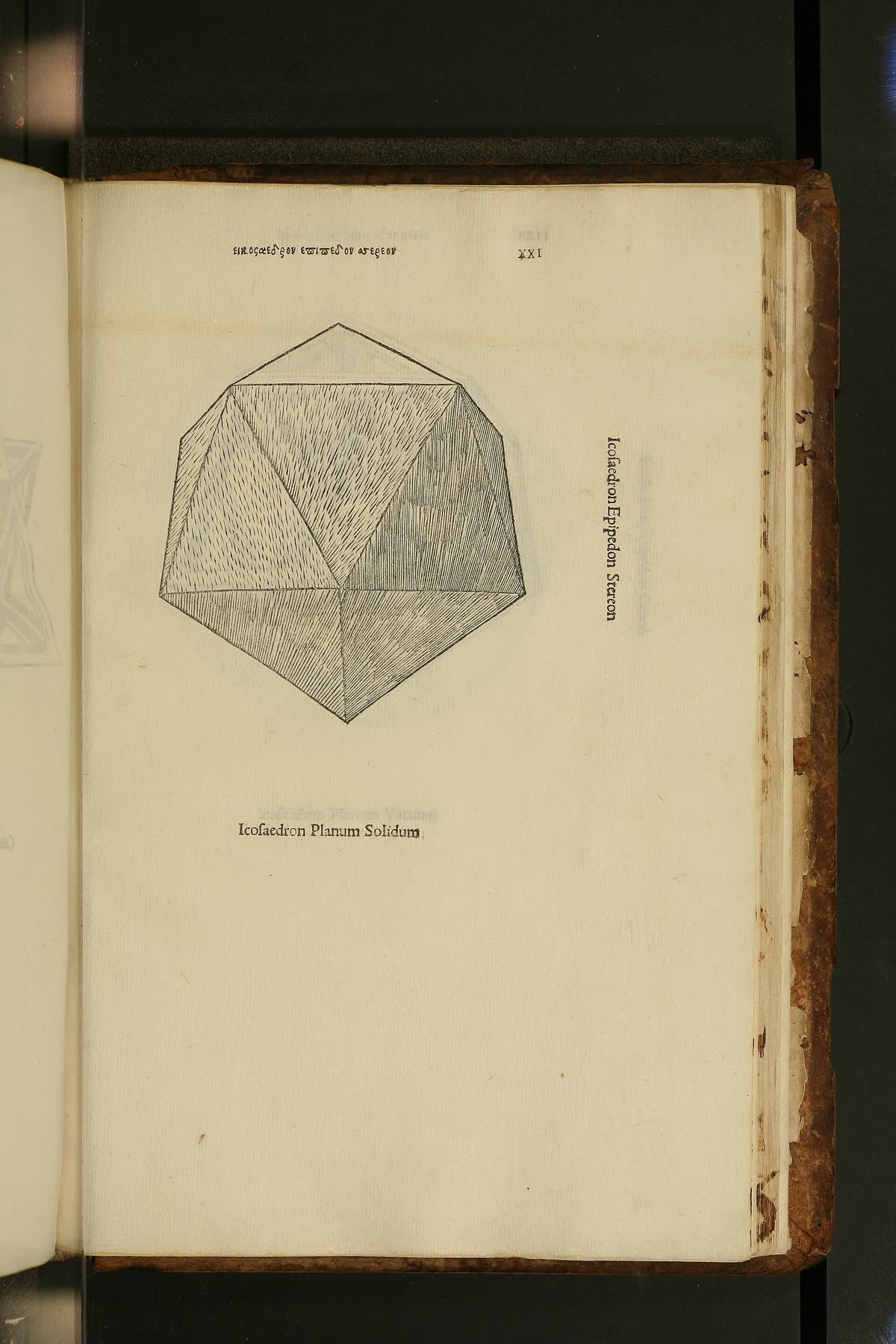
Plato and the bricks of the world
It was Plato who gave them their meaning. In the Timaeus, he explains that the world is made of four elements, and that each one has its shape:
- fire, which burns and stings, is made of tetrahedra, the sharpest shape;
- earth, stable and heavy, is made of cubes, which stack without slipping;
- air is made of octahedra;
- water, which flows and rolls, is made of icosahedra, the roundest shape.
And the fifth, the dodecahedron, Plato reserved for the universe as a whole. The thinkers who followed made it the ether, the quintessence, the fifth essence. That is why the dodecahedron is also called the shape of the cosmos.
From Leonardo da Vinci to Kepler
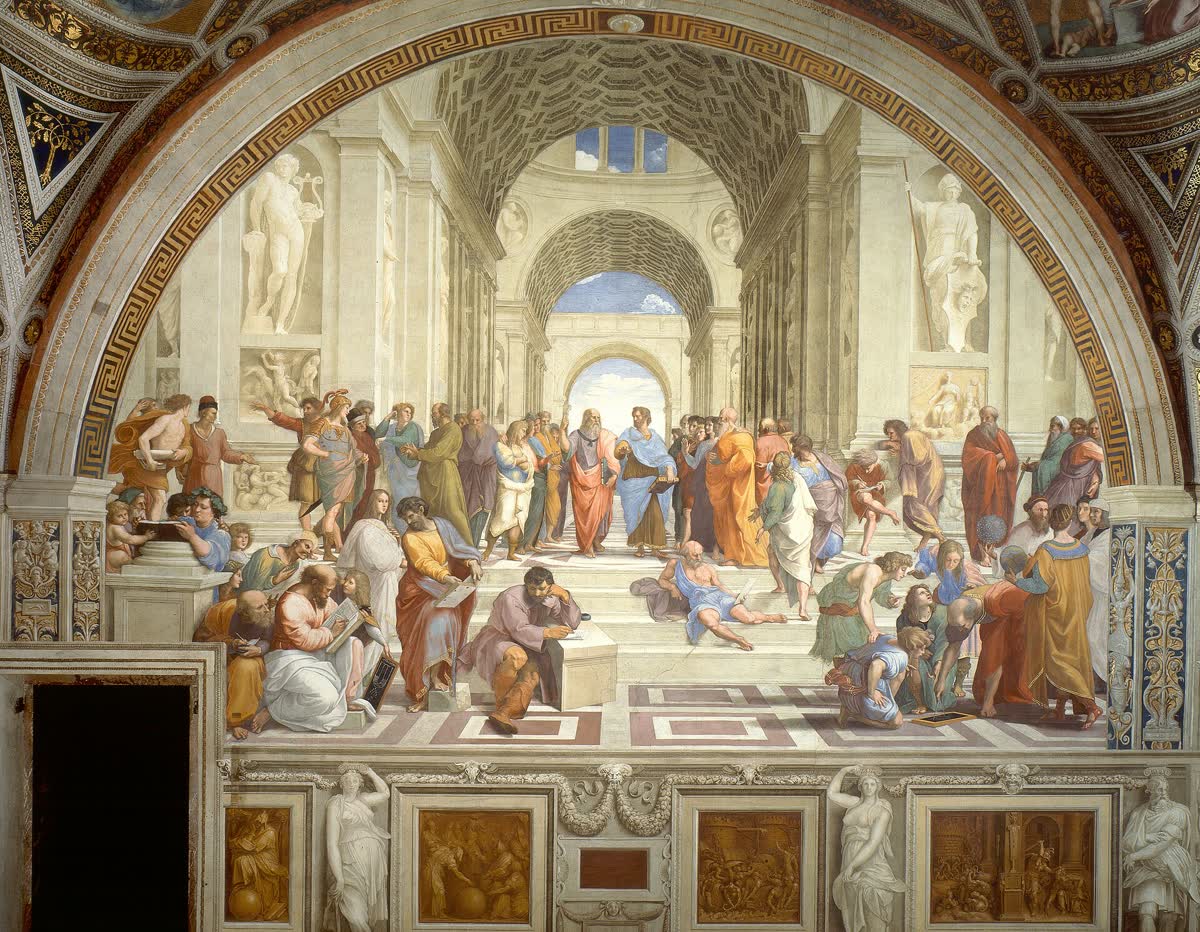
Two thousand years later, the Renaissance rediscovered the five solids. In 1509, the mathematician monk Luca Pacioli published De divina proportione, the treatise on the divine proportion, the golden ratio. The illustrations were by a friend: Leonardo da Vinci. They are the engravings you see on this page.
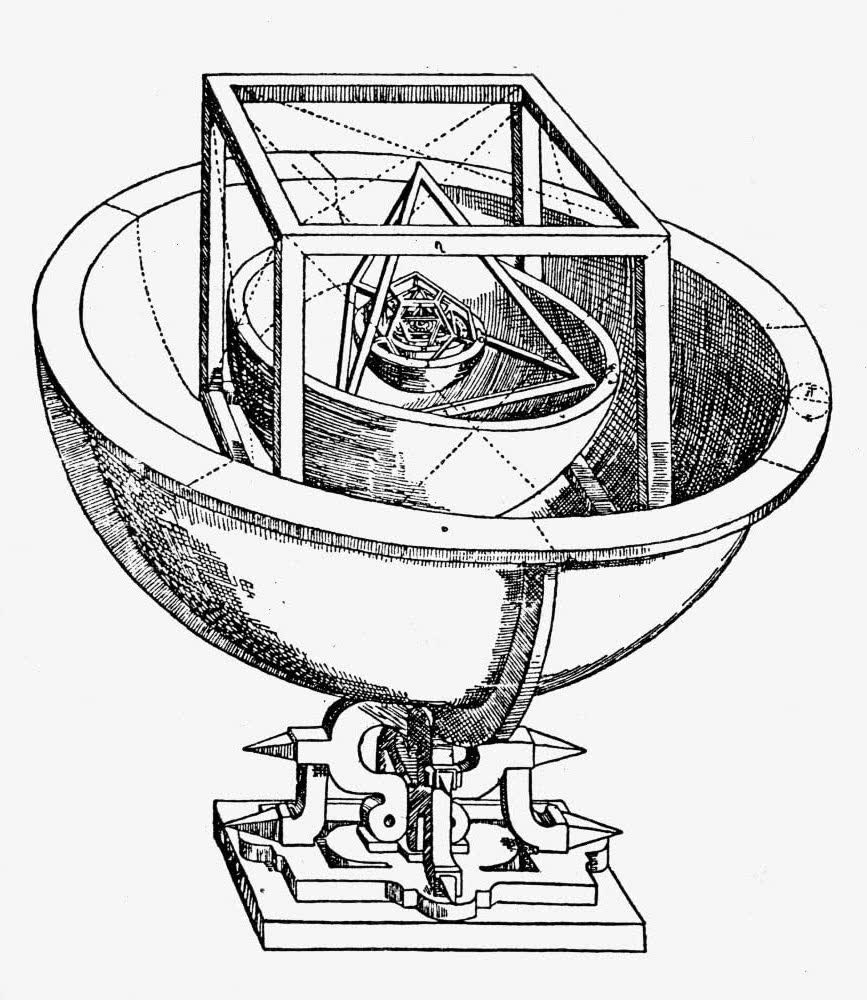
In 1596, the astronomer Johannes Kepler went further. He nested the five solids inside one another, and believed he saw in them the secret plan of the solar system, the spacing between the planets' orbits.
One shape for each Moon window
Antoine linked four of these solids to the four Moon windows. Each lunar cycle, about one week per window, a shape takes over. Each window has its colour, the one on the calendar he kept on the workshop wall.
| Window | Colour | Solid | Element | For |
|---|---|---|---|---|
| New Moon → first quarter | Yellow | Tetrahedron | Fire | Drive, vitality, starting again |
| First quarter → full Moon | Orange | Icosahedron | Water | Love, attraction, understanding |
| Full Moon → last quarter | Green | Octahedron | Air | Learning, succeeding, persuading, convincing |
| Last quarter → new Moon | Red | Cube | Earth | Material things, what must last |
| All the time | Blue | Dodecahedron | Ether | It harmonises the whole |
For Antoine, the solid gives your wish its shape, and the window gives it its moment. A wish about love waits for the icosahedron and the waxing Moon; a project to build waits for the cube and the waning Moon. And the dodecahedron works continuously, all year round.
The right solid: Antoine's rules
A Platonic solid is not an ornament. Antoine set four requirements.
- A hollow structure. Edges, not a solid block. It is the shape that acts: shape waves.
- Spheres at the vertices. Like the old spark gaps in the oscillating circuits of Lakhovsky, the scientist who also inspired the resonance table.
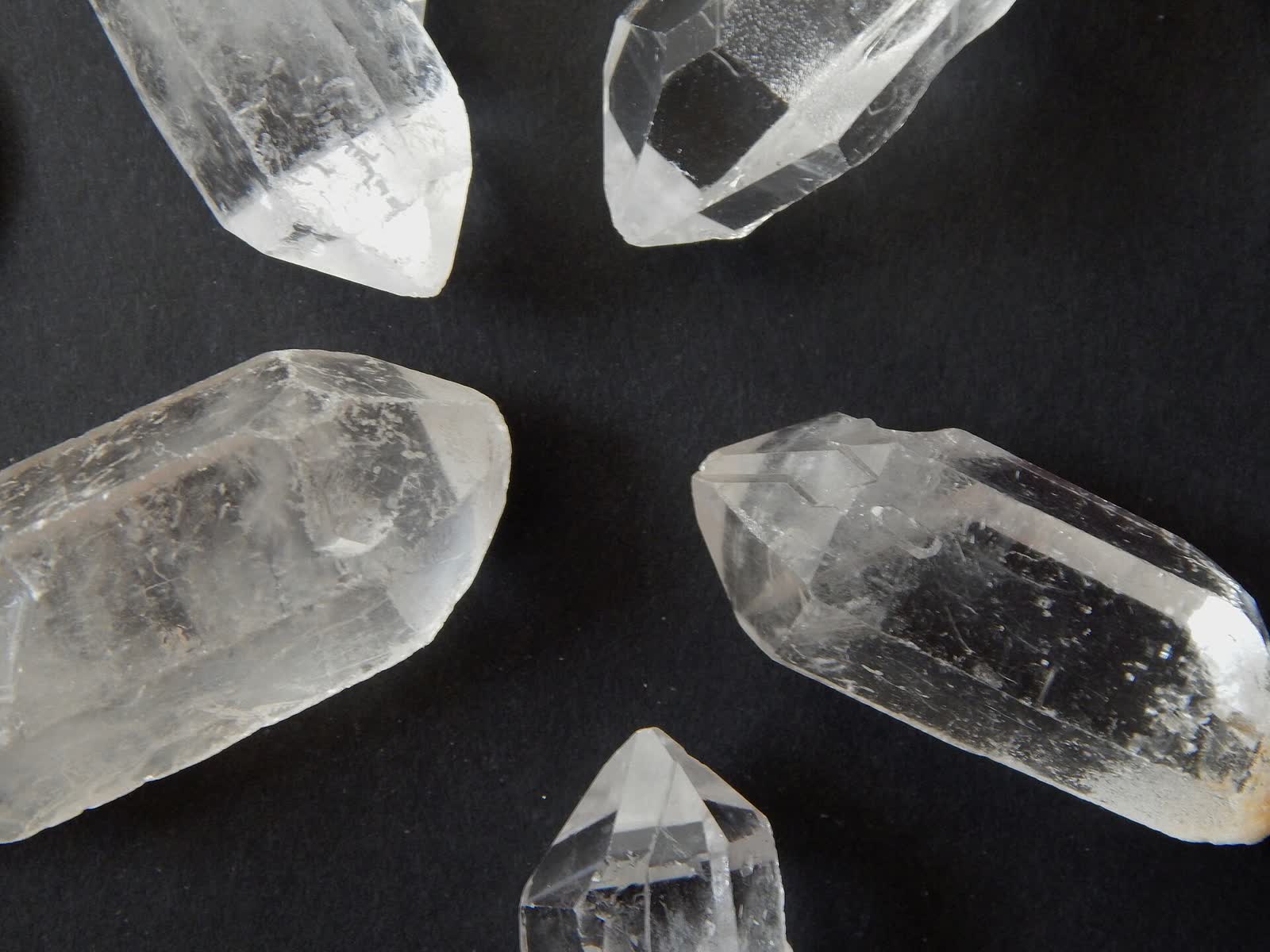
- Neutral rock crystal, never worn before. Antoine held to this rule: a stone keeps the memory of what it has been through.
- Perfect regularity. An irregular solid, he said, does not work.
The workshop's solids are about 50 millimetres high. Antoine oriented them east-west, one per room, like the dodecahedron.
The glass of water of the four elements
Antoine also passed on a very simple practice, taken from tradition. Each day, you choose the solid of the day's element, according to the sign the Moon is passing through:
| The Moon is in | Element | The solid in the glass |
|---|---|---|
| Aries, Leo, Sagittarius | Fire | Tetrahedron |
| Taurus, Virgo, Capricorn | Earth | Cube |
| Gemini, Libra, Aquarius | Air | Octahedron |
| Cancer, Scorpio, Pisces | Water | Icosahedron |
You place the solid in a glass of water for 24 hours, then drink the water while holding a dodecahedron in your hand.
In the workshop
In Herstal, Antoine places the solid of the current window on his orgone chimney before entrusting it. Your wish thus receives its shape and its moment.
To go further, discover the square of the Earth, the Star of Brahma and the dowsing pile.
Tell the workshop what you wish for: we will tell you which window is opening and the solid that goes with it.
Frequently asked questions
What are the five Platonic solids?
The tetrahedron (fire), the cube (earth), the octahedron (air), the icosahedron (water) and the dodecahedron (ether). They are the only solids whose faces are all identical regular polygons, with the same number of faces at each vertex.
Why only five?
It is a law of geometry, proved by Euclid in the last book of his Elements: it is impossible to build a sixth.
Which solid for which Moon window?
Antoine links the tetrahedron to the yellow window, the icosahedron to the orange, the octahedron to the green and the cube to the red. The dodecahedron, blue, harmonises the whole all the time.
How do you choose a good solid?
According to Antoine: a hollow structure, spheres at the vertices, neutral rock crystal never worn before, and perfect regularity.
How does Antoine use them?
He places the solid of the current window on his orgone chimney before entrusting it: your wish thus receives its shape and its moment.