What you think goes out into infinity, and your table gives your wish a shape.
Antoine de Saint-Christophe
In the Herstal workshop, some instruments impress by their size: the copper columns, the piles, the Commodore. And one impresses by its silence.
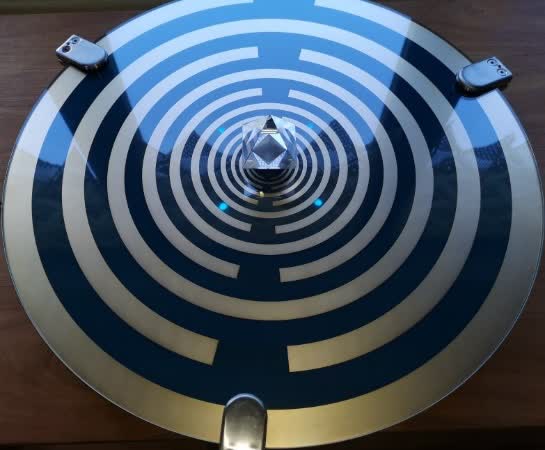
A wooden table. On it, a large glass disc. Under the glass, a golden antenna made of circles that fit inside one another without ever closing. And in the centre, a small crystal pyramid that floats, two centimetres above its base, slowly turning on itself.
This is the resonance table.
Lakhovsky's antenna
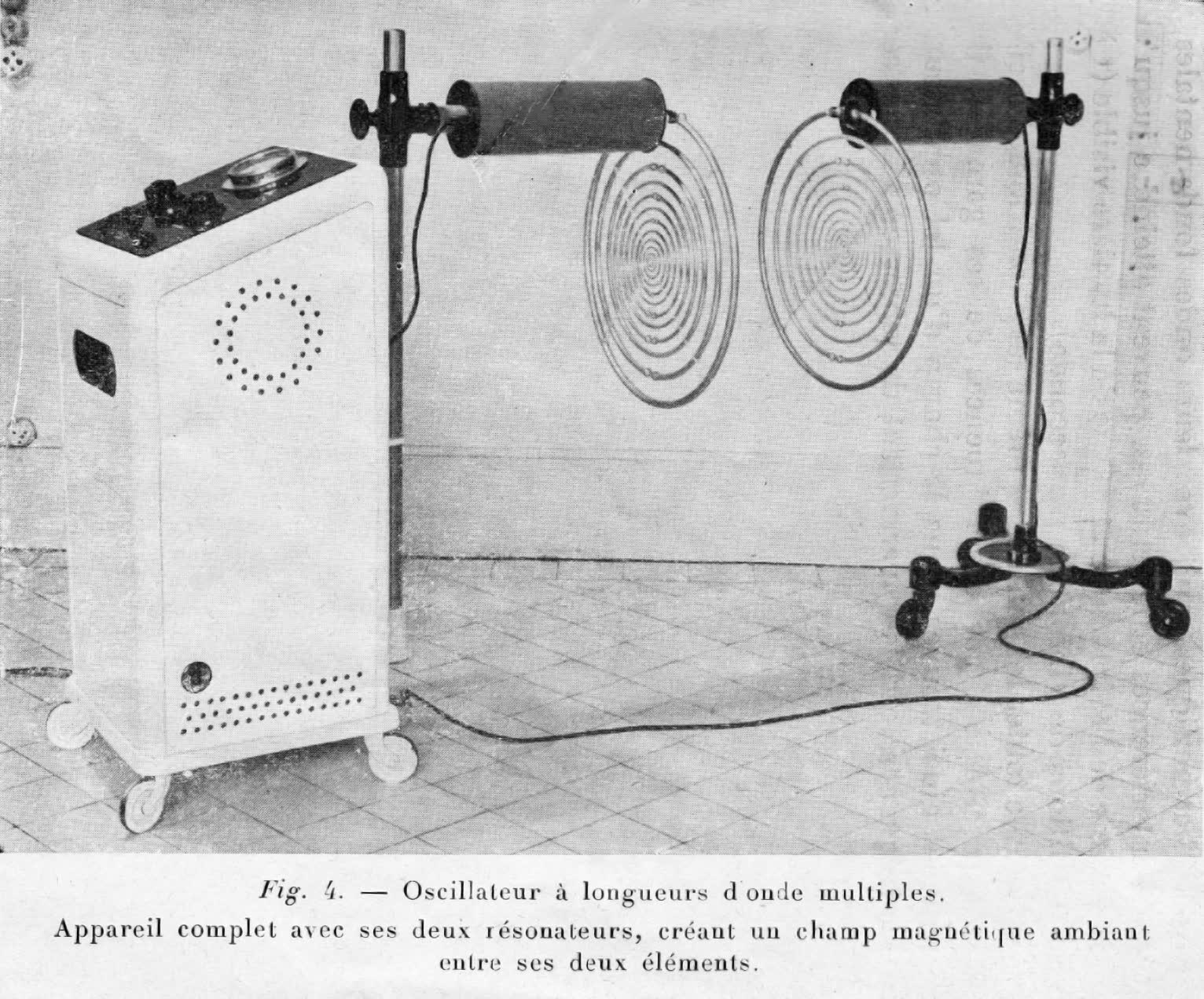
The heart of the table is an antenna whose shape comes from a Russian-born engineer who settled in France, Georges Lakhovsky (1869-1942). Between the wars, he became fascinated by the idea that everything alive oscillates, and that you can enter into resonance with these oscillations. In 1925 he published Le Secret de la vie ("The Secret of Life"), and developed a device that became famous: the multiple wavelength oscillator.
His visual signature is these open concentric rings, nested inside one another, each interrupted by a small gap. A shape that never closes: energy circulates through it without being shut in.
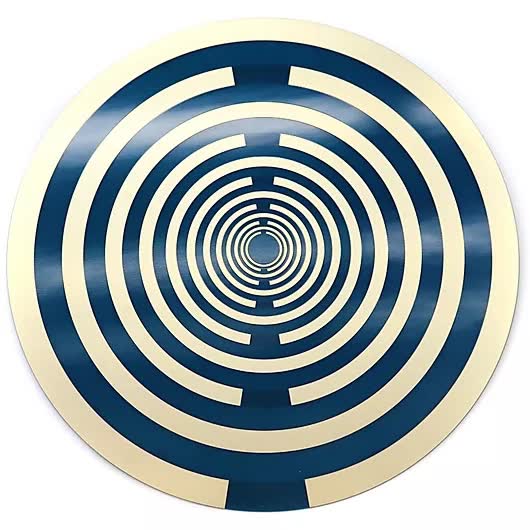
Antoine uses an antenna of this type, gold-plated, 500 millimetres in diameter.
How Antoine builds his table
Antoine set two conditions: the resonance table must stand on a wooden table, and it works within a complete orgone station, with an outdoor antenna and a relay. That is why he offered to guide those who wanted to build one.
The disc
- The antenna is set between two translucent glass discs, 4 millimetres thick and 500 millimetres in diameter, ground and polished.
- The two panes are held by three glass clamps placed in an equilateral triangle: the first opposite the antenna's outer oscillator, the other two 41.5 centimetres away on either side.
- The table is laid perfectly flat, with the outer oscillator oriented 22.5 degrees to the right of magnetic north.
The floating pyramid
- In the centre of the disc, you place a magnetic levitation platform, able to carry 500 grams, powered by a small adapter.
- On the floating magnet, you place a double pyramid of translucent crystal with a 50-millimetre base, the one Antoine calls the Bühem pyramid, after Bernard Charles de Bühem, with whom he wrote the encyclopaedia Le Mystère dévoilé ("The Mystery Unveiled").
- You adjust the levitation so that the pyramid floats two centimetres up and turns in the chosen direction.
Antoine warned that this adjustment is delicate and sometimes takes several tries. He advised slipping a protective glass between the floating magnet and the base, and keeping a few spare pyramids: in a power cut, the floating one can fall and break.
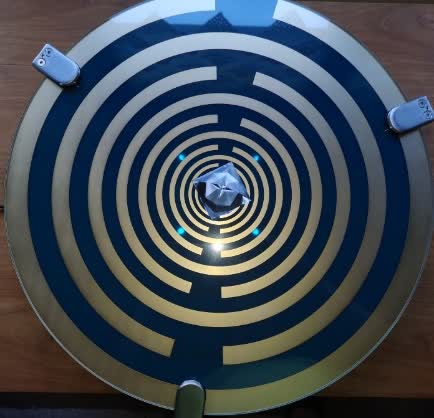
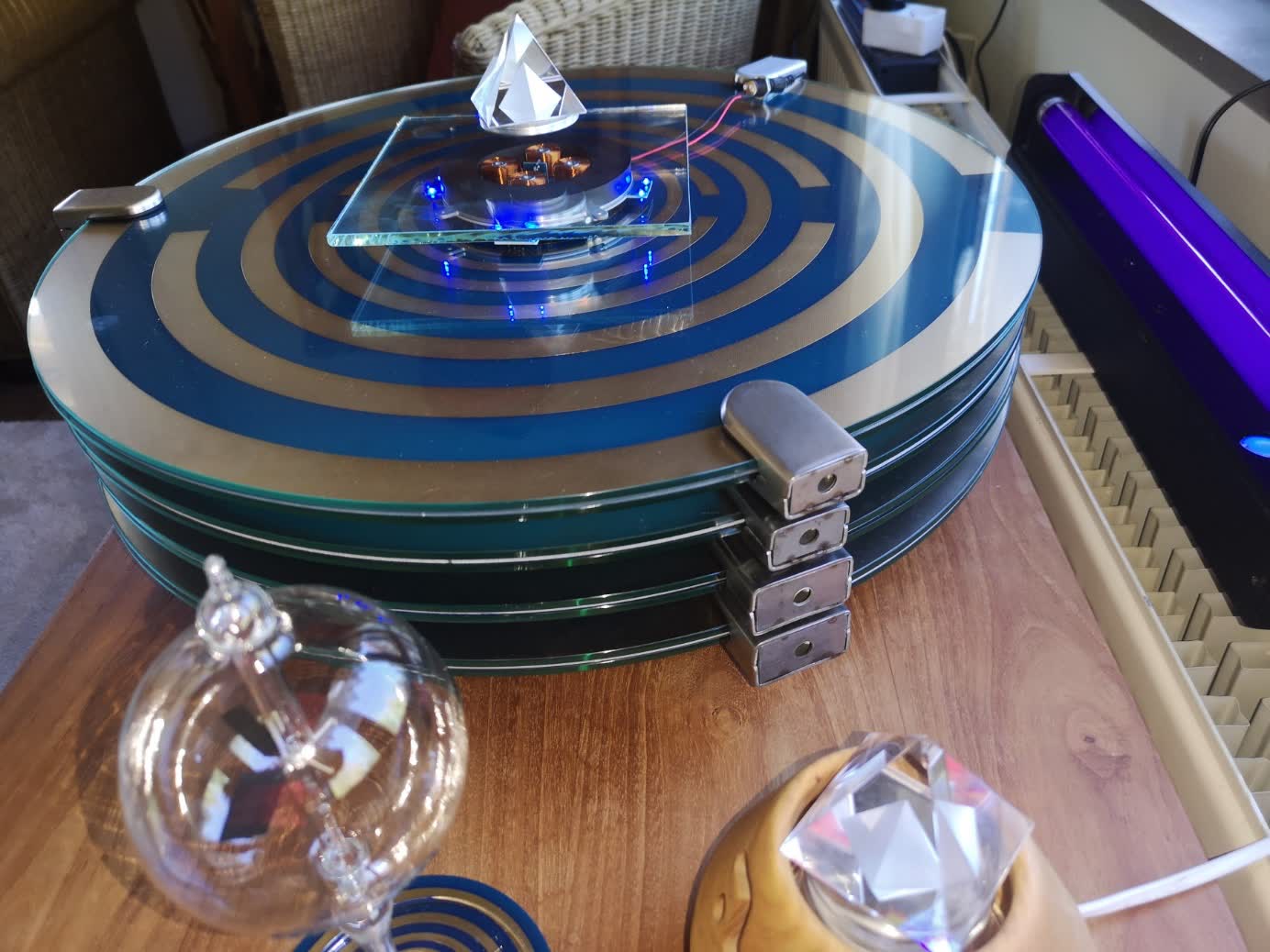
A table has at least one disc, and at most twelve.
The direction of rotation
This is the most important gesture. The pyramid must be set spinning clockwise. Antoine called this movement dextrogyre (right-turning): it is yang, a centrifugal force, a spiral that opens endlessly outwards. The spiral of wishes that build, like joy of living in every area: well-being, love, finances.
The right moment
The table isn't used at just any time.
- Only on the lucky days of the Perpetual Table, for twelve consecutive hours.
- Never during an eclipse of the Sun or the Moon, total or partial.
- And one special moment: 23 July at 11 pm, the only lucky Egyptian moment of the year, which many occultists consider the miraculous moment of the year. The Egyptian days, Antoine reminded us, are true corridors of time during their single hour.
Two ways to send a wish
Antoine distinguished two uses, depending on whether you put your thought into it or not.
The psionic use: with your thought
- Close your eyes.
- For a few seconds, place the index finger of your less skilful hand inside the antenna's outer oscillator.
- Think of your wish.
What you think is the principle of intention. The table does the rest: that is the principle of resonance. And for Antoine, distance makes no difference.
The psychotronic use: without your thought
Here, the operator does not intervene.
- Place your personal square, or that of the person the wish is for, inside the outer oscillator.
- In the centre of the antenna, under the spinning magnet, place the five-by-five wish square, the same type of square as the domains of the Commodore.
The wish is then sent towards the person concerned, without any power of thought.
Black light
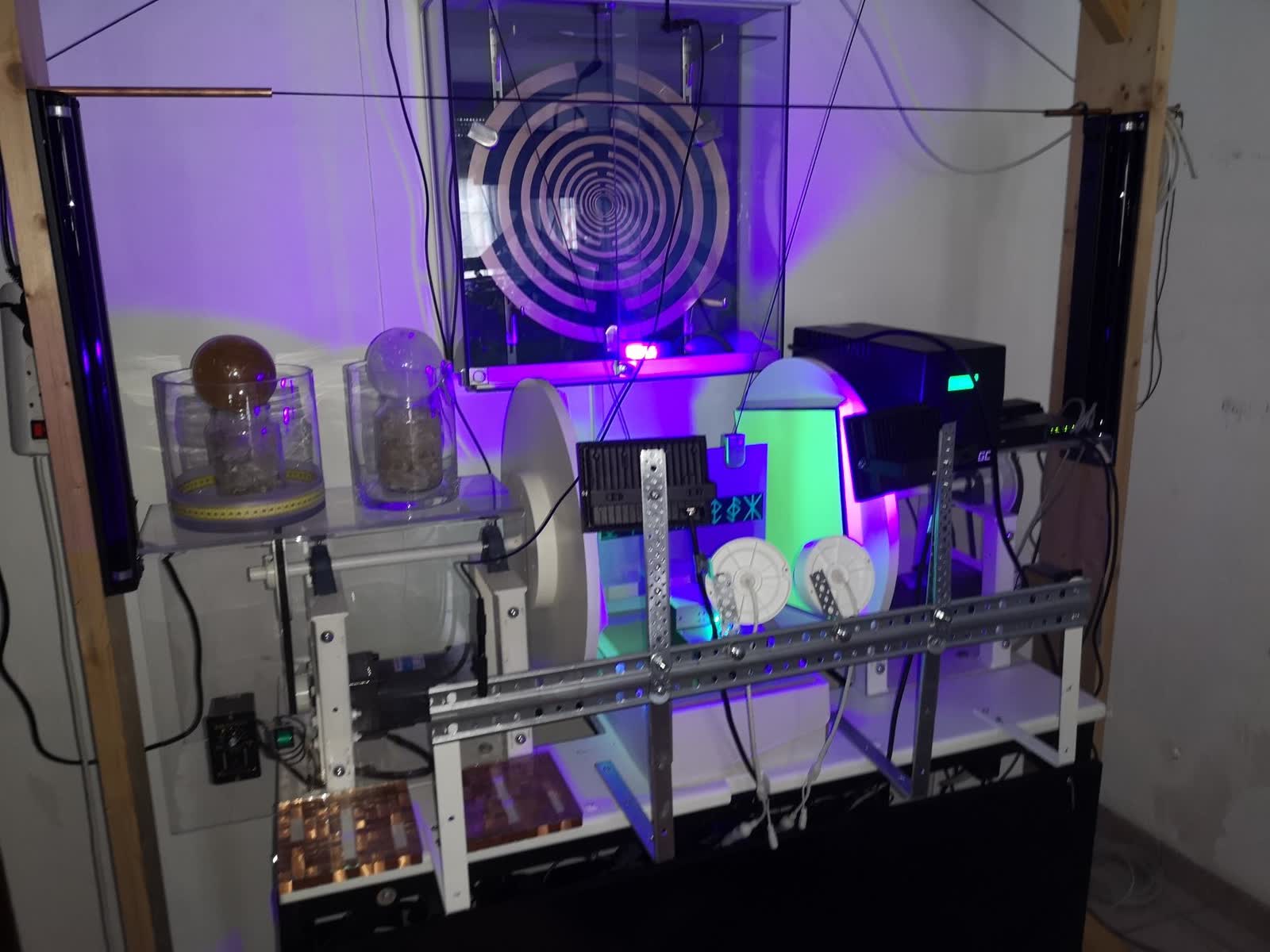
Antoine always advised lighting a black-light lamp (a 15-watt UV lamp) near the table. It serves, he said, to cleanse the table of any interfering presence.
When you change personal square, Antoine switched on the UV lamp for twenty minutes before placing the new square, to erase any trace of the previous one. Never look directly at a UV lamp.
To go further
- A personalised radionic T-shirt, worn only on the days of the emission, strengthens the resonance of the wish, according to Antoine.
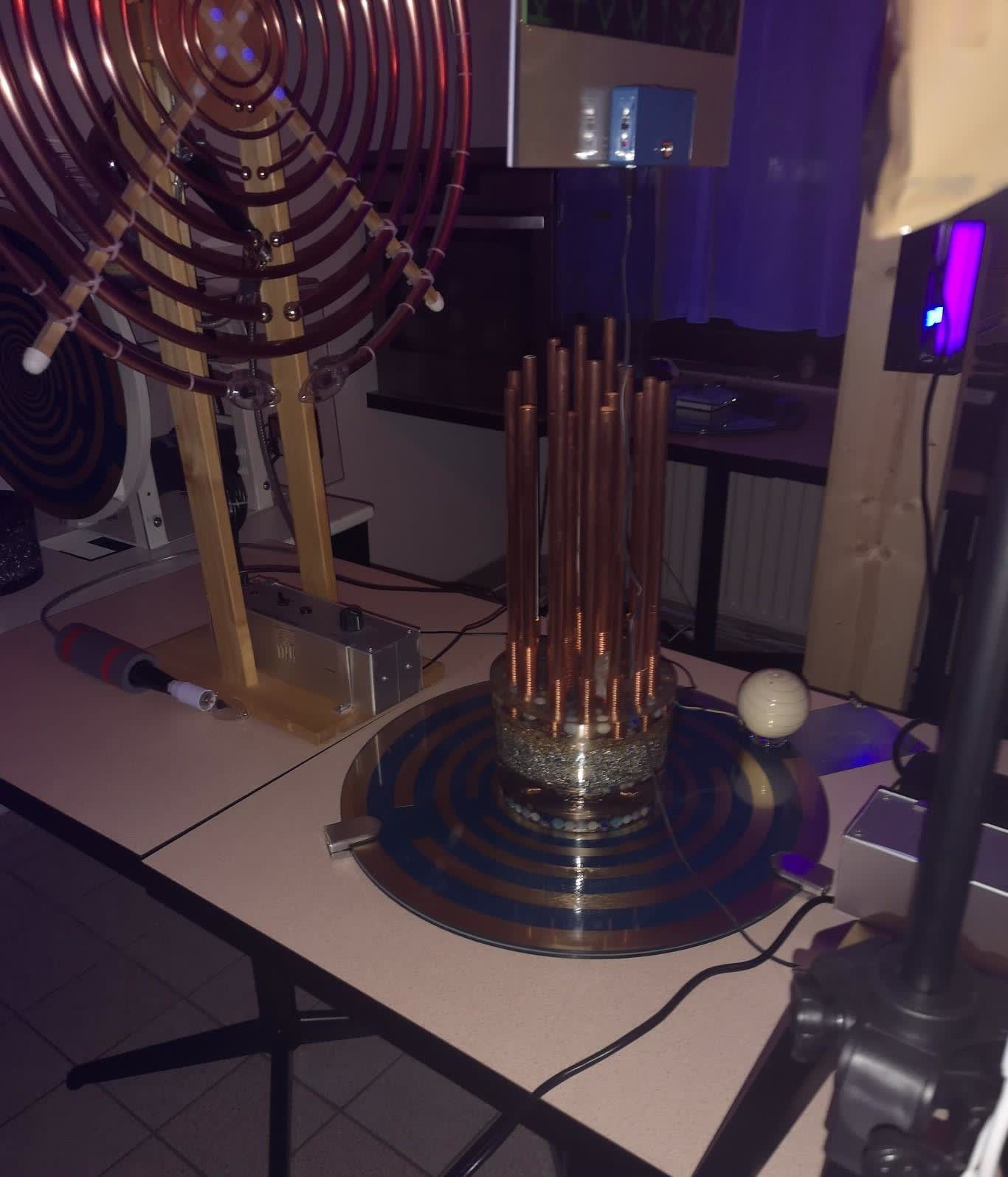
- The table joins the whole family of the workshop's instruments: orgone, dowsing piles, magic squares.
A table, a glass disc, an antenna that never closes, and a crystal pyramid turning silently above the void. On lucky days, for twelve hours, Antoine entrusts a wish to it. And he lets it go.
No resonance table of your own? The workshop can carry out one emission a month per wish for you, or help you build your own. Write to us with your wish.
Frequently asked questions
What is a resonance table?
Antoine's instrument combining a Lakhovsky-type antenna, set under glass, and a crystal pyramid in magnetic levitation. It is used to send a wish, with or without your thought, whatever the distance.
Who was Georges Lakhovsky?
A Russian-born engineer who settled in France (1869-1942), author of "Le Secret de la vie" (1925), known for his multiple wavelength oscillator and his open concentric rings.
When should the table be used?
Only on the lucky days of the Perpetual Table, for twelve consecutive hours, never during an eclipse. 23 July at 11 pm is the lucky Egyptian moment of the year.
Which way should the pyramid turn?
Clockwise, the right-turning movement, that of wishes that build.
What is the black light for?
Antoine uses it to cleanse the table of any interfering presence, and for twenty minutes before each change of personal square.