
Orgone is the primordial life energy of the creative infinite, which bears as many names as there are human societies. It is the energy of the spirit of life, which tirelessly creates and animates creation.
Wilhelm Reich, as quoted by Antoine de Saint-Christophe
Every civilisation has given a name to this force that animates living things. In India it is called prana, the breath. The Chinese call it chi, and their whole traditional medicine rests on its circulation. The Greeks spoke of ether, the subtle matter that fills the sky. Polynesians speak of mana.
In the 20th century, an Austrian doctor gave it a new name: orgone. His story is one of the most novelistic and most tragic in the science of the last century. Antoine took it up as his own, and in Herstal orgone became the fuel of almost all his instruments.
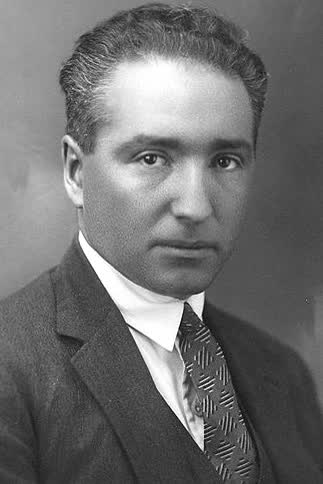
Wilhelm Reich, the man who named orgone
Wilhelm Reich was born in 1897 in Galicia, then part of the Austro-Hungarian Empire. He studied medicine in Vienna and became, very young, one of Sigmund Freud's most brilliant students. He was interested in what psychoanalysis left aside: the body, tensions, breathing, the way our emotions are written into our muscles.
The 1930s made him an exile. He left Vienna for Berlin, then fled Nazi Germany for Denmark, Sweden and Norway. It was in Oslo that he began to observe under the microscope what he called bions, tiny vesicles which, according to him, radiated an energy. In 1939, he settled in the United States. He gave this energy the name orgone.
For Reich, orgone was not a metaphor. It was a physical energy, present everywhere in the atmosphere, which charges all living beings and can be concentrated.
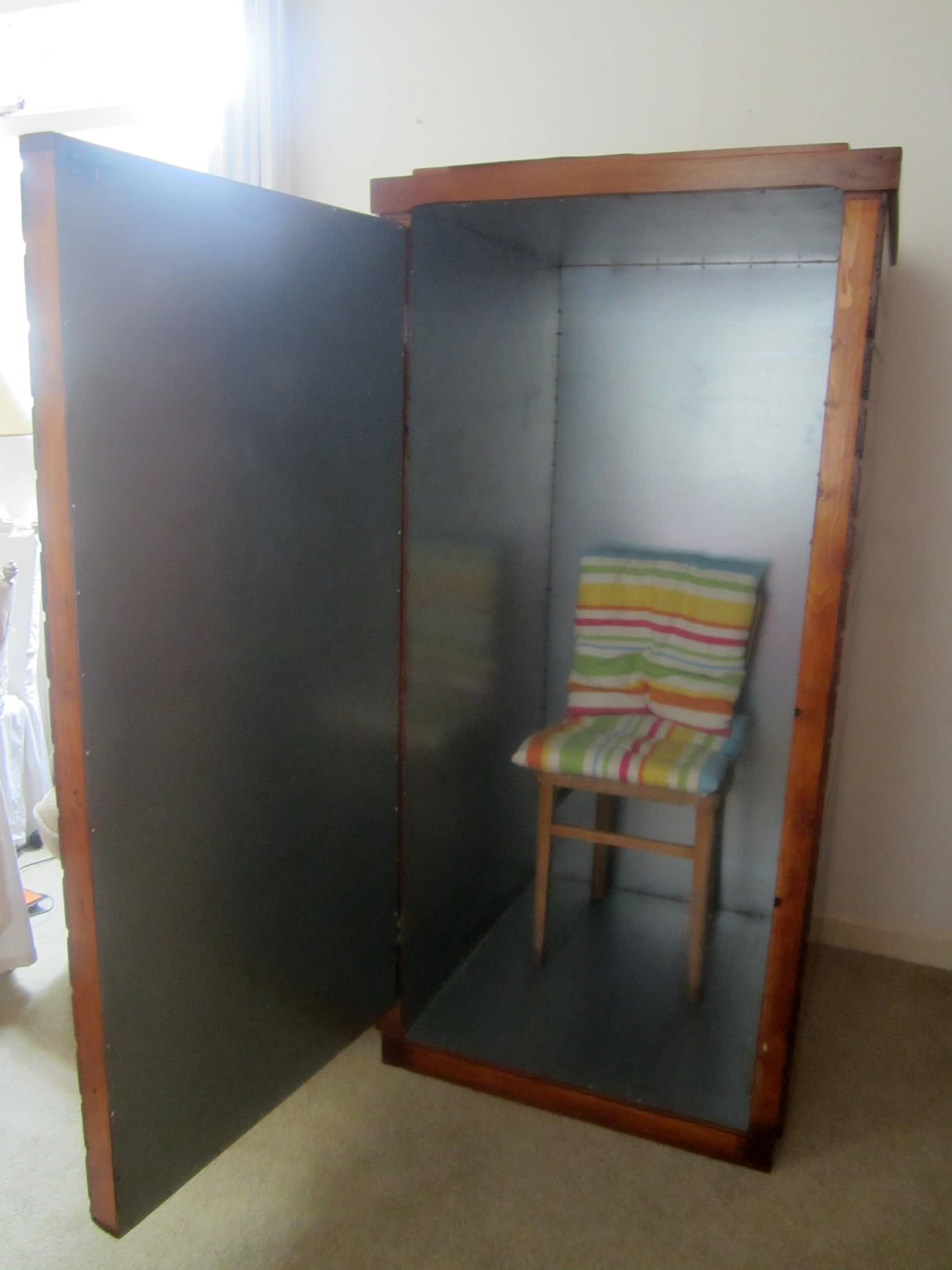
The accumulator: a cabinet to sit in orgone
To concentrate this energy, Reich came up in 1940 with a disarmingly simple object: the orgone accumulator. It is a cabinet the size of a wardrobe, which you sit inside. Its walls alternate layers of organic material, wood, wool, cotton, and layers of metal. The organic material attracts and holds orgone, the metal sends it back inwards. The more layers, the more powerful the cabinet.
Keep this principle in mind, the alternation of organic material and metal: it is exactly the principle of orgonite, and of most of Antoine's objects.
Reich bought a large plot of land in Maine, by Rangeley Lake, and built his research centre there, Orgonon. There he developed the cloudbuster, a bundle of metal tubes pointed at the sky, with which he tried to bring rain to parched fields.
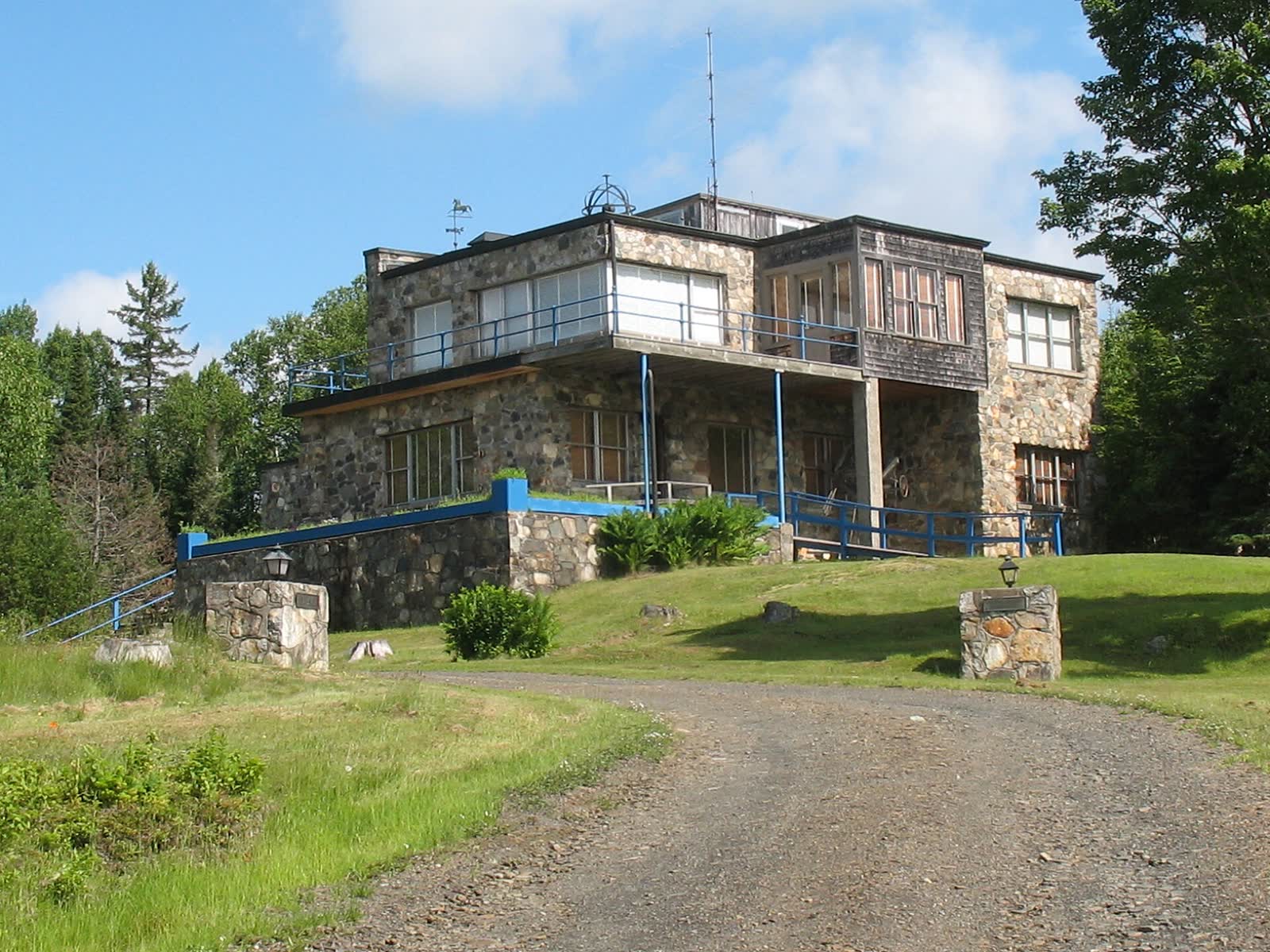
The end is dark. The American authorities banned him from distributing his accumulators. Reich ignored the ban, was convicted, and his books were burned in 1956 by court order. He died in prison the following year, in 1957. Orgonon is now a museum, and his instruments can still be seen there.
Living orgone and dead orgone
Reich distinguished two states of orgone, and Antoine takes up this distinction in all his writings:
- Living orgone, pure and vibrant, good for living things. Reich called it POR, for positive orgone.
- Dead orgone, deteriorated, which weighs on living things. This is DOR, for deadly orgone.
What is good for nature is steeped in living orgone and produces it in turn, Antoine writes, in material things as much as in feelings and thoughts. What harms it soils and deteriorates it.
Antoine loved an idea found among Reich's heirs: orgone is drawn to kind people. A house full of quarrels, a place charged with anger or fear, exhaust living orgone. A house full of laughter regenerates it.
The whole art, then, is to encourage the first and transform the second. That is the role of orgonite.
Orgonite, or orgone you pour into a mould
In the early 2000s, an American couple, Don and Carol Croft, took up Reich's intuition and simplified it to the extreme. No more cabinet: they poured into a mould a mixture of resin and metal shavings, with a quartz crystal. They called it orgonite.
Antoine gave the basic recipe, with its four ingredients:
- one or more quartz crystals, which transform energy and send it back amplified;
- other stones, for their own properties;
- metal: iron, brass, aluminium, bronze or copper, which collects energy from the surroundings;
- resin, which acts as the matrix.
And two rules never to forget: 50% metal, 50% resin, and always a quartz big enough to transform everything the metal collects.
The secret lies in the resin. As it hardens, it shrinks and puts the metal and the quartz under permanent tension. Now, quartz has a very real property, used in all our watches: under pressure, it produces a small electric charge. For orgonite makers, this is the mechanism that constantly transforms dead orgone into living orgone.
The best-known form is Don Croft's HHG, an orgonite cone containing five quartz crystals arranged like the spokes of a wheel, and a seven-turn copper spiral wound clockwise from the base to the tip.
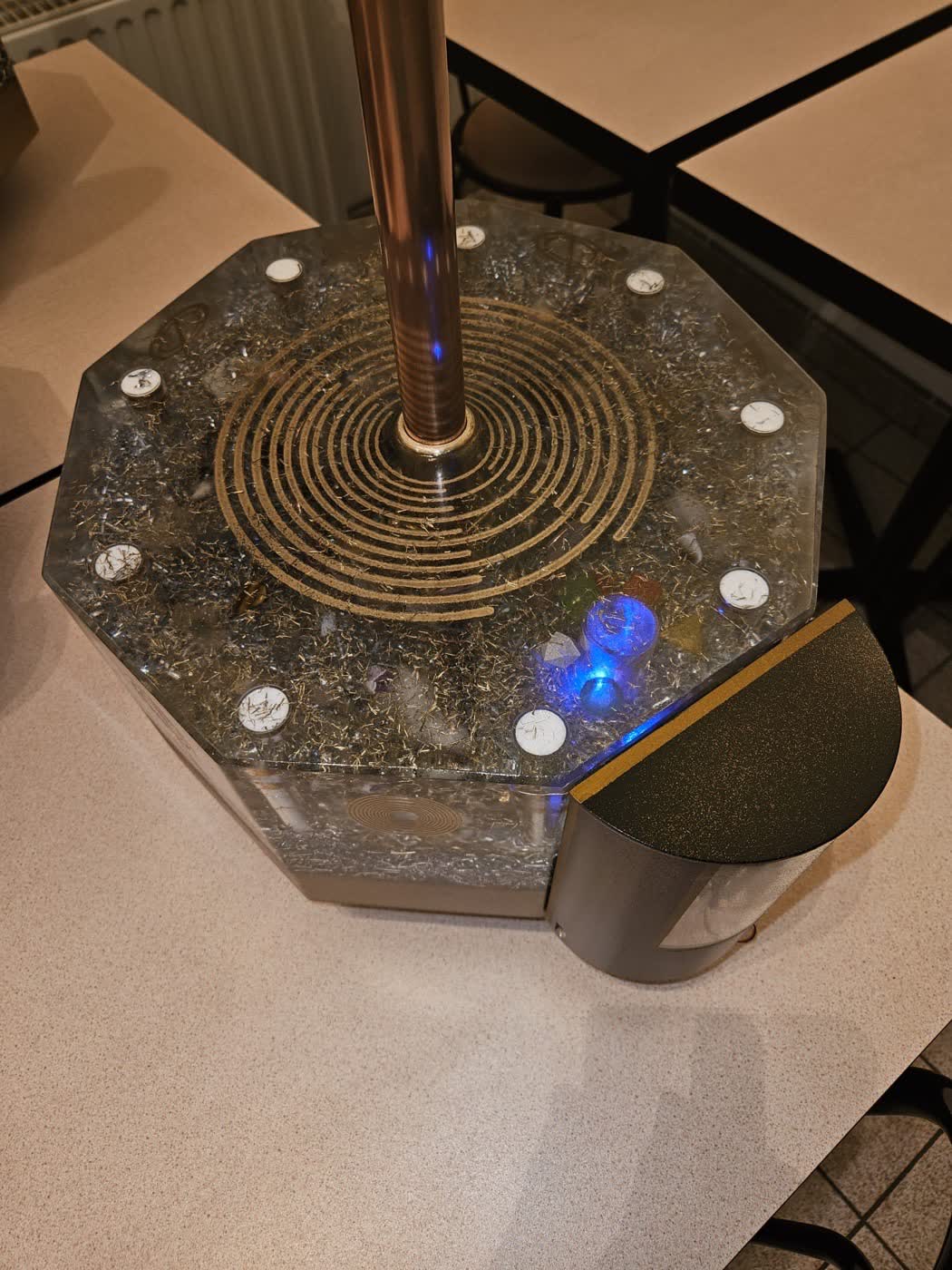
Antoine's generator: nine faces and twenty kilos
Orgonite has travelled the world. Antoine adopted it, and pushed it much further than anyone. His centrepiece is the orgone generator.
It is a block of translucent orgonite weighing twenty kilos, cut as an enneagram, a nine-pointed figure. Each face measures 12 centimetres, the height is 18 centimetres, and the full circumference is 108 centimetres: nine times twelve. For Antoine, 9 is the number of fulfilment, and 108 a sacred number in India as in Tibet.
The block is built up layer by layer, like a dowsing pile:
- at the base, two 45-millimetre levels of resin and metals, iron, brass, aluminium, bronze and mica flakes, which produce, he said, a very strong concentration of orgone through a pile effect. In the centre, a brass sleeve with nine rings and a gold-plated dodecahedron;
- above, 365 grams of double-terminated rock crystals, one for each day of the year, a small orgonite Khufu pyramid, the twelve-ring Lakhovsky circuit and, if desired, its owner's birth chart;
- around it, nine glass tubes filled with natron, the salt of the Egyptian embalmers, each placed facing one point of the enneagram.
Each generator is made for one person: it is composed according to their date of birth. You can even slip in an object that belongs to them, a photograph or a lock of hair, as is done on a resonance table.
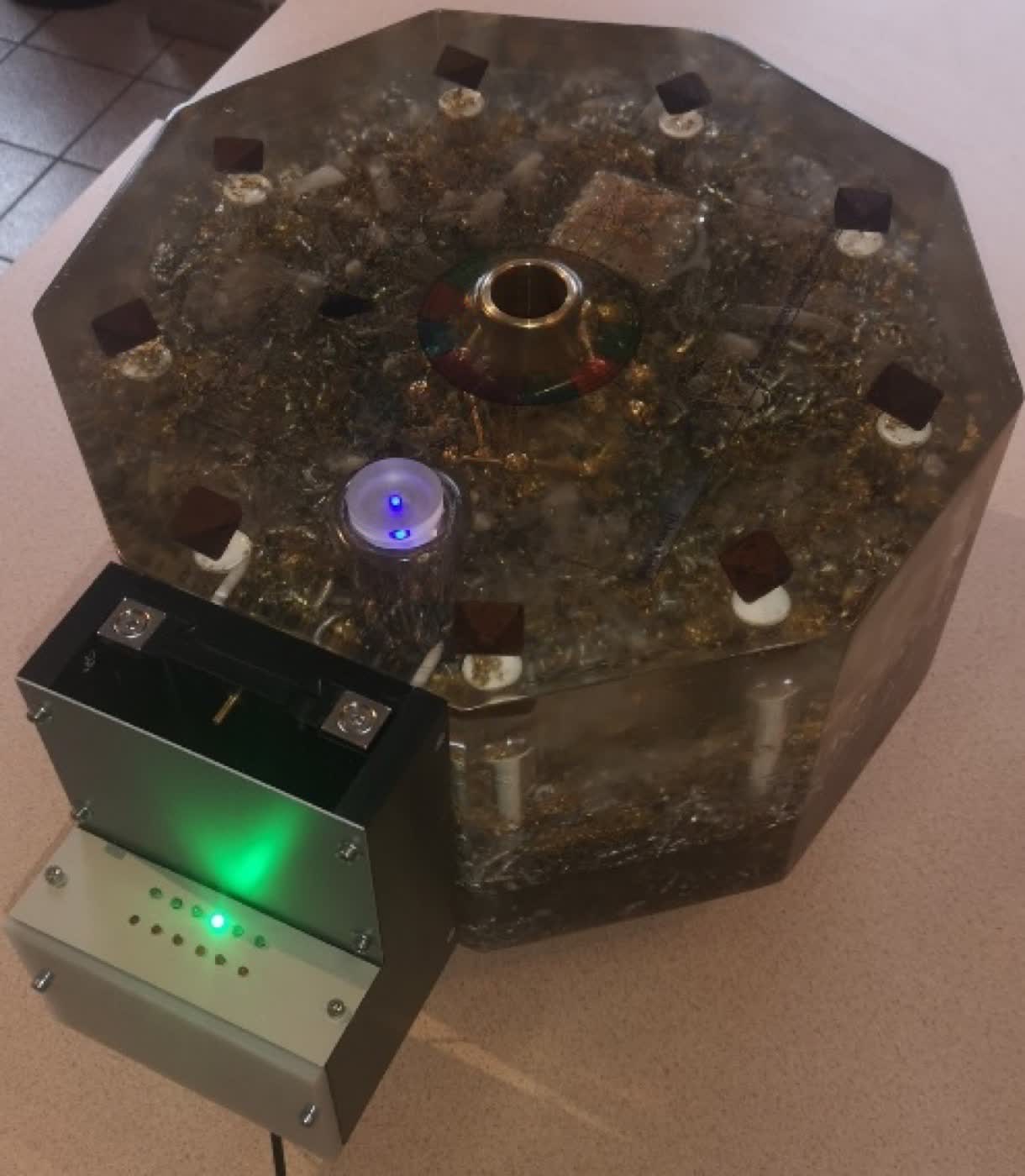
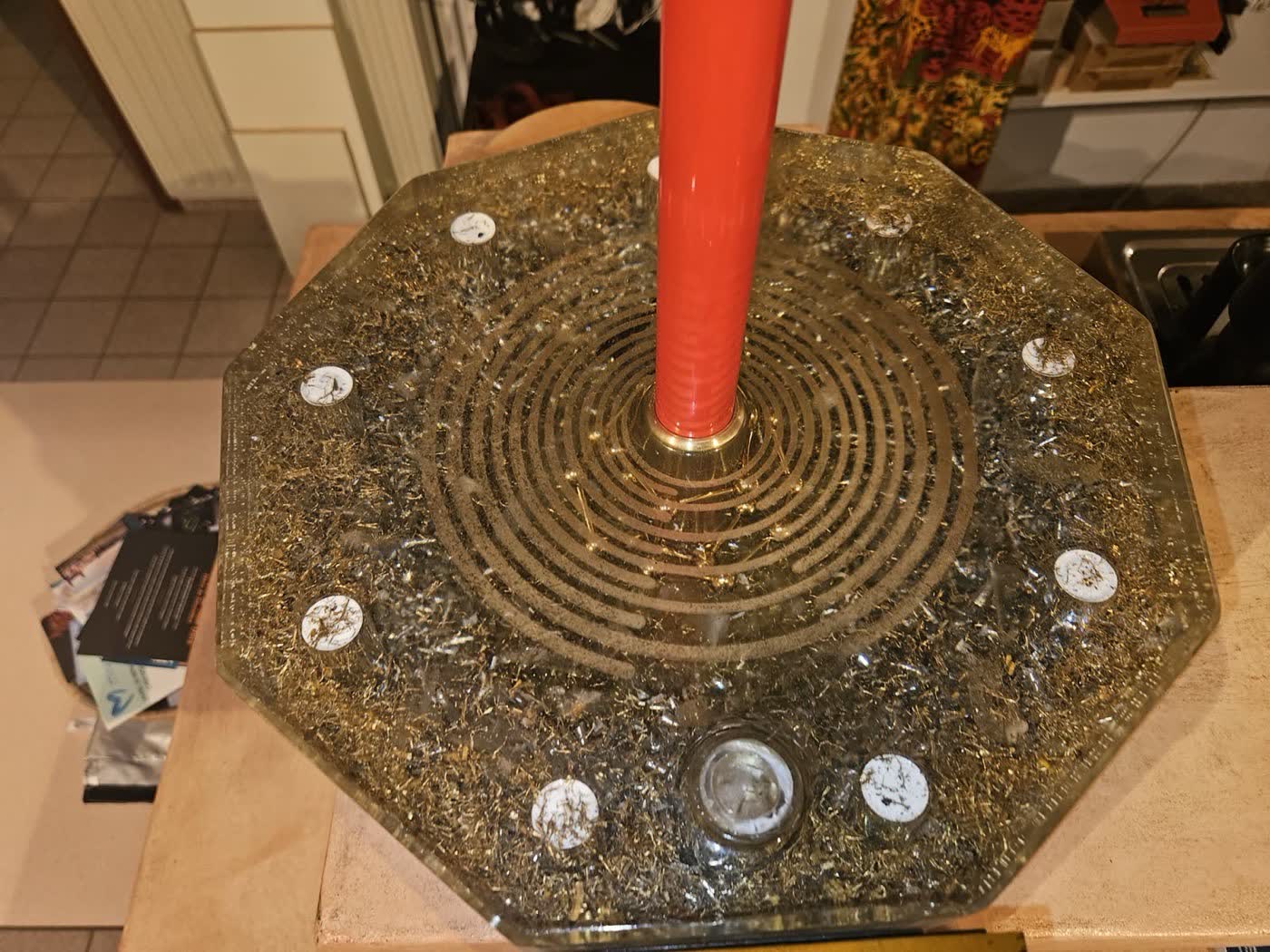
Antoine presented his generator with a dizzying idea. Everything that exists obeys entropy, the physical law that says disorder always increases: houses crumble, objects wear out, living beings age. Orgone, for Reich as for Antoine, is the force that goes the other way, the one that organises and makes things grow. The generator is his way of putting this force at the service of a single person.
Magnetites, the teeth of a wind god
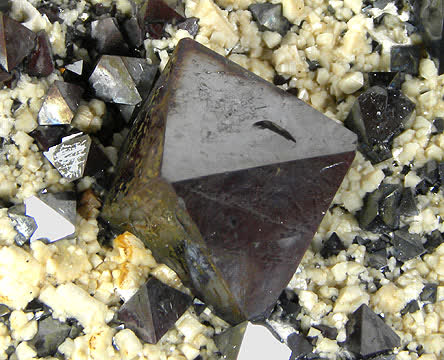
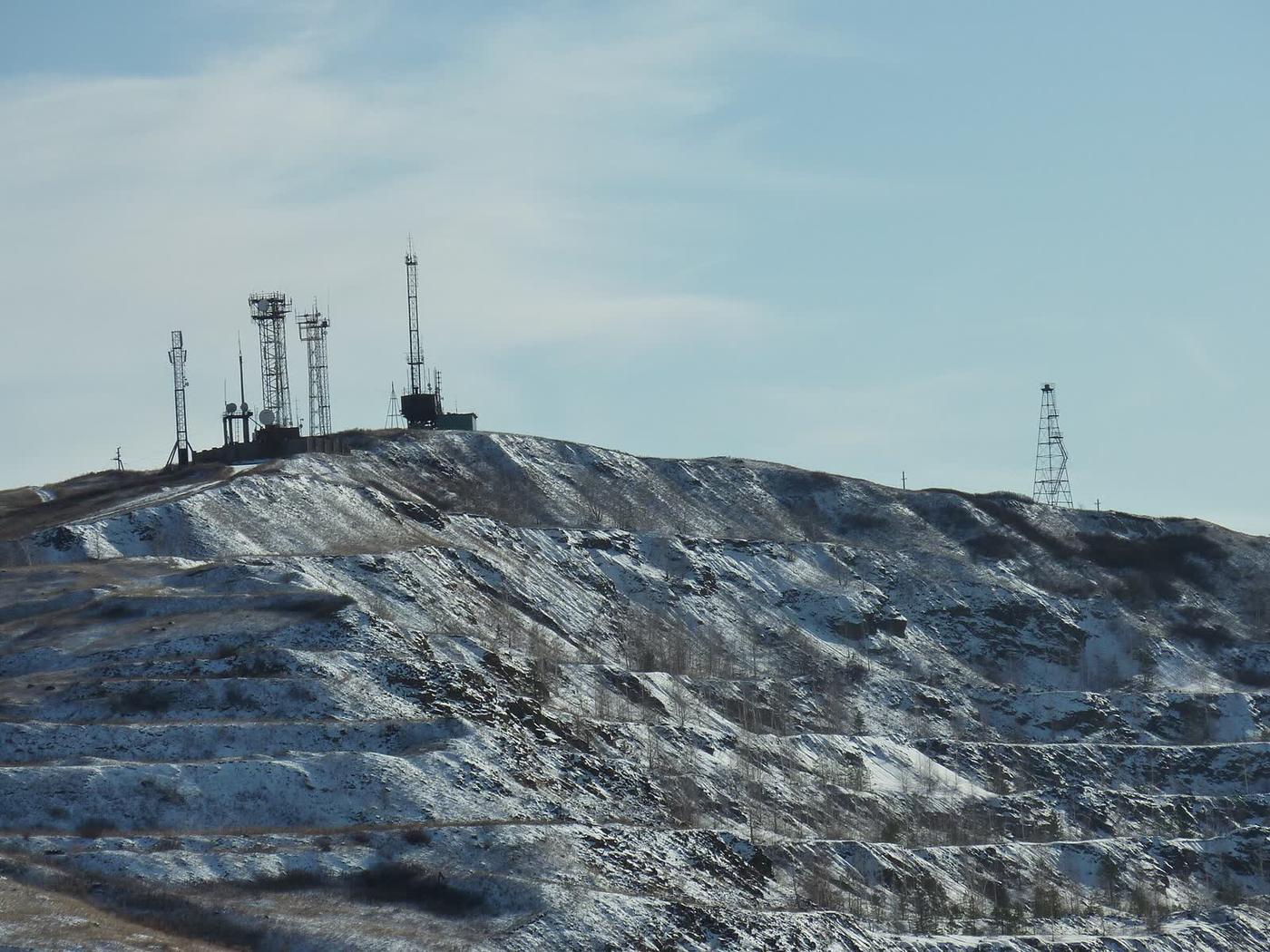
On each of the nine tubes, the owner can have an octahedral magnetite placed: a naturally magnetic, eight-faced iron crystal. Antoine had them brought from Magnitnaya Gora, the "magnetic mountain" of the Urals, in Russia, a hill made almost entirely of iron ore. He reserved them for those whose sky, once studied, allowed it.
He liked to tell how, in the tradition of the Sámi (Lapps), each eight-faced magnetite is a tooth of a wind god.
Activated at the solstice, before the Roche Quinet
The nine natron tubes are not simply put in place. Antoine twisted them throughout a second decan, the middle part of a zodiac sign. Then he activated them on the day of the summer solstice, at the foot of a Belgian site he loved more than any other: the Roche Quinet.
It stands on the bend that climbs above the village of Heyd, towards the hamlet of Lignely, near Durbuy. Many enthusiasts, Antoine says, claim to see the Sphinx of Egypt appear at the precise moment the sun rises and lights up the entrance of the rock. For him, this activation put the generator in resonance with the Sphinx.
In the same way, Antoine searched all over Belgium for places charged with memory to activate his generators: the pouhon of Grandménil, a spring known since Roman times, or Wéris, the land of standing stones. He talks about them in finding luck through a place.
Orgone everywhere in the workshop
In Herstal, orgone is everywhere. It powers:
- the Commodore, which brings together orgone, magnets and the vortex;
- pictographic resonance, whose resonator is fed by an orgone station;
- the orgone car, in which Antoine went travelling;
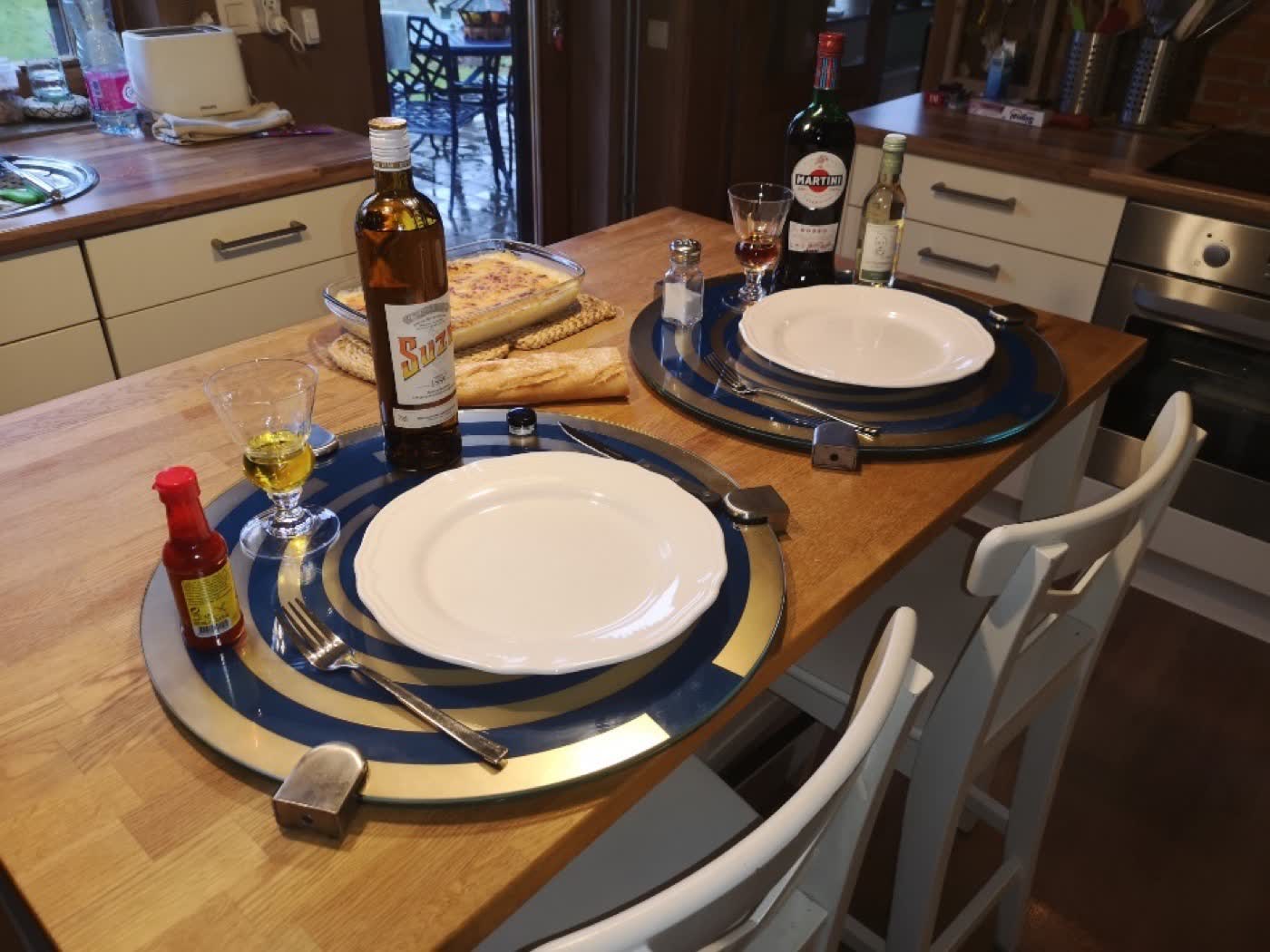
- Antoine's morning, his breakfast set on an orgone plate;
- the radionic T-shirt, made in a workshop saturated with orgone;
- the orgone chimney, where he places the Platonic solid of the Moon window.
For Antoine, everything is better in orgone. He said it in his own words: food tastes better, music sounds different, the people around you are more pleasant. The effects he observed are gathered in the article orgone according to Antoine.
Orgone belongs to an esoteric tradition, not to medicine: it diagnoses nothing and treats nothing. For any health question, see your doctor.
Start with orgone according to Antoine, as he observed it, then discover the Commodore, the machine that works for you.
Frequently asked questions
Who discovered orgone?
Wilhelm Reich (1897-1957), an Austrian doctor and a student of Freud. After settling in the United States in 1939, he gave the name orgone to the life energy he believed he had observed, and described it as the primordial life energy that creates and animates everything.
What is an orgone accumulator?
A wardrobe-sized cabinet designed by Reich in 1940, whose walls alternate layers of organic material and metal. You sit inside it. This principle of alternating organic material and metal is found again in orgonite.
What is orgonite?
A cast mixture of resin and metal shavings, in equal parts, with a quartz crystal, developed by Don and Carol Croft in the early 2000s. As it hardens, the resin shrinks and puts the quartz under permanent tension.
What is the difference between living orgone and dead orgone?
Reich spoke of POR, positive orgone, pure and good for living things, and DOR, dead, deteriorated orgone. Orgonite is meant to transform the second into the first.
How is Antoine's orgone generator made?
It is a twenty-kilo, nine-sided block of translucent orgonite, built in layers of resin, metals and rock crystals, with a dodecahedron, a pyramid and a Lakhovsky circuit. Nine natron tubes surround it, activated at the summer solstice before the Roche Quinet, at Heyd.
Where did Antoine activate his generators?
At Belgian sites charged with memory: the Roche Quinet above Heyd, the pouhon of Grandménil and the site of Wéris.