To reach the truth, once in your life you must rid yourself of all the opinions you have received.
Descartes, as quoted by Antoine
It is the idea that links almost every object in the workshop: shape acts.
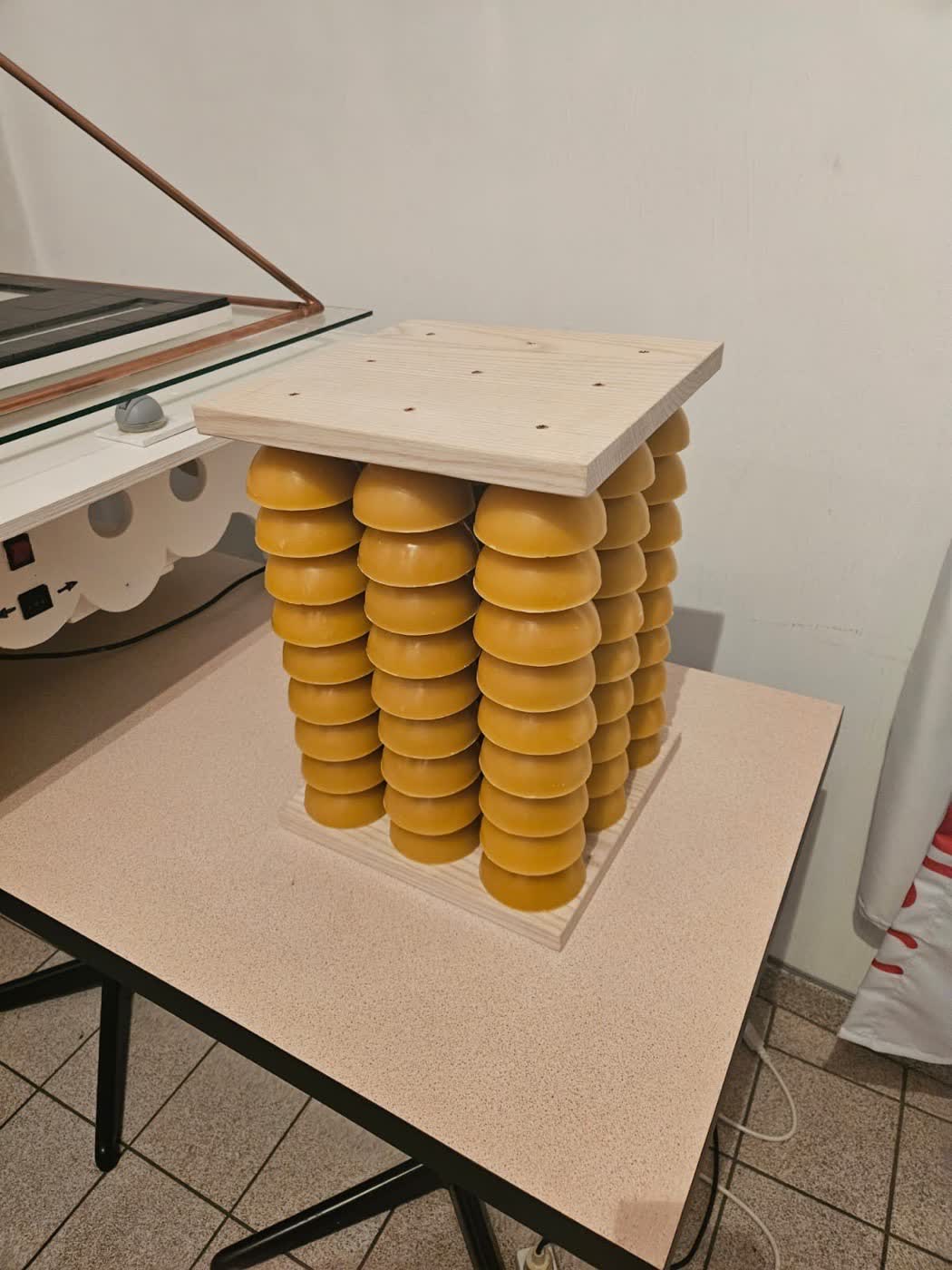
A pyramid, a sphere, a Platonic solid, a grooved ring, a pile of hemispheres produce an effect through their geometry alone, their proportions and their orientation. No battery, no motor, no cable. The shape is enough.
The pyramid builders knew it, Antoine used to say. So did the pilgrims of the Middle Ages, with their staffs. And a handful of 20th-century French researchers spent their lives measuring it.
The pioneers: Chaumery and Bélizal
The modern history of shapes that act begins in France, in the 1930s. Two men, Léon Chaumery and André de Bélizal, dowsers and stubborn researchers, set out to study what spheres, hemispheres, pyramids and cones produce.
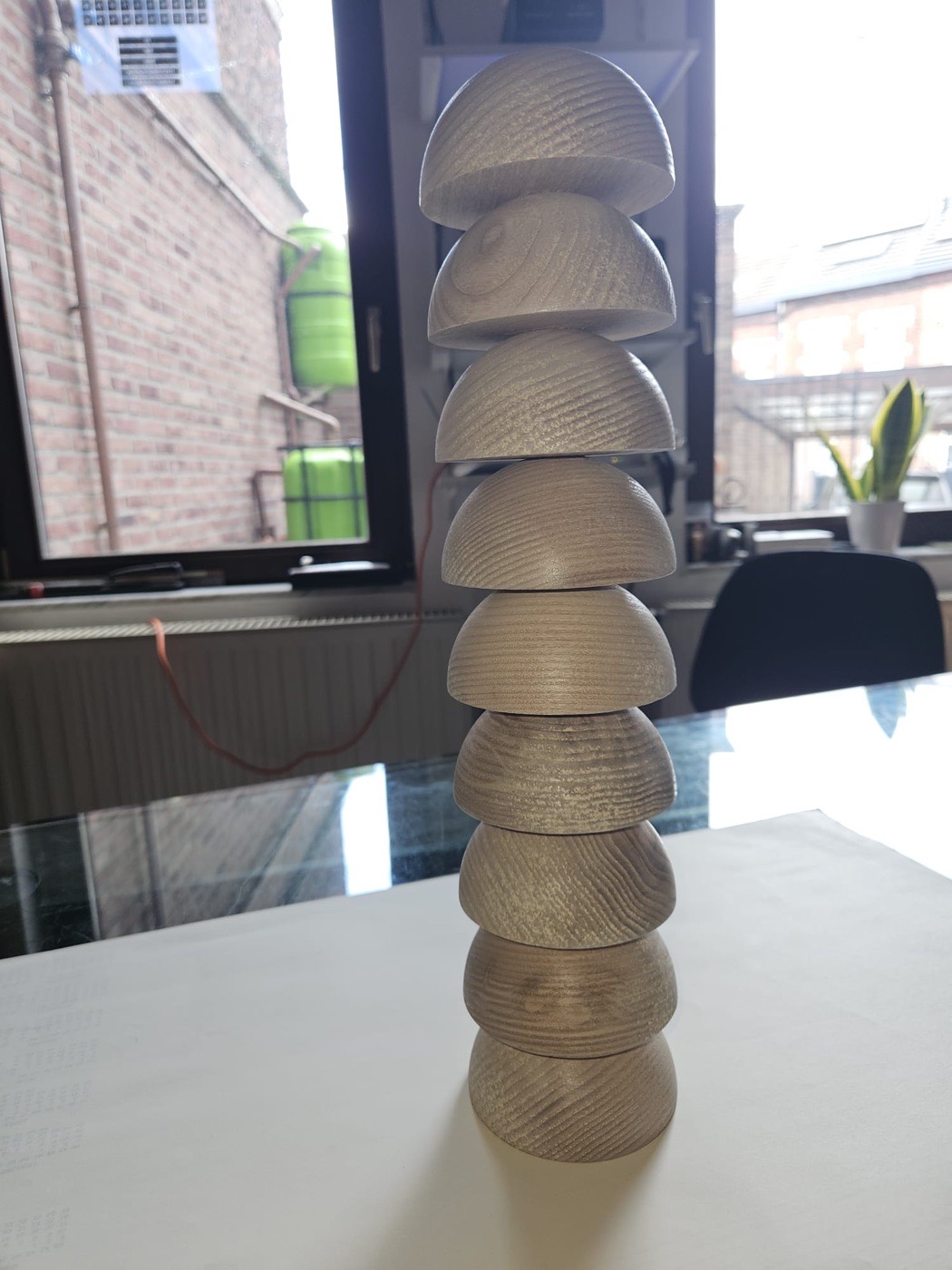
In 1936, Léon Chaumery filed a patent for an invention that looks very simple: a dowsing pile of four hemispheres, 12 millimetres in diameter. He died in 1957, but the pile remained, and Antoine made it one of the pillars of his workshop. Read its story.
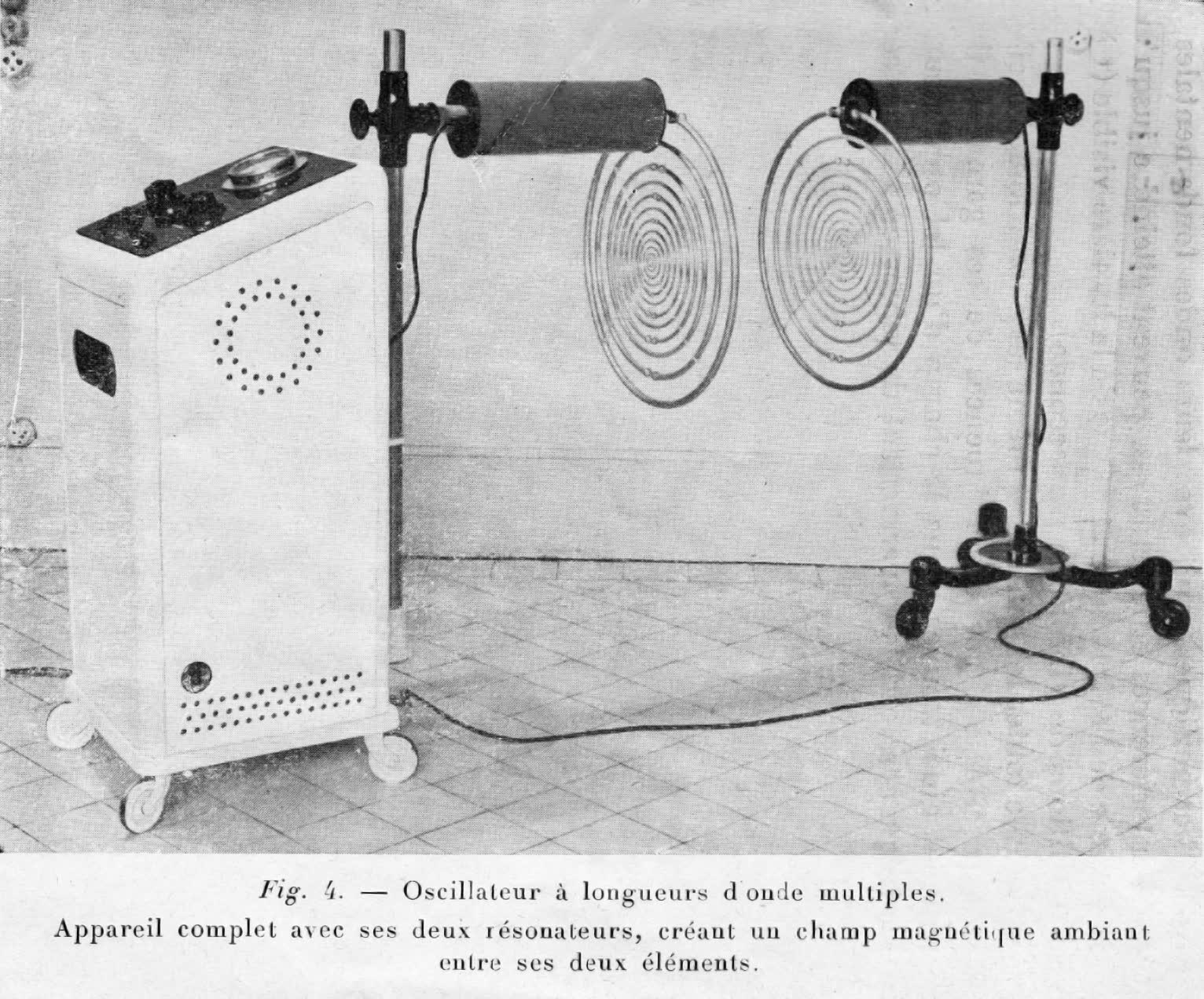
André de Bélizal pushed the research towards a true micro-vibratory physics, with what he called "lambda" form effects. His work, like that of Georges Lakhovsky, forms the lineage Antoine claimed: a study of forms without mysticism, without batteries, without maintenance.
The right word
For a long time, people spoke of shape waves (ondes de forme). It is Chaumery and Bélizal's term. But Antoine preferred to follow the view of Raymond Réant, author of a reference work on the subject.
Réant pointed out that nobody has ever proved these effects travel as waves. We observe them, we reproduce them, but we don't yet know how they spread. Hence his choice: to speak of form effects (effets de forme).
Antoine adopted this term. It is more honest, and it takes nothing away from the mystery.
The great families of shapes
In Antoine's writings, you meet several families of form effects:
| Family | The shape | Where to find it on the site |
|---|---|---|
| Piles | Stacked hemispheres: the number sets the voltage, the diameter the intensity | The dowsing pile, the Kaprekar pile |
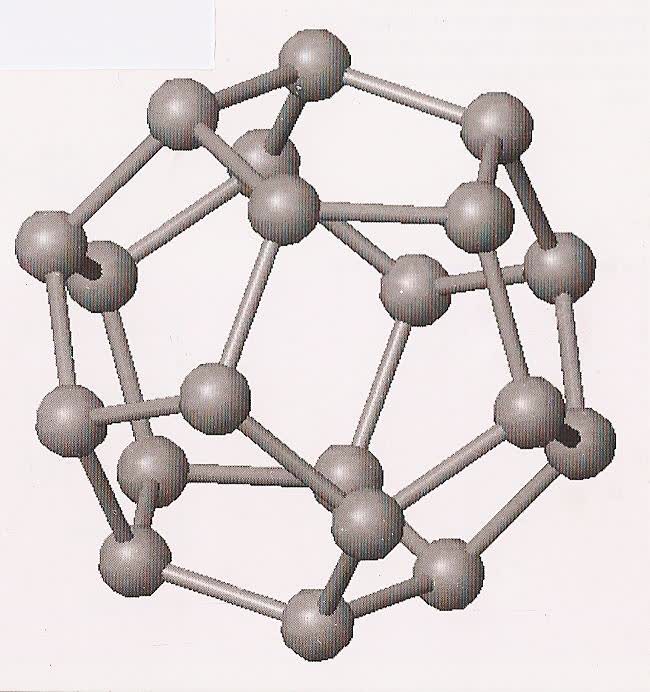
| Perfect solids | The five Platonic solids | The 5 solids, the dodecahedron |
| Pyramids | The 51° slope, that of Khufu (Cheops) | The Schumann medal |
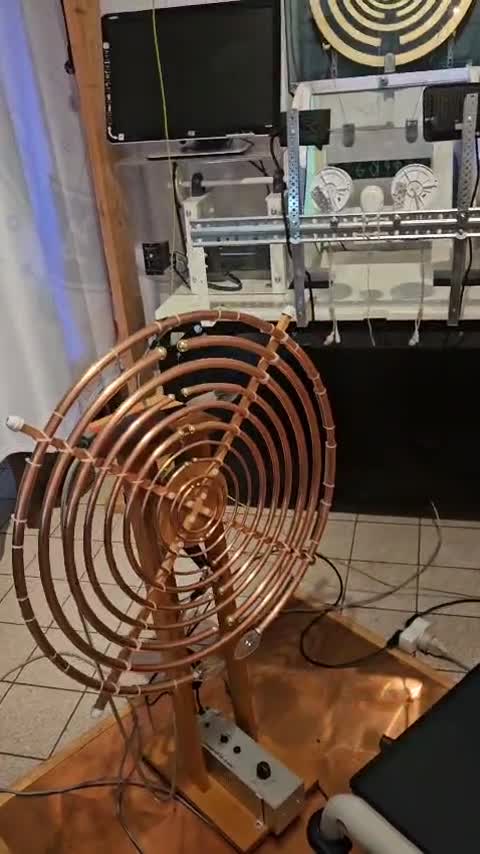
| Circles and spirals | Lakhovsky's rings, copper spirals | The resonance table |
| Grooves | The furrows of the Atlantean ring | The Atlantean ring |
| Grids | The layout of a magic square, its "circulation map" | Magic squares |
| Angles | Your personal birth angle | The country walking stick, below |
For the pile, Antoine summed up the rule like this: a pile with increasing diameters is a succession of octaves; the voltage depends on the number of stacked hemispheres; the intensity, on the diameter of each one.
Structure is the regulator
There is a lesson Antoine often repeated: a shape without structure charges too much and saturates.
A magic square without dividing lines, an Atlantean ring without grooves, are never used. It is the lines, the intervals and the proportions that regulate the effect. An irregular Platonic solid doesn't work. A completely closed dodecahedron does little.
Shape is not decoration: it is a mechanism.
The country walking stick: the angle of Asclepius
It is one of the finest applications of form effects Antoine came up with, and one of the simplest: a walking stick.
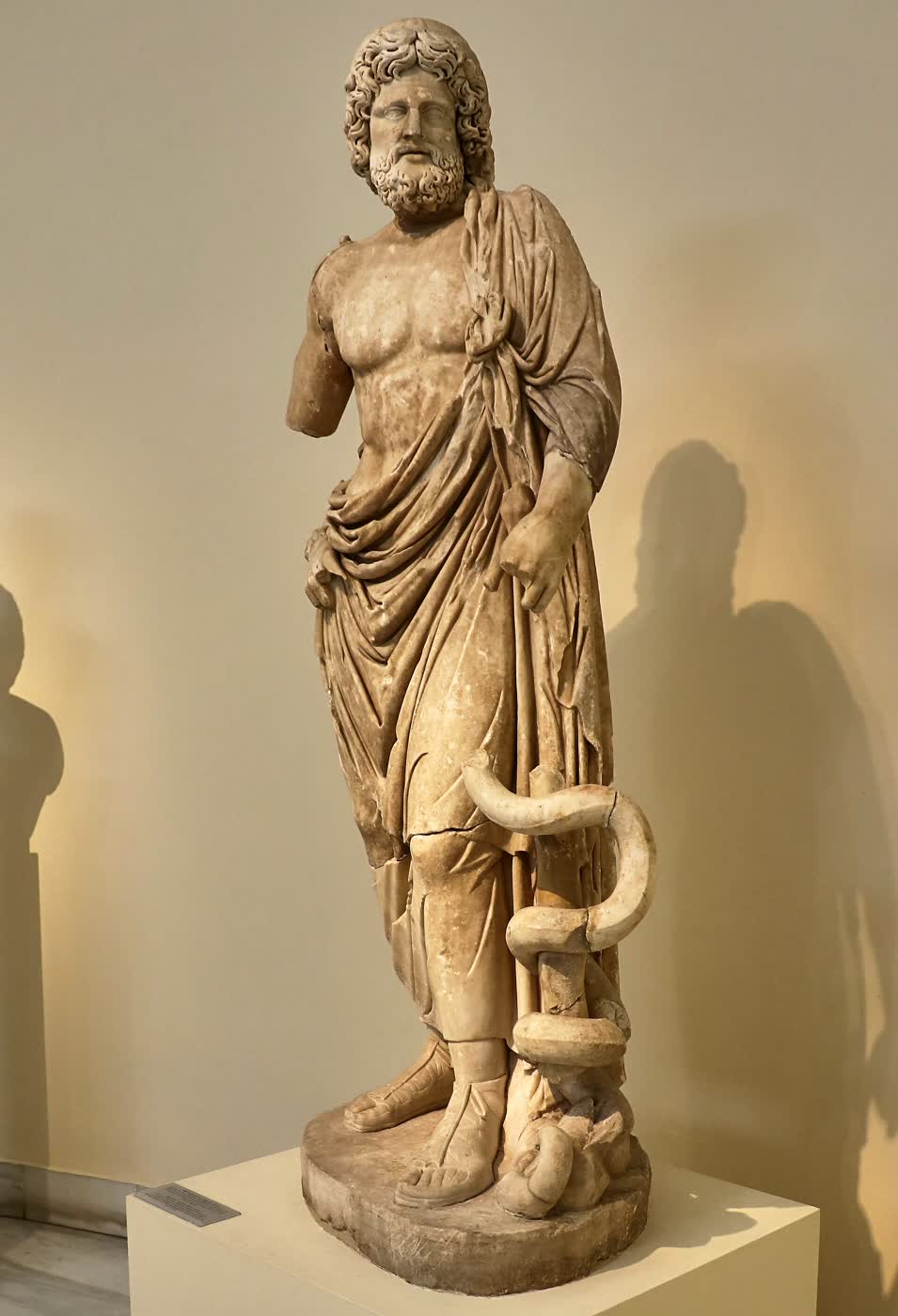
It all starts with an angle. At the moment of your birth, the Midheaven and the Ascendant of your chart form an angle that is yours alone. Antoine called it your angle of protection, or angle of Asclepius, after the Greek god of medicine, always shown leaning on his staff.
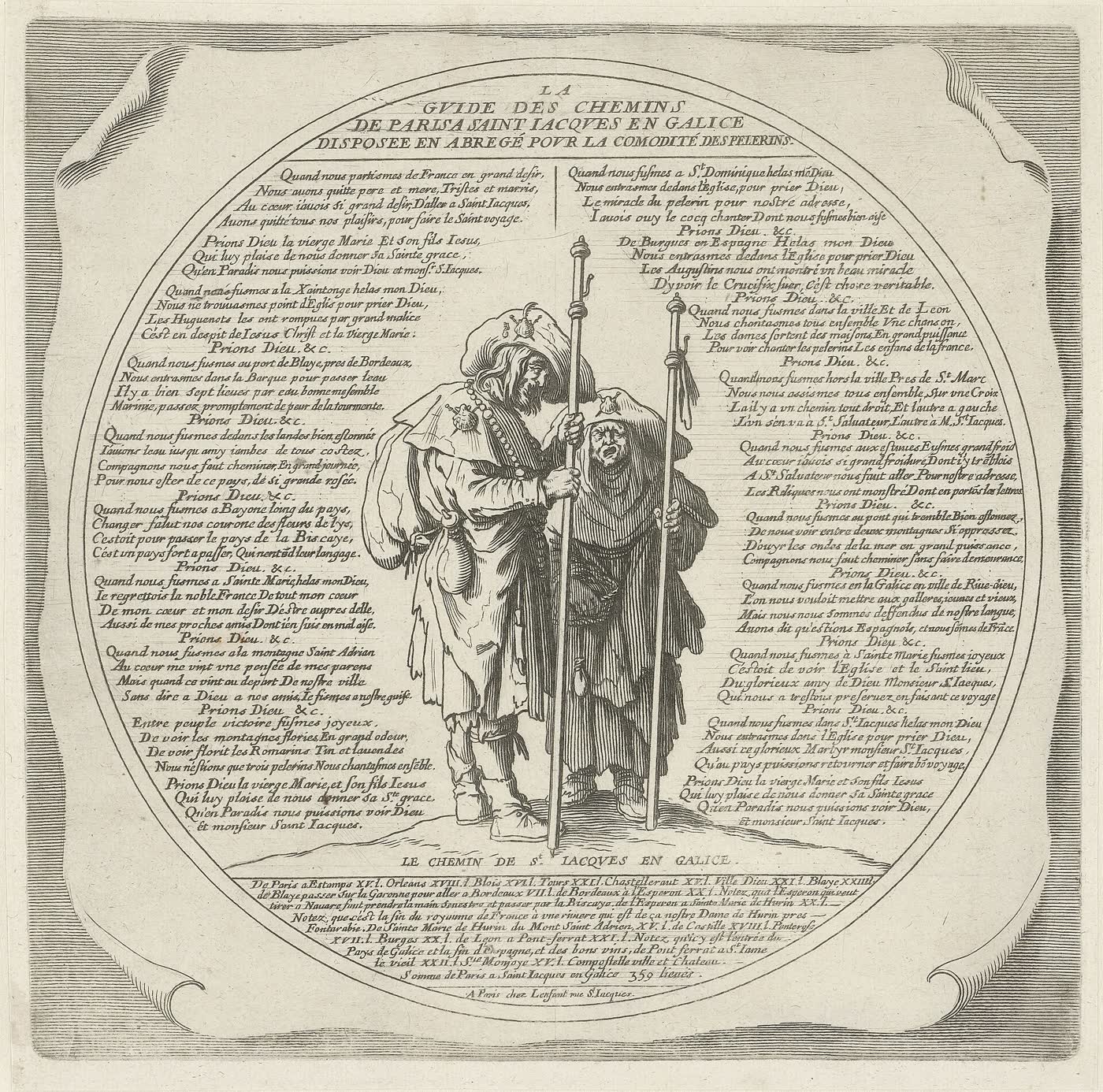
According to Antoine, the pharaohs already wore this angle on the solar plexus. In the Middle Ages, pilgrims are said to have built it into their staffs, to recharge with the magnetism of the earth along the way.
How it is made
- Local wood: beech or oak, in resonance with the subsoil of the region.
- The beech is cut during a waning Moon, at the end of autumn: that way the wood needs no chemical treatment.
- The stick is rounded, stained with walnut stain, impregnated with beeswax, and has no metal parts. Never a metal or rubber tip.
- The craftsman carves into it a number of rings matching the number of a planet chosen for you, and sets that planet's stone at the top. Plant, mineral and animal are thus brought together.
There are two models: the angular stick, or Asclepius stick, if you know your time of birth; the circular stick, or Phi stick, if you don't. Cut to your angle, it is strictly personal and is not lent.
How to use it
Hold the stick by the handle, never by the vertical part, in your writing hand, with the small angle turned behind you.
Then look for a fine oak. Lean your back against its trunk, preferably on the north-south axis, the stick wedged between the tree and your back, the palm of your other hand against it, your writing hand on your solar plexus. Breathe deeply, for a few moments.
Where to take it? To the foot of great healthy trees, beside waterfalls and clear rivers, in the middle of streams, where springs rise, in the morning dew, by the sea, in the snow, in the mountains. Wherever nature is lively.
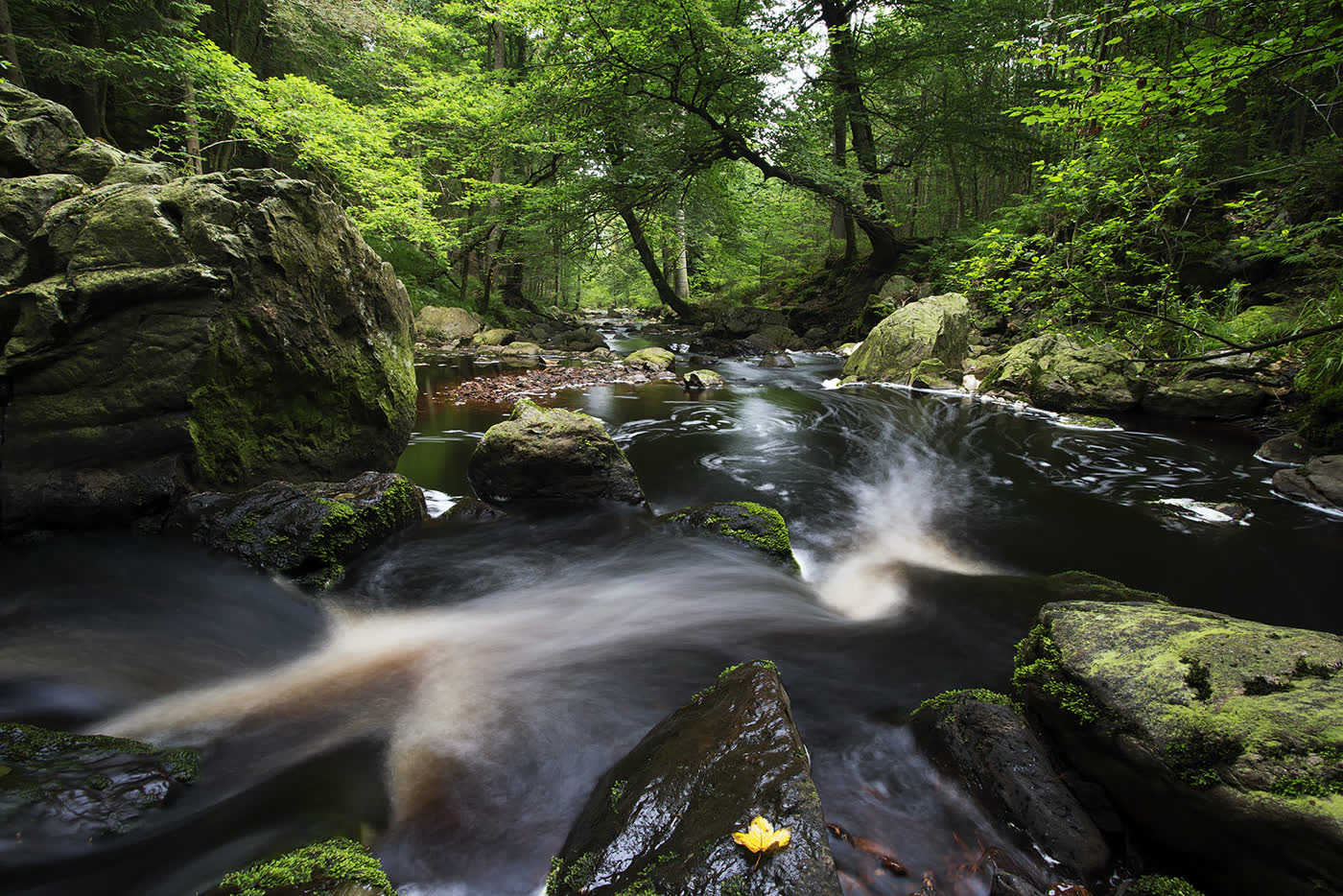
Walkers know it without knowing it, Antoine wrote: a walk in a fir forest, the sound of a waterfall, the air by a river feel good. The country walking stick, he said, lets you draw on these energies at the very heart of their activity.
For other ways of borrowing the strength of a place, see finding luck through a place and the tree of luck.
Would you like your own stick, cut to your birth angle? Send the workshop your date, time and place of birth.
Frequently asked questions
Should you say shape waves or form effects?
Antoine follows Raymond Réant: nobody has ever proved these effects travel as waves. We observe them and reproduce them, hence the term form effects.
Who are the pioneers of form effects?
The Frenchmen Léon Chaumery, who patented the dowsing pile in 1936, and André de Bélizal, who developed a micro-vibratory physics. Antoine claimed their lineage, and that of Georges Lakhovsky.
Where do you find form effects?
Throughout Antoine's work: in the dowsing pile, the Platonic solids, pyramids, the resonance table, the Atlantean ring, magic squares and the country walking stick.
Why does a shape need structure?
A shape without structure charges too much and saturates. It is the lines, intervals and divisions that regulate its effect.
What is the country walking stick?
A beech or oak stick, without a single metal part, cut to the angle formed by the Midheaven and the Ascendant at your birth. Leaning against an oak, you use it to recharge in contact with nature.