You don't use just any length, anywhere, at any time, in any way.
Antoine de Saint-Christophe, on the pendulum
A weight at the end of a string. That's all. And yet, for centuries, men and women have used it to find a spring, track down a lost object, choose a stone, question a map. The pendulum is the best-known instrument of dowsing (in French, radiesthésie), the art of perceiving what things radiate.
For most people, it answers yes or no. For the researchers Antoine quotes, it does much more. Well chosen and well tuned, it becomes an emitter: you deliberately make it turn to record an intention.
From water diviners to dowsers
The story begins underground. In the 16th century, German miners searched for veins of ore with a forked rod held in both hands. In 1556, the scholar Georg Agricola drew them in his great treatise on mining, De re metallica: men walk through the forest, rod held out, while others dig where it dipped.
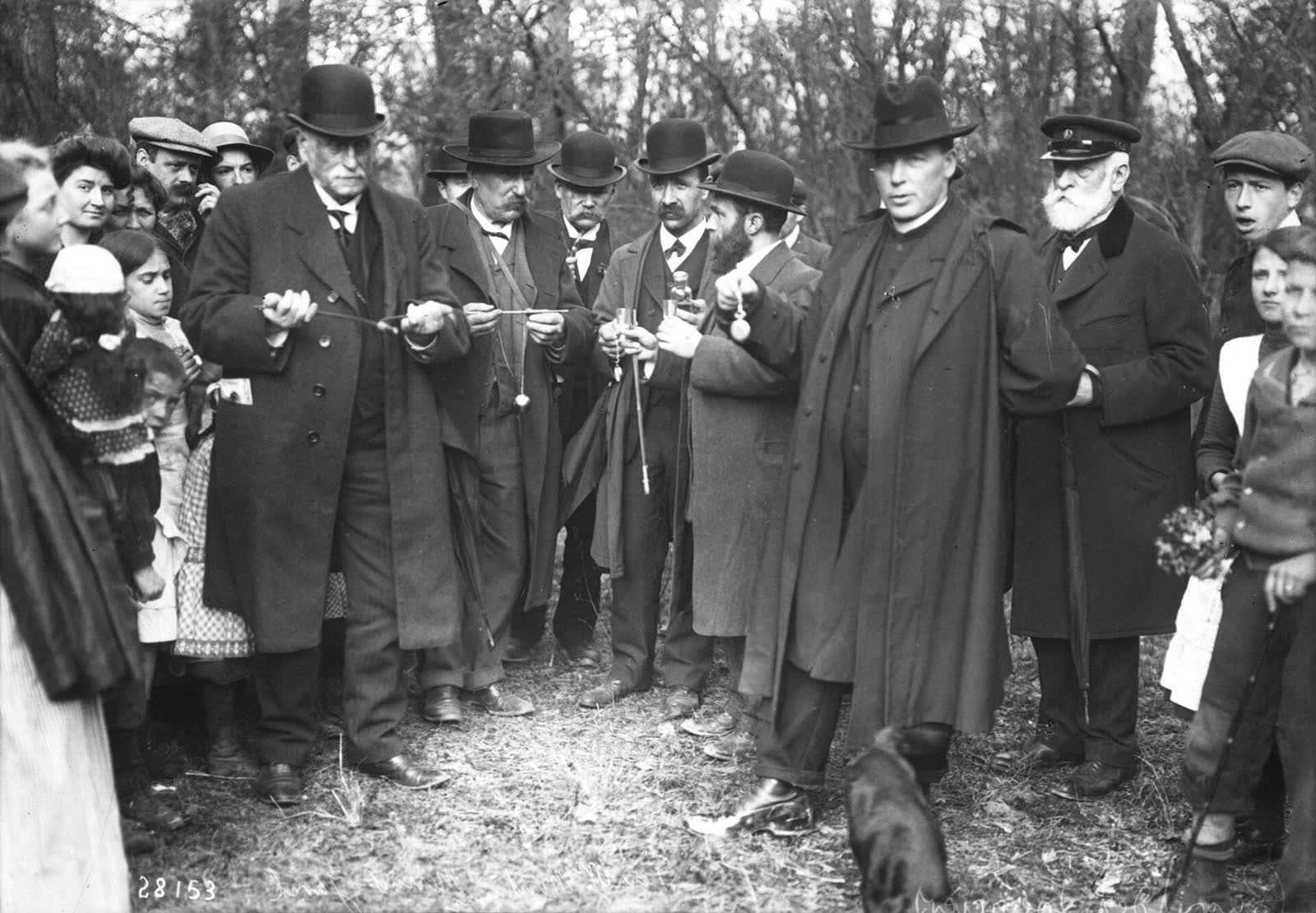
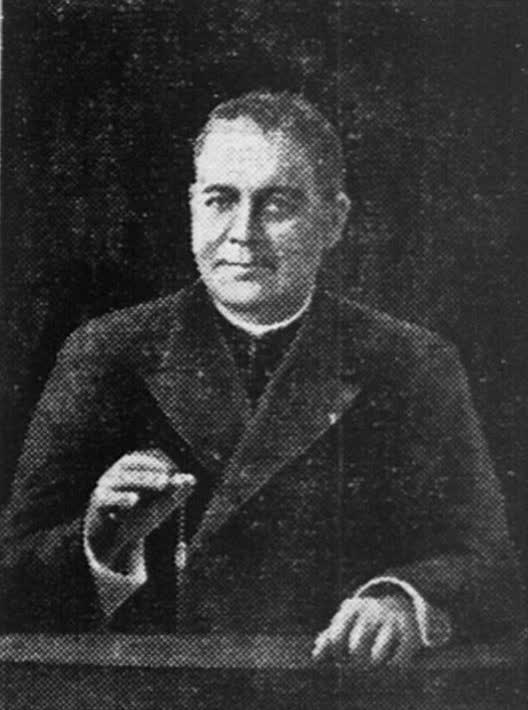
Water diviners kept the rod for centuries. The pendulum only really took hold at the start of the 20th century, especially in France. In 1913, a congress brought dozens of dowsers together near Paris for open-air demonstrations. A few years later, a priest from the Pas-de-Calais, Abbé Alexis Bouly, coined the word radiesthésie, from the Latin radius, ray, and the Greek aisthêsis, sensitivity: sensitivity to radiation.
The most famous of all was a Swiss priest, Abbé Alexis Mermet, nicknamed "the prince of dowsers". He claimed he could work at a distance, on a simple map or a photograph. His book, Comment j'opère ("How I work"), published in 1935, has remained a classic.

How does it work?
Nobody really knows, and opinions have clashed for two centuries.
In 1833, the French chemist Michel-Eugène Chevreul, the father of colour theory, studied the pendulum very closely. His conclusion: it is our tiny involuntary movements that make it turn, without our being aware of them. Since then we speak of the ideomotor effect.
Dowsers don't dispute it: of course the hand moves. But for them, the question is what guides the hand. The pendulum would be an amplifier: it makes visible a perception the body already has and the conscious mind doesn't notice. That perception is what you must learn to listen to, without trying to influence the answer.
Bélizal and Chaumery's universal pendulum
In the 1930s, two French researchers, Léon de Chaumery and Count André de Bélizal, went further. In their Essai de radiesthésie vibratoire, published in 1939, they claimed that every shape emits invisible "colours", just as a prism splits light. These are shape waves.
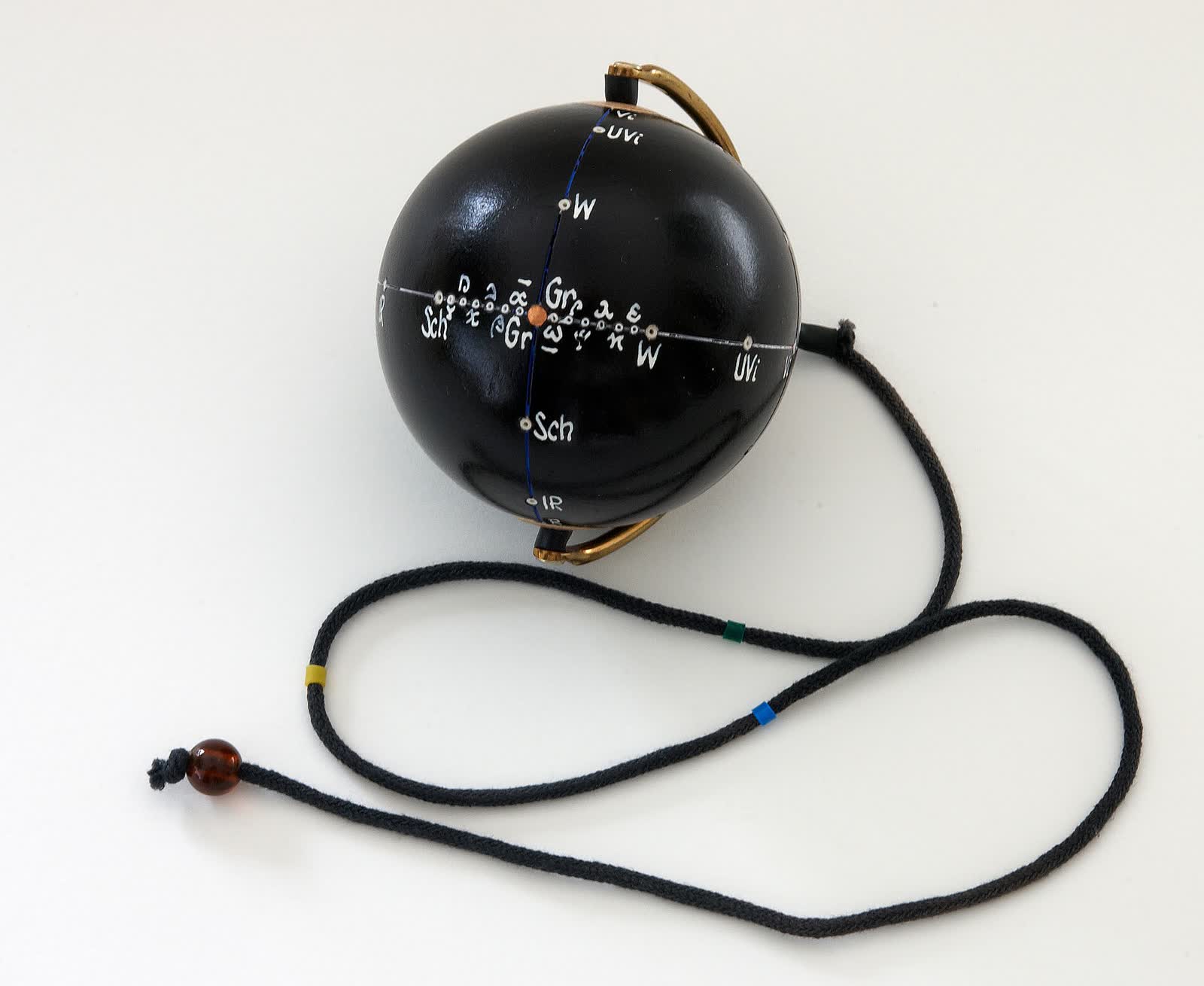
To pick them up, they developed the universal pendulum: a black sphere, graduated like a globe, with an equator marked with the colours, from red to violet, infrared, ultraviolet, and a colour you cannot see, negative green. The cord, also marked, lets you tune the instrument to the colour you are looking for. From the same research came the dowsing pile, made of stacked hemispheres.
The cosmobiologist Otto Brock, whom Antoine often quotes, always carried a universal pendulum, model 5.4, fitted with four hemispherical piles, and a second, Egyptian-style pendulum in rock crystal.
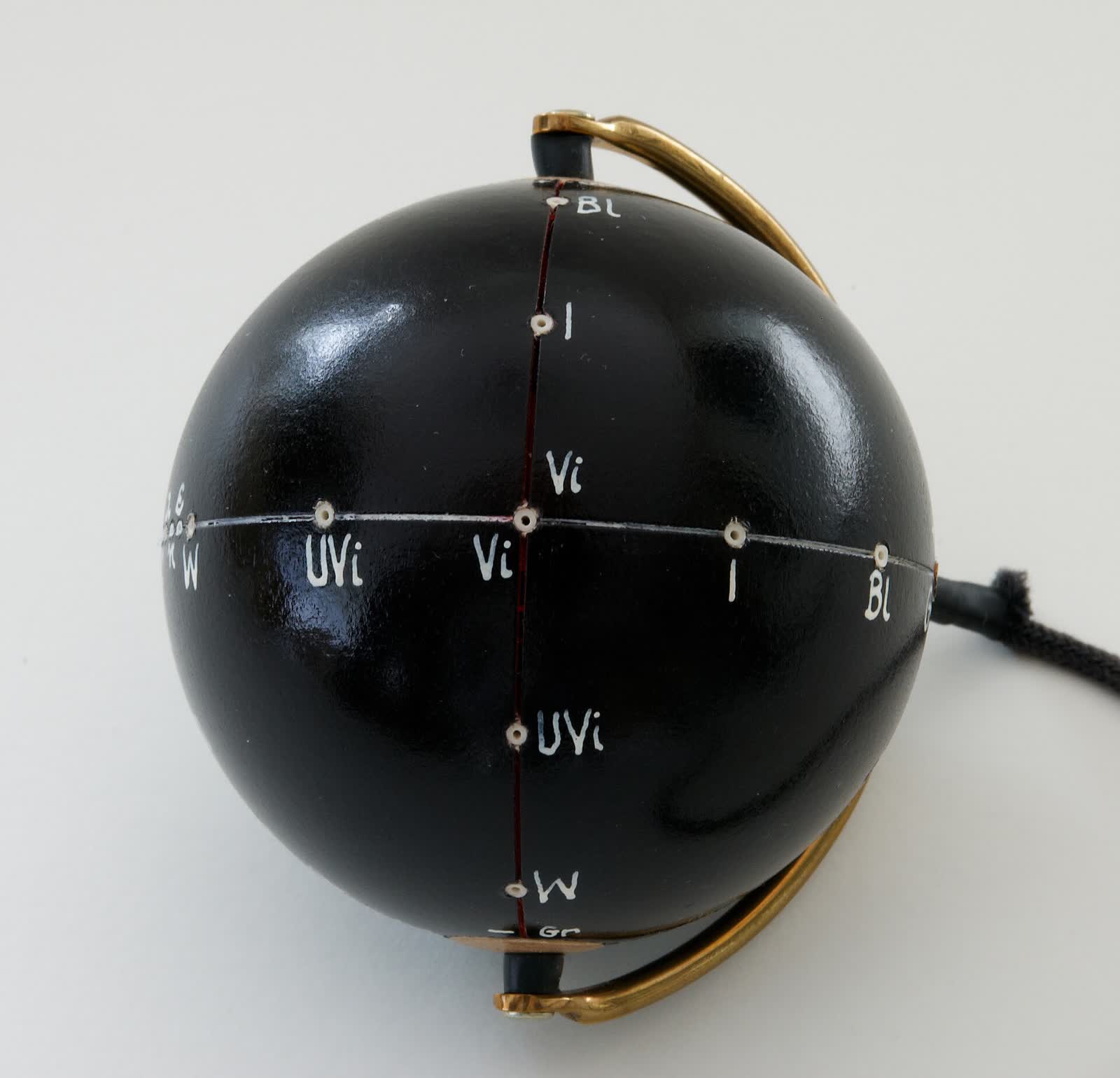
All the research on shape waves started there.
The emitting pendulum
This is what sets Antoine's practice apart. An ordinary pendulum asks. An emitting pendulum acts.
The gesture is simple: instead of letting the pendulum move on its own, you deliberately make it turn, in regular circles, above what you want to "inform". Antoine did this over his intention squares before placing them in the Commodore: one minute of rotation, no more.
For this use, he preferred two models:
- the Egyptian pendulum in rock crystal, which he considered a broad-spectrum emitter;
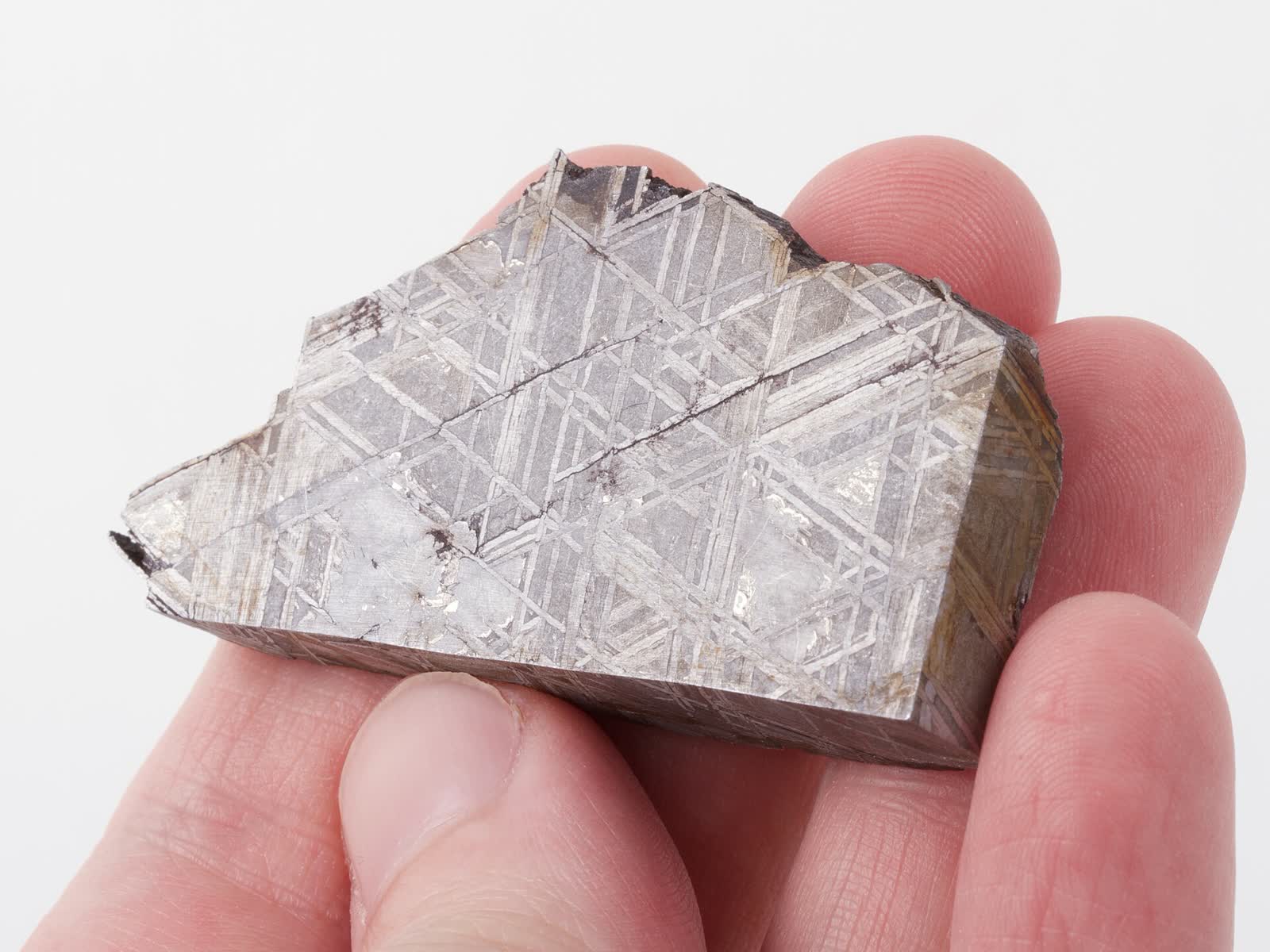
- the meteorite pendulum, and in particular one containing a fragment of Muonionalusta.
Muonionalusta is an iron meteorite that fell about a million years ago in northern Sweden and was discovered in 1906 near the Muonio river. Cut and polished, it reveals an astonishing pattern of crossed lines, the Widmanstätten figures, which betray its octahedral structure. It was this eight-faced structure that made it, for Antoine, the most effective of all in radionics.
The right string length
You don't hold a pendulum just any old way. Otto Brock insisted on two things: an insulating string rather than a metal chain, and a twisted string.
And length matters. Antoine gave three pairs of lengths, using the physicist's formula: the length of a pendulum depends on the square of its period.
| Tuned to | String lengths |
|---|---|
| The Earth day | 10.8 cm or 43.2 cm |
| The Earth year | 5.5 cm or 22 cm |
| The Platonic year | 13.75 cm or 55 cm |
Where do these numbers come from? We redid the calculation. A 10.8-centimetre pendulum swings exactly seven octaves below the tone of the day, 194.18 hertz. A 22-centimetre pendulum swings seven octaves below the tone of the year, 136.10 hertz. In other words, setting your string to these lengths means tuning your pendulum to the tone of the Earth. And going from one length to four times that length takes you down one octave: you stay on the same note.
Getting started
- Hold the string between thumb and index finger, elbow on the table, wrist relaxed. The pendulum should hang still, a few centimetres above the table.
- Set your convention. Ask it to show you "yes", then "no". Most often, yes is a clockwise rotation and no an anticlockwise rotation or a swing. Write down what it shows you: this is your code, and it may differ from someone else's.
- Ask precise questions that can be answered yes or no. "Is this the right day to sign?" rather than "What is going to happen?".
- Stay neutral. If you want an answer too much, your hand will give it. Dowsers advise you to settle, breathe, and not to question the pendulum about what upsets you.
- Say thank you and stop after a few questions. Tiredness distorts the answers.
For a full step-by-step guide, read How to use a pendulum.
The cosmo-magnetic pendant
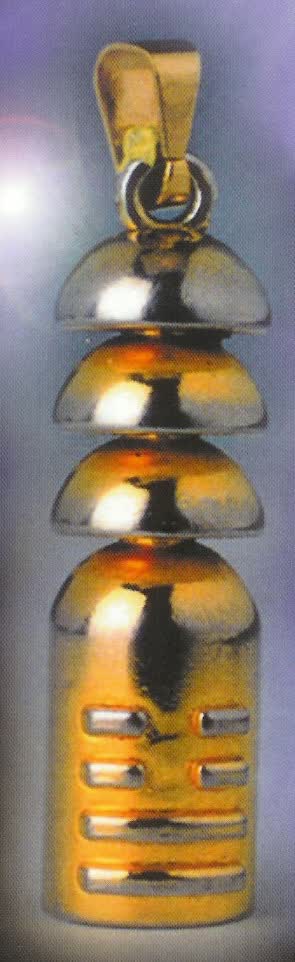
Antoine gives a special place to the cosmo-magnetic pendant of Dr Francis Frandeau de Marly, patented in 1984. It is a small cylinder of brass plated with fine gold, 39 millimetres high and weighing 22 grams, which contains:
- three elements 12 millimetres in diameter, like a miniature Chaumery pile;
- a fourth element carrying a Fortuna Major-type selector, the figure of great luck.
Its name gives its two axes: "cosmo" for the east-west axis of balance between sky and earth, "magnetic" for the north-south axis. Held vertically, its top emits positive green and its base negative green.
You can wear it around your neck, alone or with others. But it can also be used as a detecting pendulum and, above all, as an emitter: it gives off both fine waves, on narrow bands, and broad vibrations.
Antoine said the same of the Star Gate, his medal with thirty-six stones: hanging from its chain, it becomes an exceptional pendulum, both detector and emitter.
Finding your time of birth
Antoine mentions one last use, valuable for astrology. If you don't know your time of birth and no document can tell you, a dowser can use a pendulum to look for the moment you were born, by asking about the hours one by one.
It is essential information for calculating your birthday trip and every technique that needs the exact time.
Before turning to the pendulum, look for the time in your documents: in Belgium, it appears on the birth certificate, which your municipality can issue. In France, it appears on the full birth certificate (acte intégral), to be requested from the town hall of the place of birth. Elsewhere, ask the civil registry office of your place of birth.
Frequently asked questions
What is a dowsing pendulum used for?
To answer questions with yes or no, to look for a spring or an object, to choose between several options. In the tradition Antoine follows, it is also used to emit: you deliberately make it turn to record an intention.
Who coined the word radiesthésie (dowsing)?
Abbé Alexis Bouly, a priest from the Pas-de-Calais, in the early 20th century. The word combines the Latin radius, ray, and the Greek aisthêsis, sensitivity.
What is the universal pendulum?
A pendulum shaped like a graduated sphere, developed by Léon de Chaumery and André de Bélizal in the 1930s to pick up the invisible colours emitted by shapes, including the famous negative green.
What is an emitting pendulum?
A pendulum you deliberately make turn above an object or an intention square to inform it. Antoine used an Egyptian pendulum in rock crystal or a pendulum containing a fragment of the Muonionalusta meteorite.
What string length should I choose?
Antoine gave 10.8 or 43.2 cm to tune to the Earth day, 5.5 or 22 cm for the year, 13.75 or 55 cm for the Platonic year. These lengths make the pendulum swing at an octave of the tone of the Earth.
How do I get started with a pendulum?
Hold the string between thumb and index finger, elbow resting, set your yes and no convention, ask precise questions and stay neutral about the answer.
Can a pendulum find a time of birth?
According to Antoine, yes, when no document can tell you. But look for the birth certificate first: in Belgium as in France, the time is often on it.