When you no longer know what? When you no longer know who? When you no longer know how? When you no longer know where?
Entry 2-510000, Antoine de Saint-Christophe
These four questions opened the very first entry in Antoine's catalogue of places, the one numbered 2-510000. Four questions everyone has asked one day. Facing a choice that commits a whole life. Facing two paths that seem equal. Facing a decision you turn over and over at three in the morning.
For those moments, Antoine had an address.
Where the crosses lean
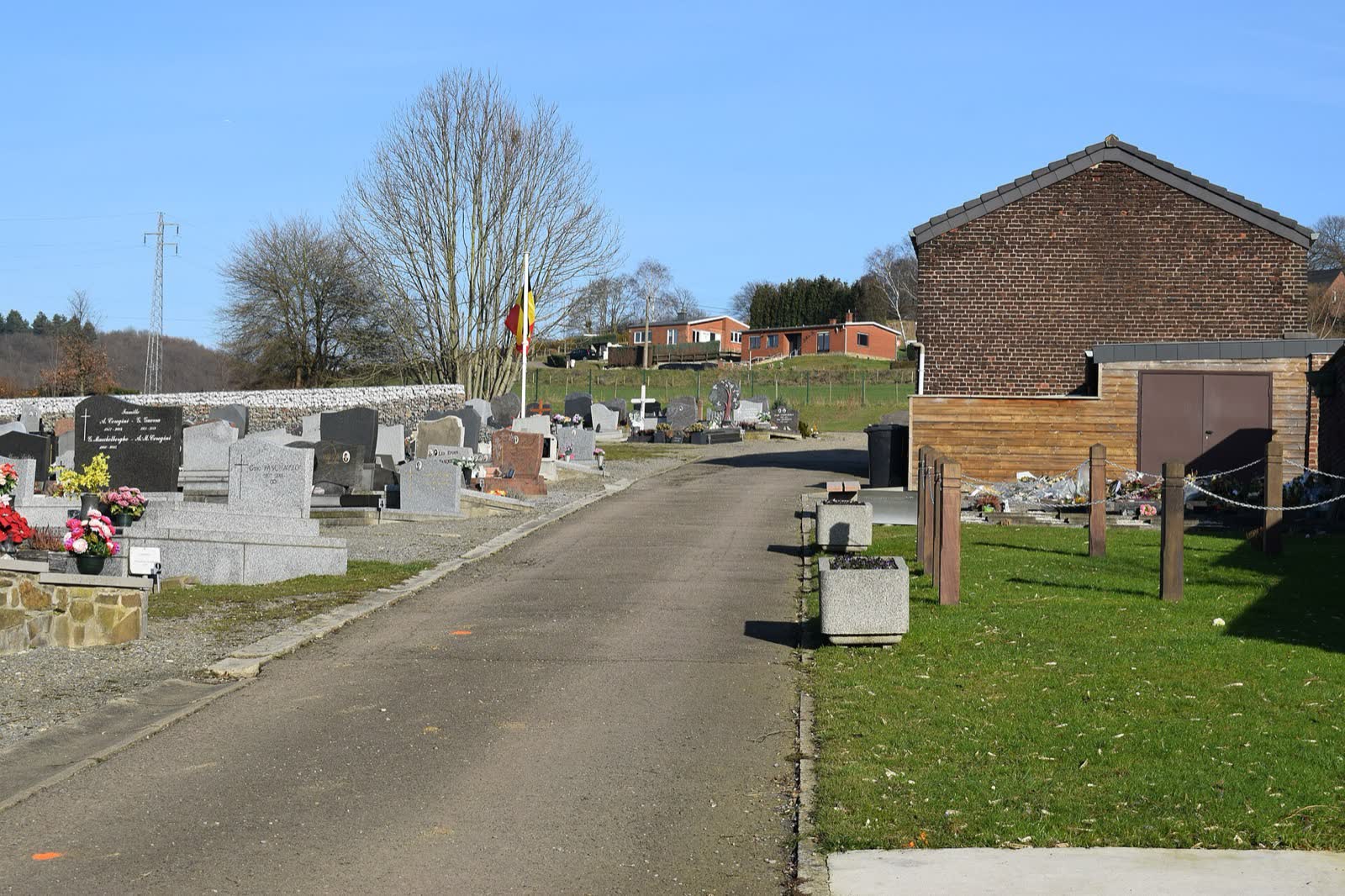
At the foot of a hill, east of Liège, in the Vesdre valley, there is an old cemetery. The cemetery of Vaux-sous-Chèvremont.
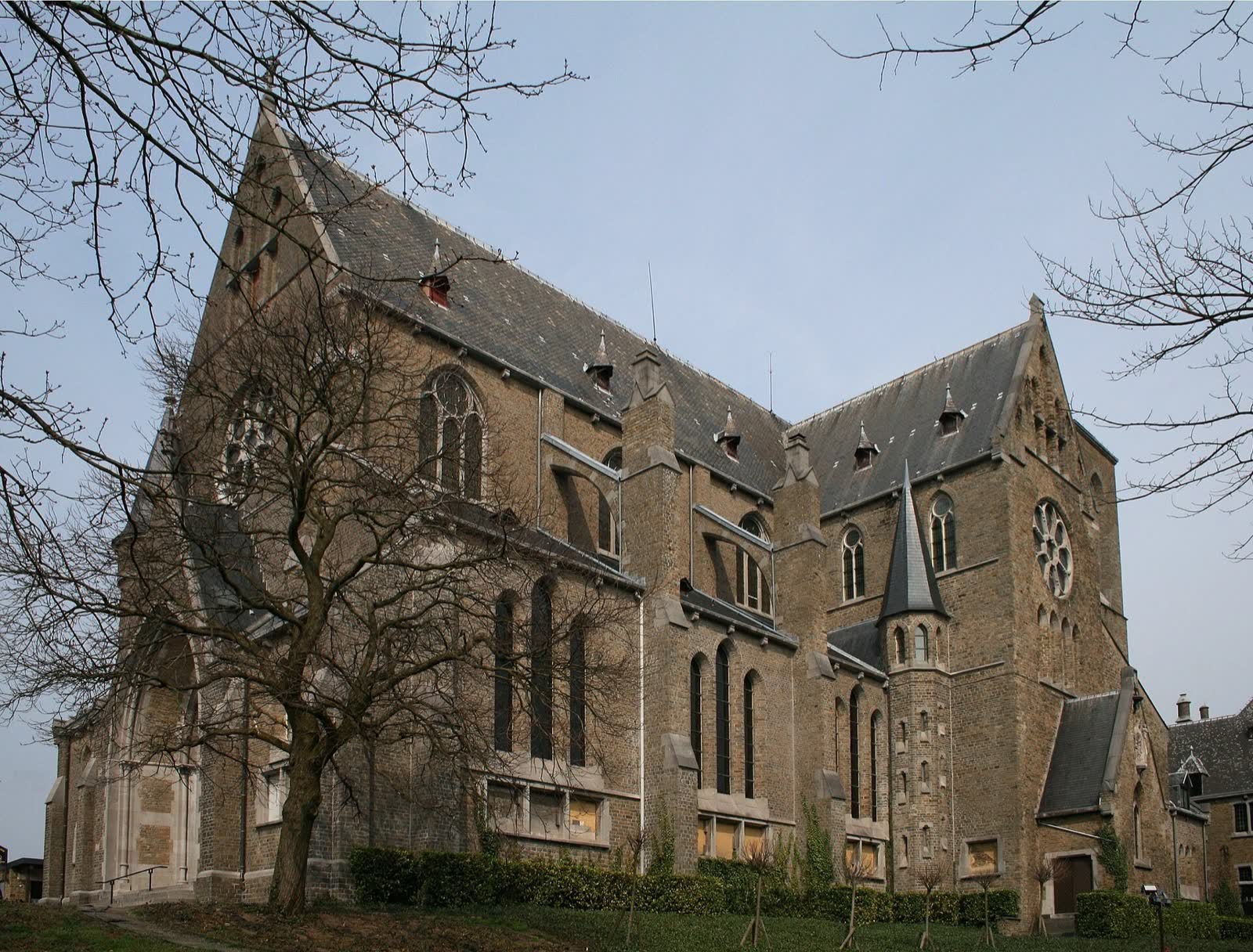
Almost no one is buried there any more. Barely one new resident a year, in the old family vaults. The paths are silent. The crosses lean. Above, on the ridge, stands the basilica of Notre-Dame de Chèvremont, a place of pilgrimage for centuries.
And yet, Antoine wrote, this forgotten cemetery has been visited for decades by very high-ranking people. They do not come for a family grave. They come for the monument that stands in the middle.
Two lions, a coat of arms, a giant
At the heart of the cemetery rises an imposing octagonal tomb, belonging to an old family of knights.
On its main face, a very fine coat of arms. Two lions face each other and frame the shield. In the shield itself, a third lion looks at a strange figure: a powerful man, a kind of Hercules, carrying a club on his right shoulder.
Antoine could not help seeing something more. Facing these lions guarding the tomb and this standing giant, how could you not think of Heracles, one of whose labours was to overcome Cerberus, the dog guarding the Underworld? The hero who goes down among the dead and comes back. The only one who knows the way home.
And the octagonal shape strengthens the symbol further. Eight faces, eight directions. For the ancients, eight is the number of passage, of resurrection, of what links the world below and the world above. Baptisteries are octagonal. So is the monument at Vaux.
The hill of three temples
To understand the power of the place, you have to look up at the hill.
The basilica of Chèvremont, Antoine recalled, was built on the ruins of an old fortified castle. And that castle had itself been built on an ancient Celtic temple, which tradition dates back more than three and a half thousand years before our era. Three sanctuaries stacked in the same spot, as if every age had recognised that the hill was a place apart.
The Liège chronicler Jean d'Outremeuse reports that at the foot of the mountain there was also a very old chapel dedicated to Saints Cosmas and Damian, built by Saint Monulph at the end of the 6th century. It no longer exists, but it cannot have been far from the cemetery.
And local legend still speaks of the giants of Chèvremont, beings from another age said to have lived on the hill. Antoine wondered whether the octagonal tomb might be hiding an even older secret: perhaps the remains of some of those giants. Hence the name he gave the place: the Mont des Géants, the Mount of Giants.
He also noted, with a twinkle, something the locals know well: during the great wave of UFO sightings over the Liège region, several were reported right above this old cemetery.
A vibration from the centre of the Earth
What people come to find at the Mont des Géants, Antoine described precisely.
The Mont des Géants gives off a very subtle vibration coming from the centre of the Earth, which allows each of us, if we know how to pick it up, to take the right decision, the right direction, to always make the right choice.
Antoine de Saint-Christophe
The guardians of the monument, he said, will give you the right decision through a dream, within seven days. On one condition: follow the rules of the Traveller's Rite.
Many esotericists, he added, see this monument as a kind of standing stone, a gateway of life, comparable to Mount Bugarach near Rennes-le-Château in the south of France, or, closer to home, to the rock of Roche-à-Frêne in the Aisne valley. For Antoine, Chèvremont, Roche-à-Frêne and the megalithic site of Wéris formed one single whole, a network of stones that give access to the energies of the earth.
The way in: from below, never from above
Antoine insisted: the path is part of the rite.
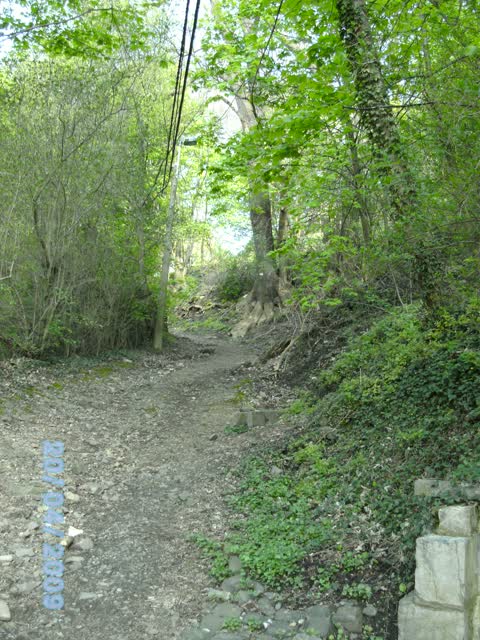
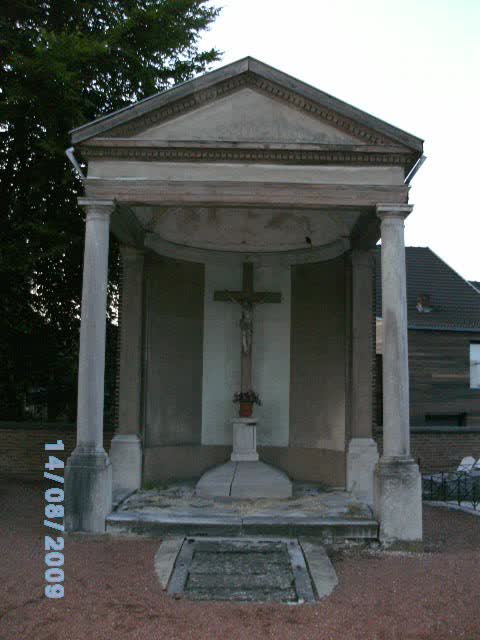
- You must go to the cemetery in the direction of the Way of the Cross, that is, by taking the rue de Namont.
- You must reach the place from the bottom of the mound, and never from the top, via the Thier de la Chapelle.
You climb towards the answer. You do not walk down to it.
He clarified one more thing, to avoid any confusion. On the hill, people also come to venerate Saint Begga, or to ask a grace of Notre-Dame de Chèvremont. These are completely separate from the octagonal tomb. You can do both, but they are not the same forces.
The Traveller's Rite
Here is the rite, as Antoine passed it on.
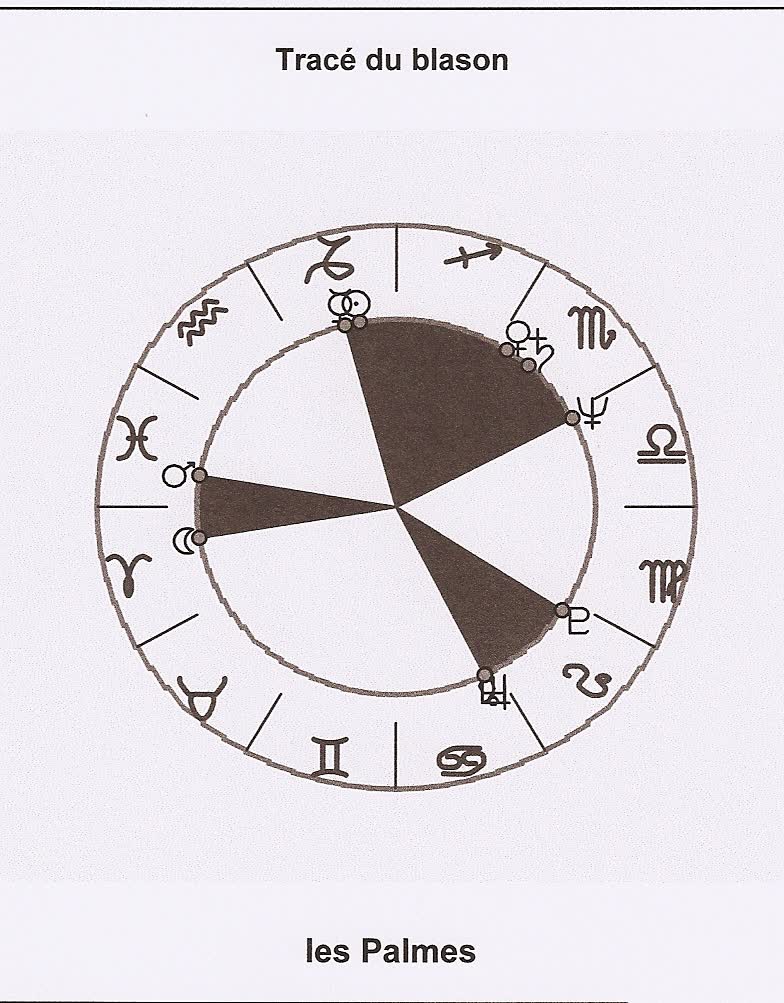
What you need: your astrological coat of arms, that is, the heraldic figure that matches your birth chart.
- Stand in front of the front face of the monument, the one bearing the coat of arms.
- Touch the monument with your own coat of arms.
- Do the same on each of the eight faces, moving clockwise.
- Then keep your coat of arms, now "charged", on you for seven consecutive days.
Within seven days, Antoine said, the answer comes through a dream: the right decision, the right direction, the right choice.
To strengthen the connection
Antoine reported several ways of amplifying the rite.
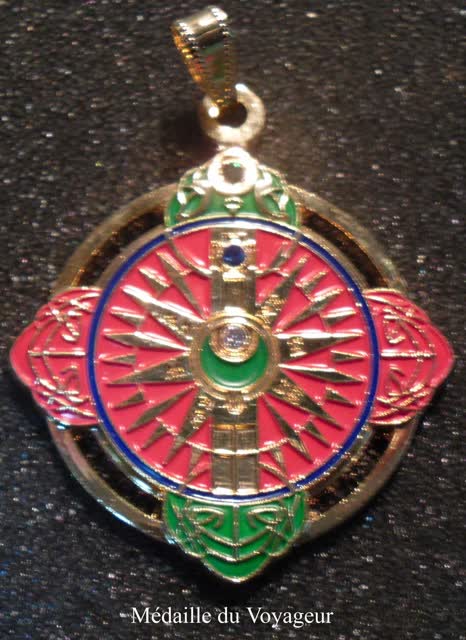
The traveller's medal. Many insist that wearing an Agadez medal, the Southern Cross of the Tuareg, or a traveller's medal, strengthens the connection. Antoine spoke of a "fusion of egregores of the same nature": the traveller calls the traveller.
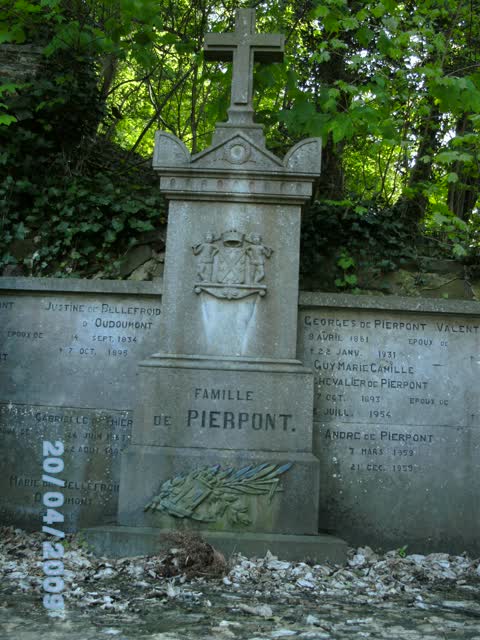
The Pierpont tomb. Some claim that walking past the tomb of the de Pierpont family, at the far end of the cemetery, after the rite strengthens it "in a masterly way". Antoine liked to explain it through the "language of the birds", the old play on sounds: in Pierpont there is pierre (stone) and pont (bridge). A stone that makes a bridge. Unless it is this family's coat of arms that plays a subtle role. "No one knows," he wrote, "but many have noticed it."
The mirror. The people who come with you have no influence at all on the connection. But if one of them holds a convex mirror reflecting your back while you perform the rite, then, on top of the answer you are waiting for, you will receive a gift of divination.
When to go
The moment, Antoine said, matters little. But the connection "flows" more easily when natural negative ionisation rises:
- at daybreak;
- at dusk;
- at night;
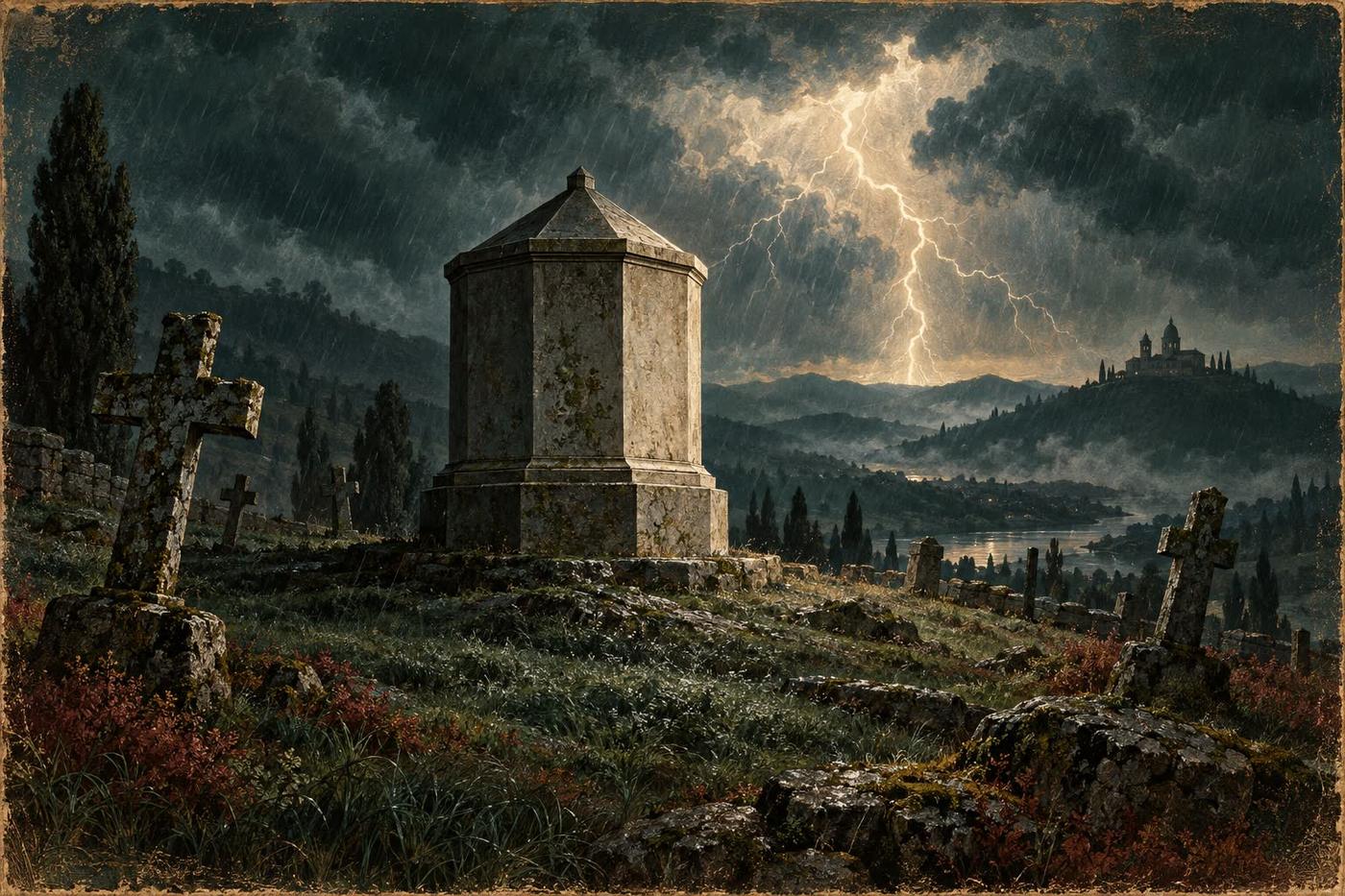
- in the rain;
- and better still, when a thunderstorm breaks.
Picture the scene: the old cemetery in the storm rain, the leaning crosses, the octagonal monument gleaming in the lightning, and you slowly walking round its eight faces.
After the visit
Antoine always ended his entries with a little bit of life. Leaving the old cemetery, you can climb the Way of the Cross to the basilica and taste, in a brasserie at the top, the local speciality: "Li fricasseye di Tchivrimont" (Walloon for "the Chèvremont fry-up"): bacon, sausage and two eggs, as in 1900.
Or you can get back in your car, parked on rue de Namont, and drive around the Mont des Géants. "It is much less tiring for older people," he wrote, "and for the less old too."
And since you are in Vaux-sous-Chèvremont, the grave of Pierre de Lambert, in the new cemetery, is not far away. Perhaps a chance to pay him a visit. Read: the Liège benefactors.
Antoine's advice
If you can, always take a miniature bottle of verbena with you for the climb.
Antoine de Saint-Christophe
Why verbena? Read: the lucky herb
You don't know your astrological coat of arms, or you can't travel to Vaux-sous-Chèvremont? Write to the workshop and tell us which decision lies ahead: we will tell you how to prepare your visit, or how to connect with the Mont des Géants from a distance.
Photos: Jean Housen (CC BY-SA 4.0) and Jean-Étienne Poirrier (CC BY-SA 2.0), via Wikimedia Commons.
Frequently asked questions
Where is the Mont des Géants?
In the old cemetery of Vaux-sous-Chèvremont, east of Liège (Belgium), in the Vesdre valley, at the foot of the hill of the Chèvremont basilica.
What do people come to find at the Mont des Géants?
The right decision. According to Antoine, if you follow the Traveller's Rite, the answer comes through a dream within seven days.
Which way should you arrive?
Always in the direction of the Way of the Cross, via rue de Namont, and from the bottom of the mound. Never from the top, via the Thier de la Chapelle.
What should you bring?
Your astrological coat of arms, the heraldic figure that matches your birth chart. You touch the eight faces of the monument with it, clockwise, then keep it on you for seven days.