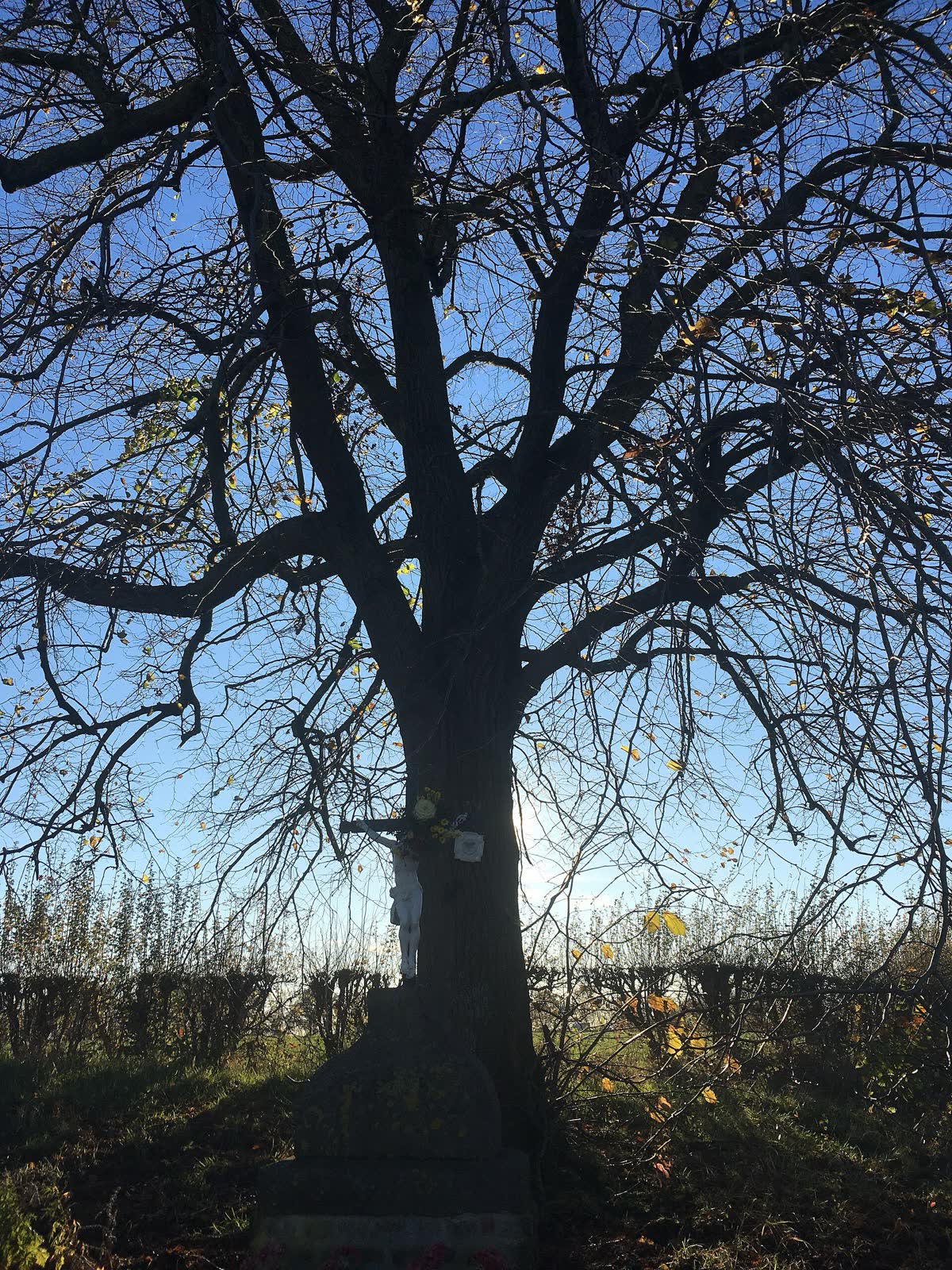
Everyone should see a nail tree once in their life.
A trunk covered in metal. Hundreds, sometimes thousands of nails, driven in at every height, rusty, shiny, bent, some so old that the bark has almost swallowed them. And sometimes, pinned along with them, a ribbon, a photo, a little folded piece of paper.
It is one of the oldest traditions in Wallonia (French-speaking southern Belgium). And one of the rites Antoine loved most.
Why a nail
To understand, you have to go back to the time when the village blacksmith was a figure apart, something of a sorcerer, who tamed fire and metal.
Of all his works, the nail was, Antoine wrote, the most charged with magic. A simple, pointed object that fixes and holds. Its power was linked to death and to passage: the nail is what closes the coffin, and tradition says it was also used, so the story goes, to finish off the vampires of Farciennes.
In popular belief, the trouble, the worry or the misfortune you "entrusted" to the nail was meant to disappear as the nail went into the wood. An eminent Walloon folklorist noted it: that shows how quickly it acts.
Driving in a nail means fixing a request. It means entrusting it to the tree, which keeps it.
Li Clawe Fawe in Jalhay: the strongest in Belgium
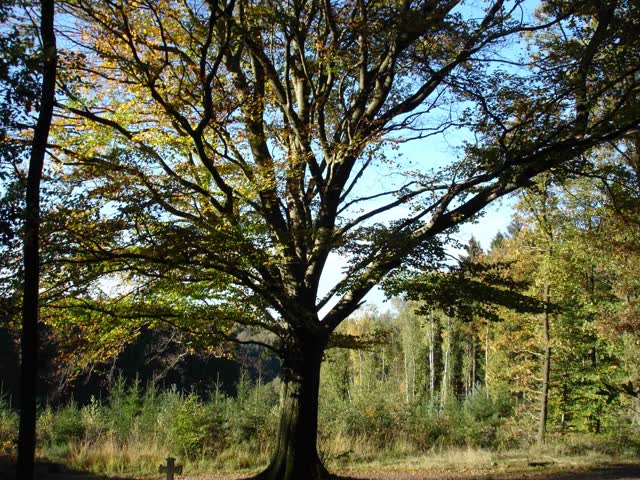
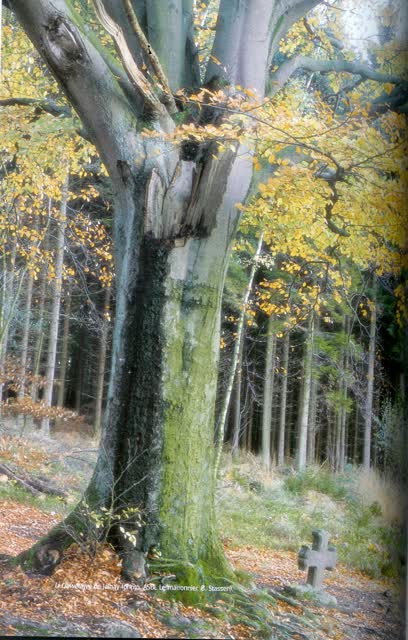
The first tree on Antoine's list has a Walloon name: Li Clawe Fawe, the nail beech. It stands deep in a wood, on the heights of Jalhay, between Verviers and the Hautes Fagnes (the High Fens).
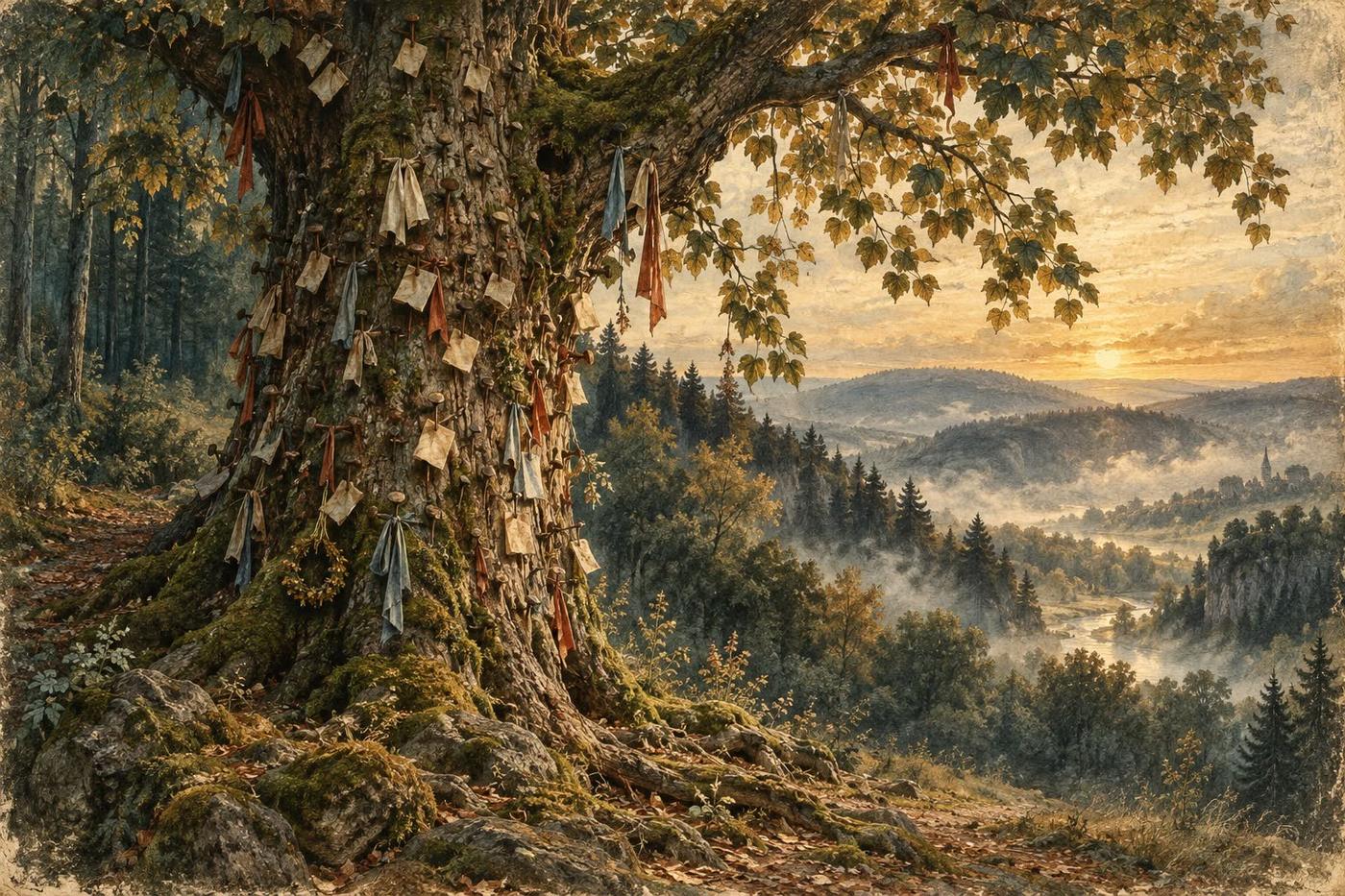
For Antoine, it was quite simply the strongest nail tree in Belgium.
The way there
Antoine's route started from Herstal, and he described it with a surveyor's precision.
- Motorway E40 towards Aachen, then E42 towards Verviers. Exit Heusy, direction Stembert, then the N629 towards Jalhay.
- A little before the centre of Jalhay, turn left towards the small village of Fouir, then Foyr, up a paved hill.
- Landmarks: a "Thier Paquay" bus stop, an old water pump and a crucifix at a first crossroads. At the second crossroads, left then right: two glass recycling bins and big flat stones along the road.
- Carry straight on to the sign marking the end of Foyr. Facing the fork, turn left and leave your vehicle 400 metres further on, at the edge of the wood.
- Follow the forest track for 350 metres. The tree is on your left, where two paths cross twice.
You will recognise it: at the foot of the tree stands a dressed-stone crucifix, with the epitaph "R.I.P. J.P. Malay, 1858-1885". A young man who died at twenty-seven, whose cross has watched over the tree for more than a century.
What Li Clawe Fawe brings
Antoine associated it with revitalisation and getting going again after a hard period. And above all with three areas:
- Finding a job quickly, getting a promotion, a bonus, real satisfaction in your work.
- Happiness as a couple and a stable relationship.
- Getting your strength back, when you feel you are at the end of your tether.
Antoine reported that a druidess, keeper of the tradition of Yggdrasil, came regularly to "communicate" with this tree, which she considered her ally. For him, the link with the world tree of the ancient Norse was no coincidence. Read: the runes and the world tree.
The Coftice lime tree: the friendship tree above all others
The second tree is in Herve, at the place called Outre-Cour, beside the N3 road, just before a garage, along a little path on the right.
A long history
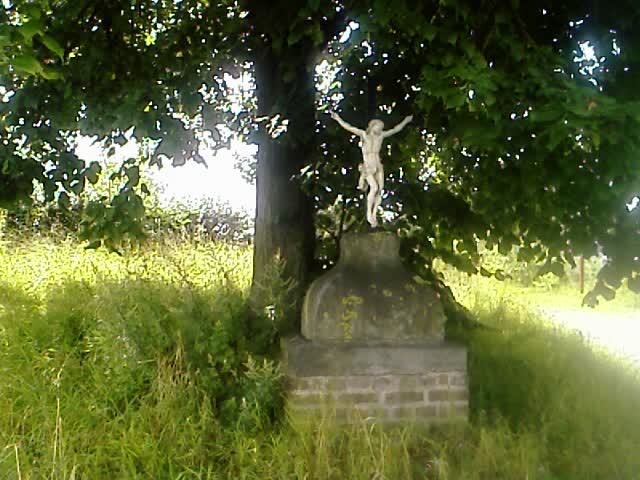
The old Coftice lime tree was a remarkable tree: six metres (about 20 feet) round. It stood on a mound, where three paths met, at the place called "campagne de Melen", with a calvary on its north side.
Like the one at Steilmont, in Gilly, it was studded with several thousand nails. Following a 15th-century custom, the faithful went to the blacksmith for silver or iron nails, made specially, to drive into its trunk and obtain various graces. For the Rogation days, people came in procession from eight parishes.
Already mentioned in 1566, the old lime tree was one day struck down by lightning. A young tree replaced it. And the nailing tradition carried on, all the more effectively, Antoine wrote, because its egregore is very old. He also noted that as early as the 12th century, Herve had another nail-studded lime tree, at the place called Six Fontaines.
What the Coftice brings
Antoine called it the friendship tree above all others.
- It makes new meetings easier in general, and very often meeting a partner. "As they say in Liège, he's the one: the circle is closed."
- It always restores a conflict situation, in court, in business or in a couple.
- It favours business negotiations, communication between people and prosperity.
- And since the dawn of time, it has been reputed to ease trouble and then remove it for good, whatever the area.
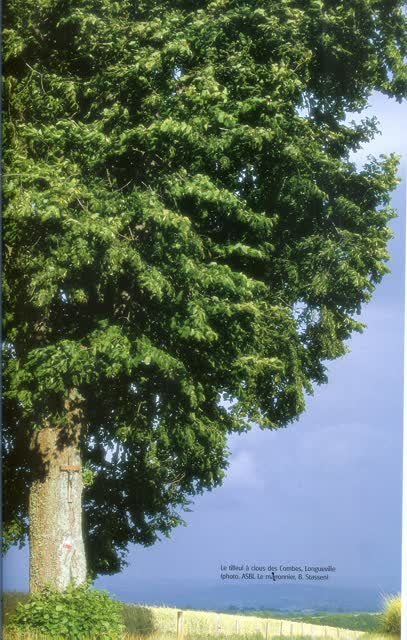
The lime tree of the Croix des Combes: the hidden defender
The third tree is the most surprising. Antoine described it as the most fabulous tree of all when it comes to justice.
The lime tree of the Croix des Combes acts, he wrote, as a real hidden defender in a dispute with the civil courts. It pushes any procedure back in time "in an incredible way", by bringing on endless additional steps. So much so that the other side, discouraged, ends up dropping the case.
Antoine particularly recommended it in case of:
- a stubborn lawsuit;
- a tax dispute;
- an administrative dispute.
The omen of the Combes
The "nailers" of the Croix des Combes know an omen. When they see game running across the fields before performing the rite, it very often means their case has already been "heard", and that everything will end with the case being dismissed.
For legal procedures, think of Monsieur Hawarden too, the magic tomb of Ligneuville, which helps you escape the law, authorities and red tape. Read the story.
These are traditions reported by Antoine. They are no substitute for legal advice.
The nail tree ritual
Antoine offered the nail tree ritual among the workshop's services, and went along on site with those who wished it, whether for reasons of mobility, safety or simply convenience. The principle is the one of the 15th-century faithful: a silver or iron nail, chosen for the occasion, driven into the trunk of the tree that matches the grace you are asking for.
| Your request | The tree |
|---|---|
| A job, a promotion, your relationship, getting your strength back | Li Clawe Fawe, in Jalhay |
| A meeting, a conflict to calm, a negotiation | The Coftice lime tree, in Herve |
| A lawsuit, a tax or administrative dispute | The lime tree of the Croix des Combes |
Antoine's advice
If you can, always take a miniature bottle of verbena with you for the rite.
Antoine de Saint-Christophe, on each of his three entries
Back to the map of places of luck
A job to find, a conflict to calm, a procedure weighing on you? Describe your situation to the workshop: we will tell you which tree to choose and how to prepare your nail.
Photo: Hoebele, CC BY-SA 4.0, via Wikimedia Commons.
Frequently asked questions
Why do people drive nails into trees?
Since the Middle Ages, in Wallonia, people have nailed certain trees to ask for a grace. The nail, made by the blacksmith, was the object most charged with magic: it fixes and it holds.
Which is the strongest nail tree in Belgium?
For Antoine, it is Li Clawe Fawe, the nail beech, deep in a wood on the heights of Jalhay, between Verviers and the Hautes Fagnes.
Which tree should you choose for a dispute?
The lime tree of the Croix des Combes, which Antoine called the hidden defender in a dispute with the civil courts. For legal procedures, he also suggested Monsieur Hawarden.
And for friendship?
The Coftice lime tree, in Herve, the friendship tree above all others.