In the Herstal workshop there were resonance tables, copper pyramids, a Commodore humming day and night. Magnificent instruments, but they never leave the room.
One day, Antoine asked himself a very simple question: what if you could wear all of this? Not a pendant you forget in a drawer, not an object on a shelf. Something you slip on in the morning without thinking about it, and which works all day long.
It took him months of trials to find the right fabric, the right way to print a circuit, the right way to charge the garment. The result is the radionic T-shirt: an organic cotton garment that brings together, on a single piece of fabric, four ideas dear to him. Your iris, your wish, Lakhovsky's circuit and orgone.
Luck, a vibration you can change
To understand this T-shirt, you have to go back to the definition Antoine gave of luck. He saw it as the most decisive force in our lives: a few seconds of bad luck, he said, can wipe out years of effort.
Luck is a cosmic vibratory imprint, fixed in matter and changeable by energies.
Antoine de Saint-Christophe
Fixed in matter: everyone is born with a sky of their own; that is the whole idea of cosmobiology. Changeable by energies: it can be tuned, strengthened, steered. The T-shirt is one of the ways Antoine came up with to do this every day, as close to the body as possible.
On this subject he liked to quote Julius Rosenwald, the former president of Sears, who put his success down to 95% luck and 5% talent. The only difference between him and his employees, Rosenwald said, was that the right opportunities hadn't come their way. We talk about it in the 4 principles of lucky people.
On the front: the iris of your eye
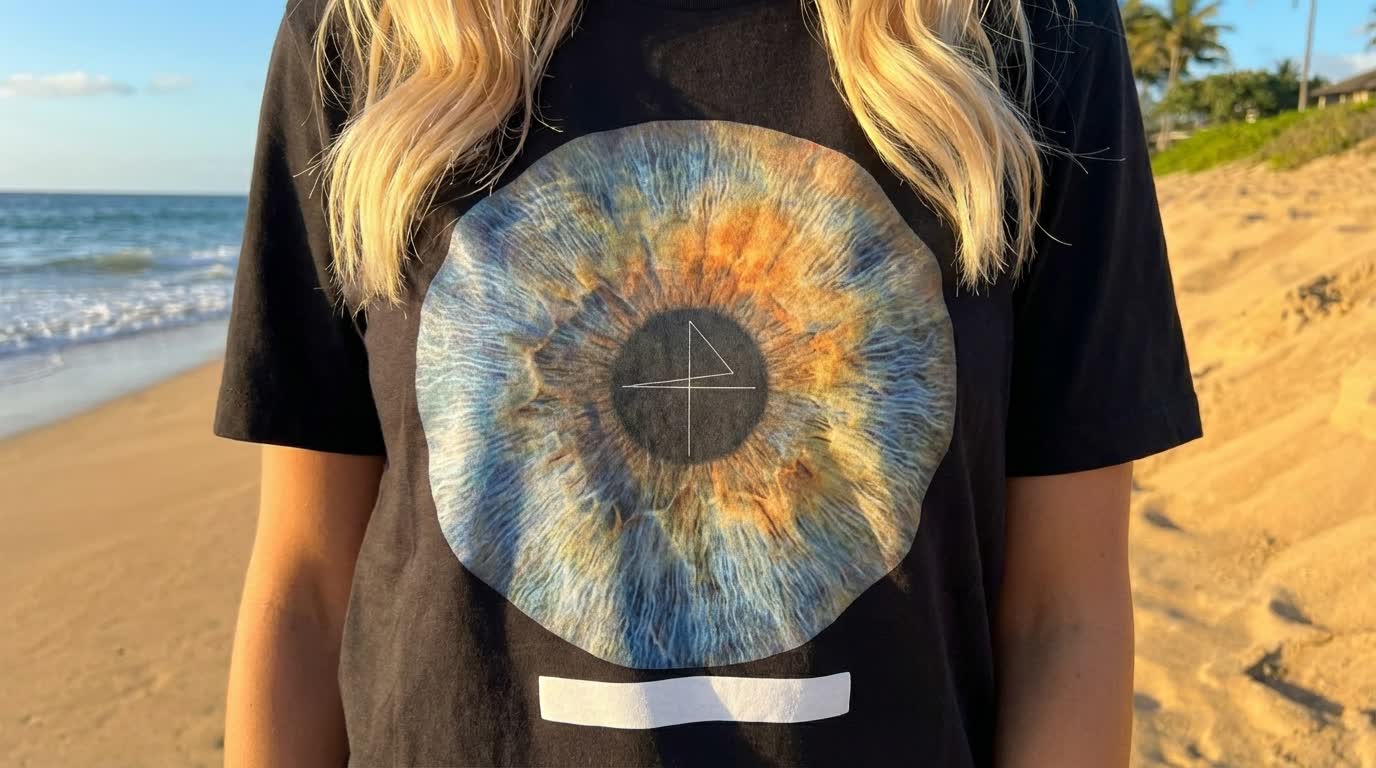
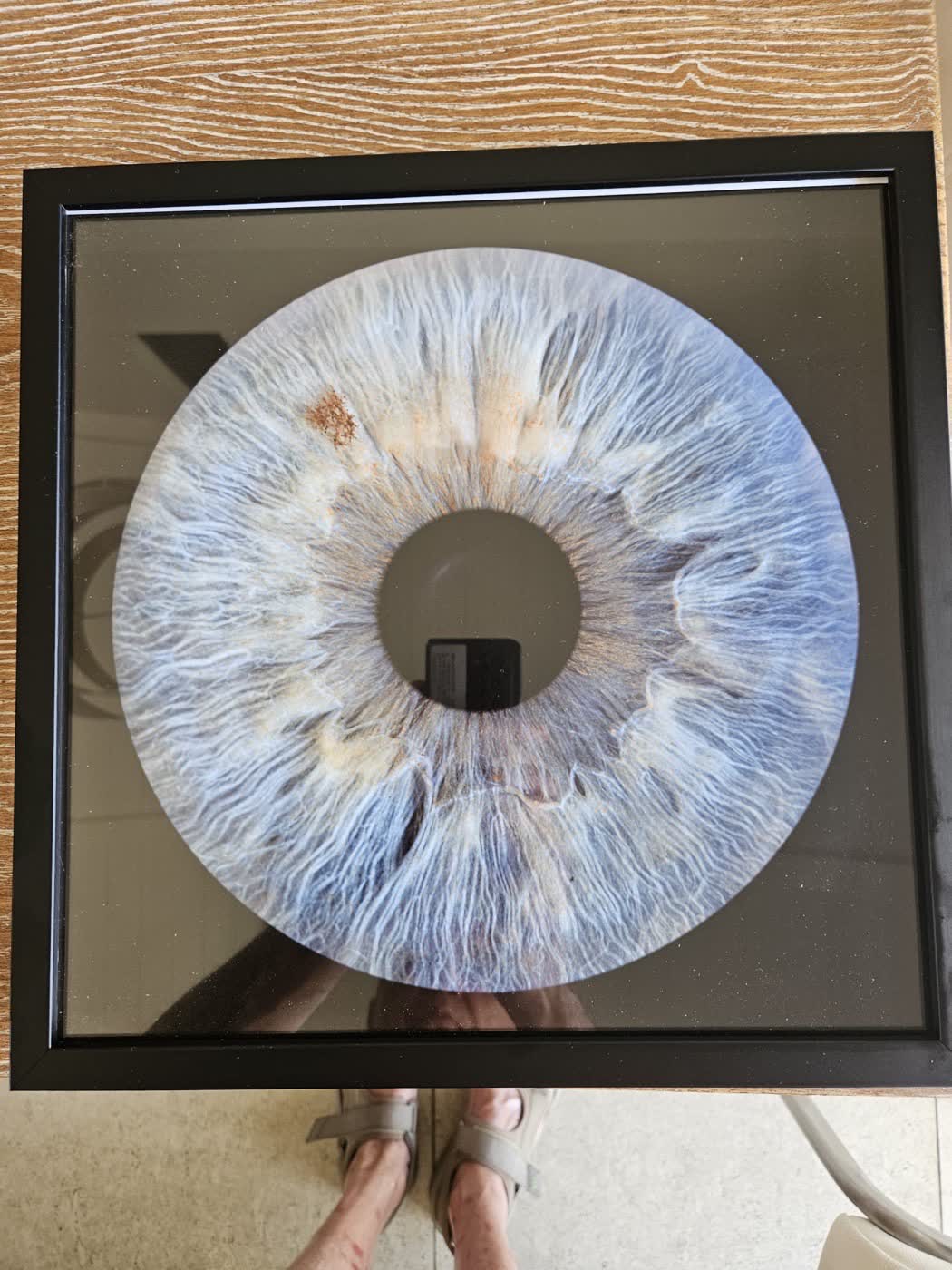
The main motif of the T-shirt is the iris of your own eye. Photographed in high definition, then screen-printed on the chest, 26 centimetres in diameter.
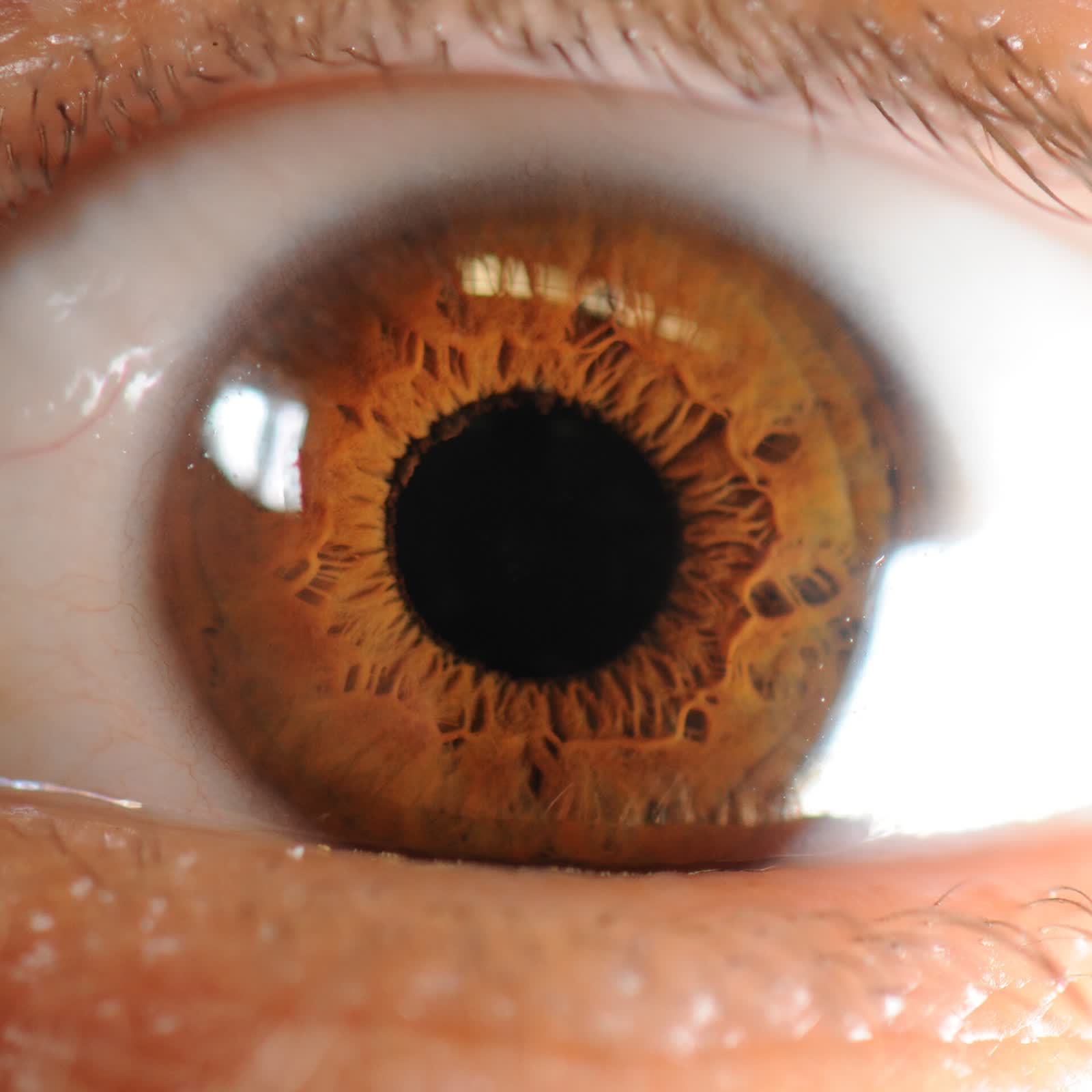
The iris is one of the most singular things we possess. Its fibres, crypts and colours take shape before birth and hardly change afterwards. No two are alike in the world: even identical twins, even the left and right eyes of the same person, have different irises. That is why it is used today to identify people at borders.
For Antoine, it is the perfect witness, like the photograph or lock of hair placed on a radionics table. The eye, he said, is the messenger of the three bodies.
The choice of eye is not left to chance:
- the right iris if you are right-handed;
- the left iris if you are left-handed, a left-hander trained to use the right, ambidextrous or of mixed laterality.
The photograph is taken in a professional studio near you. Antoine even planned for a photographer to come to your home, to a care home, a hospital, and even a veterinary clinic: nothing stops you from making a T-shirt for your dog.
In the centre of the pupil: your wish
This is the heart of the T-shirt, and its most beautiful detail. In the centre of the pupil, Antoine draws your wish.
Not spelled out: in the form of a sigil, an active drawing. A sigil is a wish condensed into a single sign. You write the sentence, keep some of its letters, join them with lines, and the figure that emerges carries the whole intention without anyone being able to read it. Antoine explains the method, with cade wood, in the article dragon's blood and cade wood.
For the T-shirt, he followed the technique of Spartakus Freemann. The wish is given its shape, then activated in a fully orgonised environment, and screen-printed in contrast: white sigil on a black ring, or black sigil on a white ring.
A surprising consequence: you don't need to wear the T-shirt visibly. Under a shirt or a jumper, the drawing works just as well. Your wish is, quite literally, at the back of your gaze.
There is also a version without a photograph, the Sigil model, where the drawing is placed on its own, over the heart.

Mi, fa, sol, la, si: the wish set to music
Antoine specified that the wish is continuously activated on the frequencies mi, fa, sol, la, si (E, F, G, A, B). These five notes have a story, and it is a beautiful one.
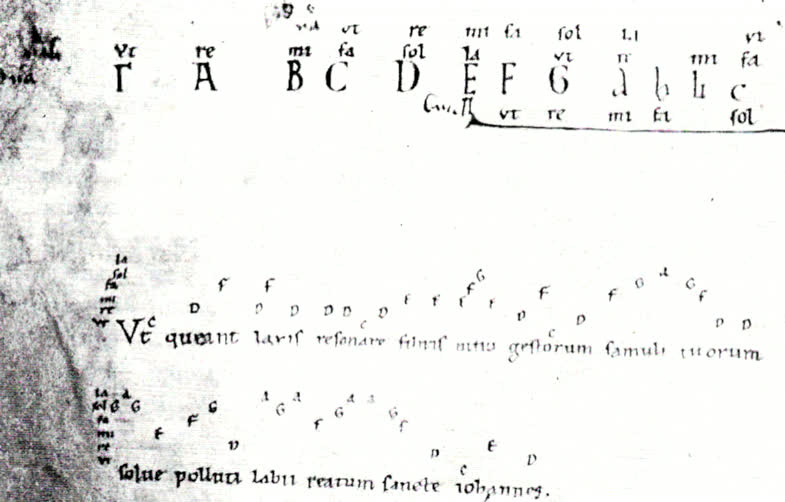
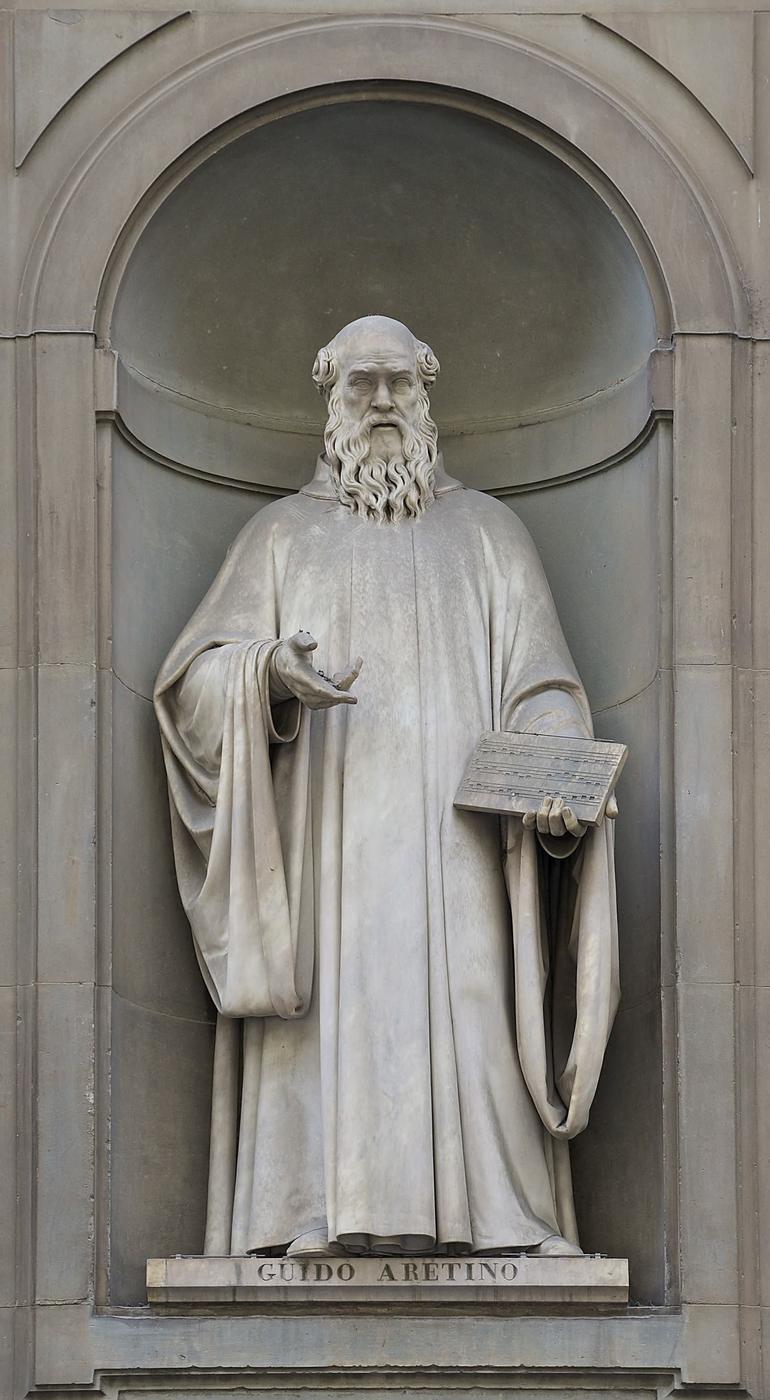
In the 8th century, a hymn in honour of Saint John the Baptist was attributed to the monk Paul the Deacon: the Ut queant laxis. Nearly three hundred years later, another monk, Guido of Arezzo, noticed that each half-line began one note higher than the one before. To help his pupils sing in tune, he named the notes after these first syllables:
| Latin line | Note |
|---|---|
| Ut queant laxis | ut, later do |
| Resonare fibris | re |
| Mira gestorum | mi |
| Famuli tuorum | fa |
| Solve polluti | sol |
| Labii reatum | la |
| Sancte Iohannes | si |
The text asks Saint John to "loosen the lips" of his servants so that they may sing his wonders. Our scale, the one every child learns at school, was born from a prayer. Antoine copied its lines into his notes: for him, the T-shirt's wish sings on the bright part of this prayer, from Mira gestorum, "your wonders", to the saint's name.
On the back: Lakhovsky's circuit
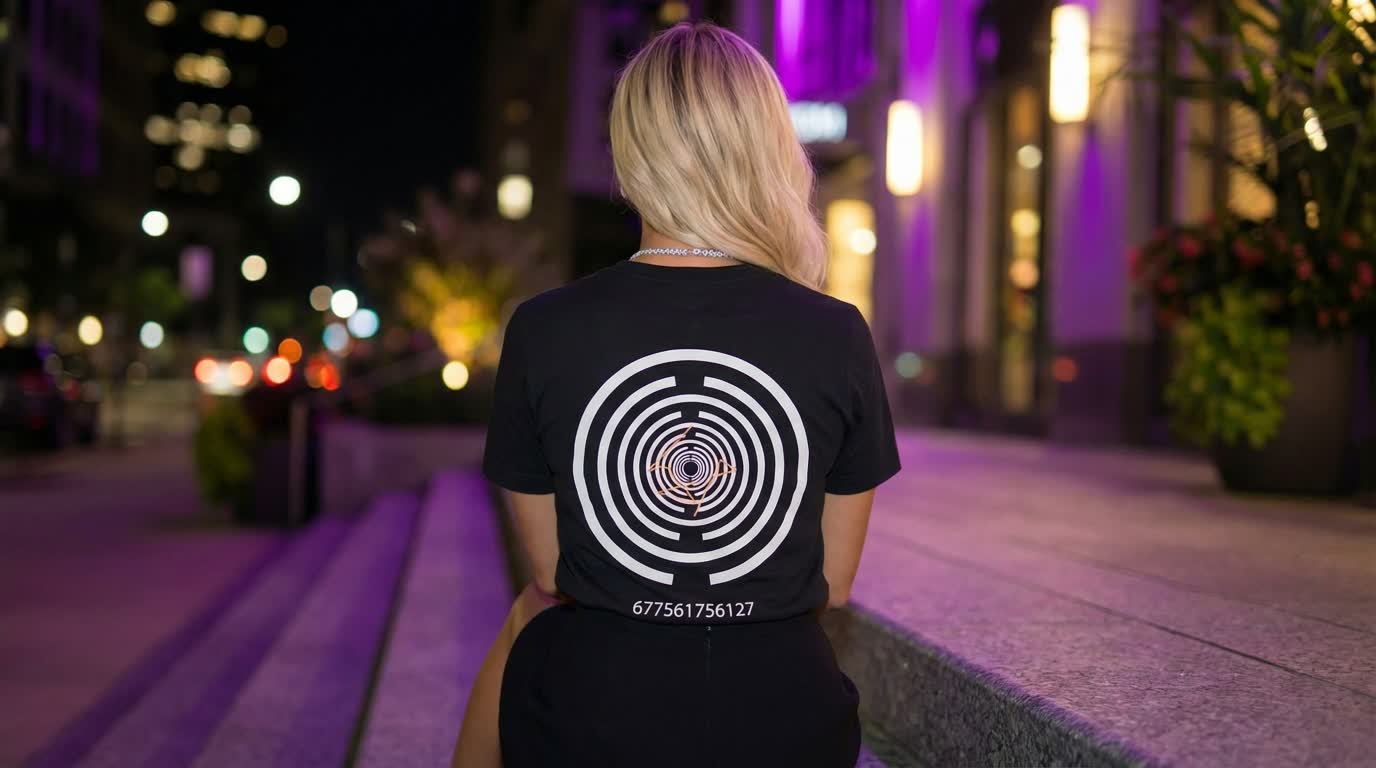
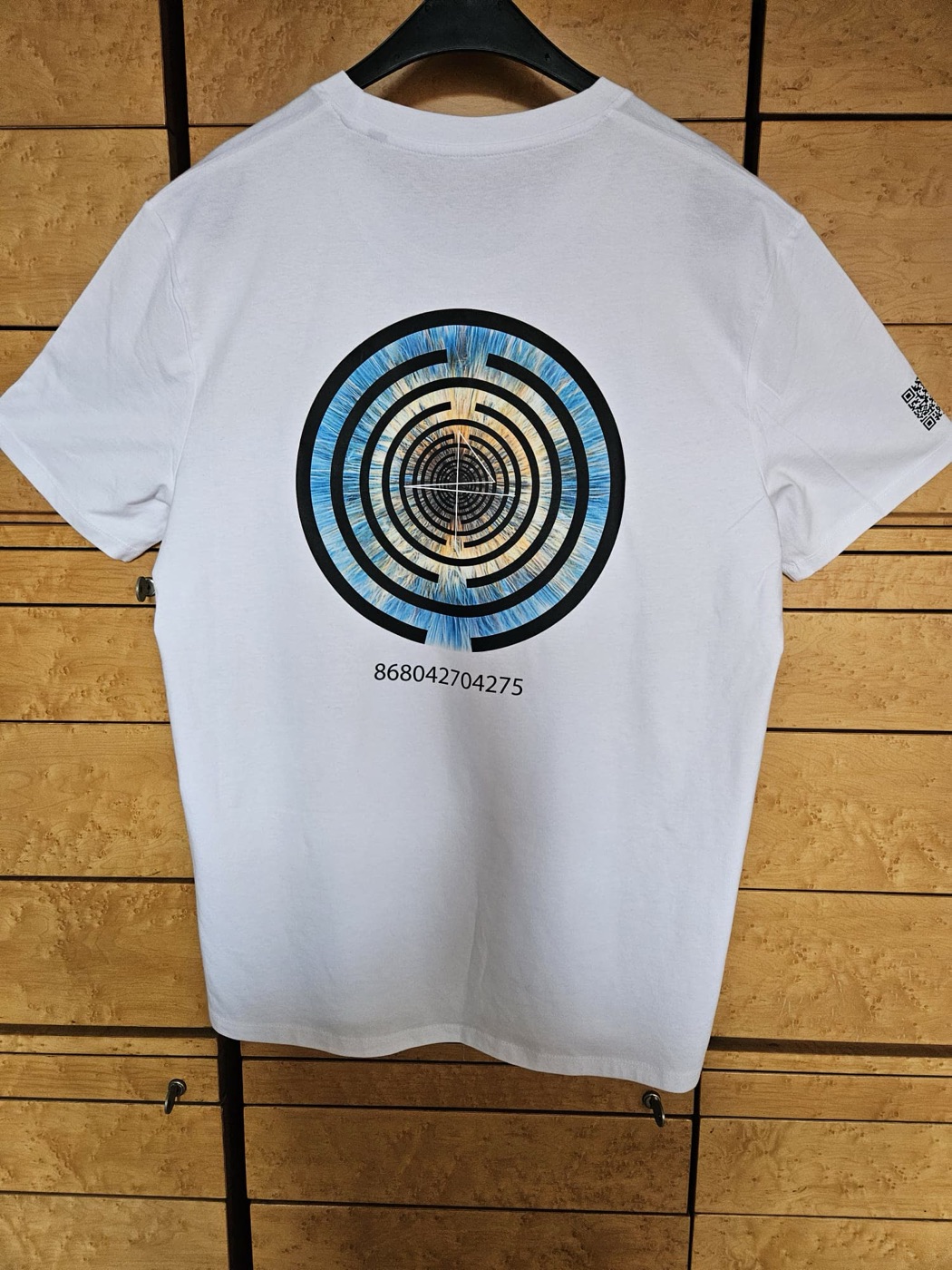
Turn the T-shirt over. On the back, a large pattern of twelve concentric rings, each one open with a small gap: this is Georges Lakhovsky's oscillating circuit.
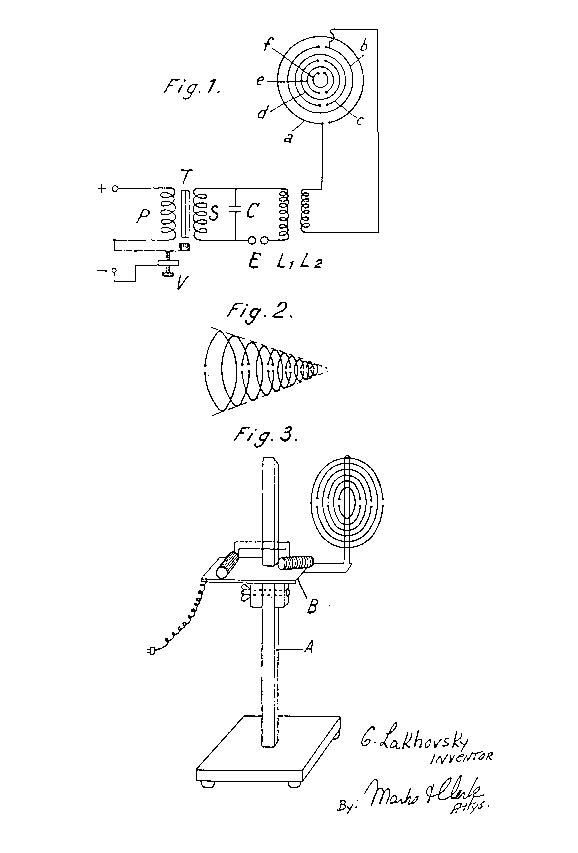
Lakhovsky (1869-1942), a Russian-born engineer who settled in France, was convinced that everything alive oscillates, and that each cell is a tiny circuit that emits and receives vibrations. From this he built his famous multiple-wave oscillator. But he had also imagined very simple versions to wear: an open copper wire, closed into a ring around the neck, the waist or the wrist. Antoine's T-shirt is the direct heir to this idea. The same antenna is found on the workshop's resonance table.
Antoine adds two personal elements:
- the iris in a gradient, enclosed at the centre of the circuit, so that front and back answer each other;
- the person's identity code, placed facing the circuit's spreaders, that is, facing the small openings in the rings.
This code is what makes the garment strictly personal. Antoine summed it up in one sentence: your T-shirt works only for you. If someone else puts it on, it's a T-shirt like any other.
The first T-shirts: the square and the target
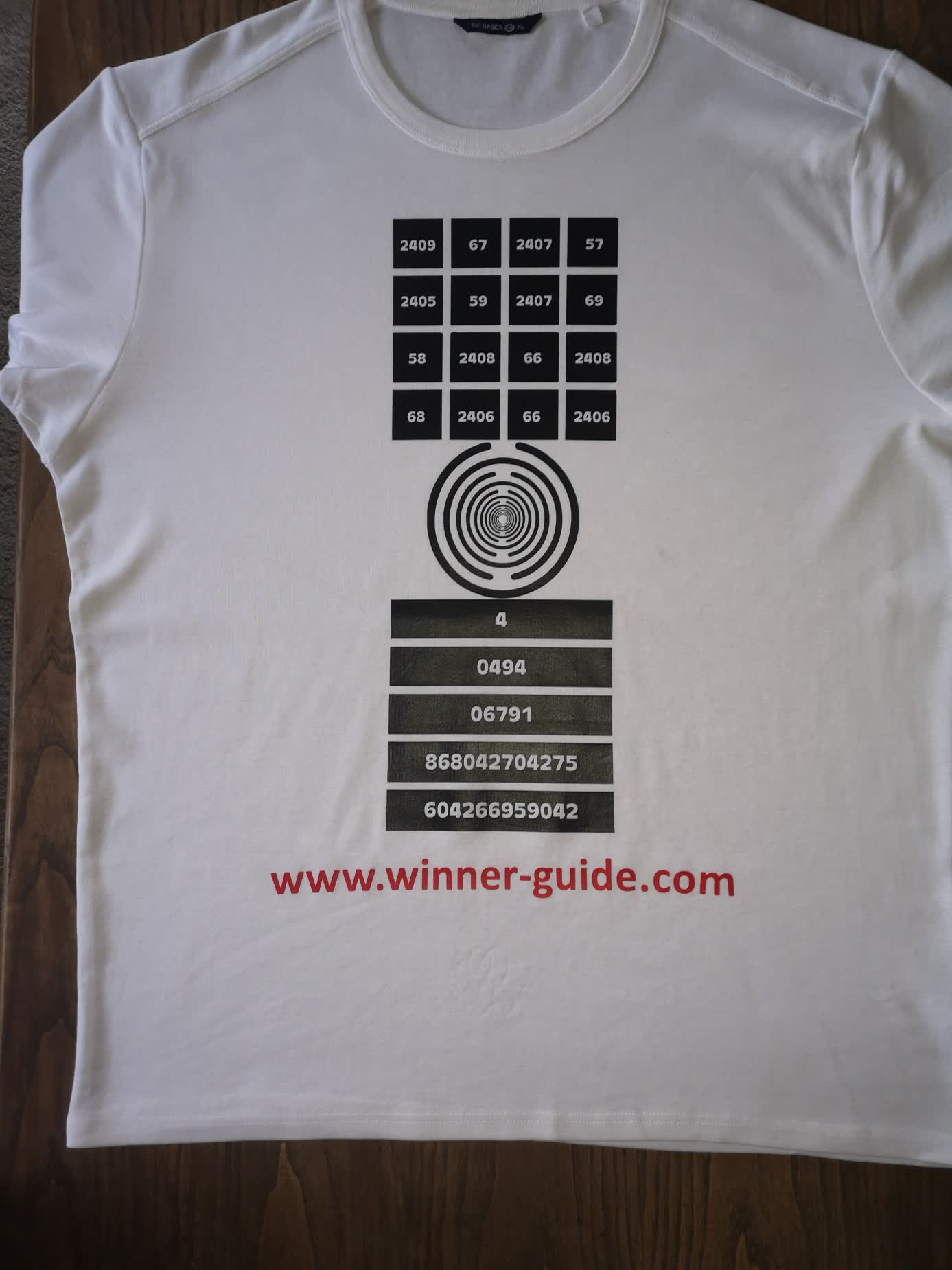
Before the iris, there was a first, more graphic generation of T-shirts. On them Antoine printed, on the front, the person's personal magic square, calculated from their date of birth, and on the back, a protection square. Each was linked to an antenna with twelve oscillating circuits, the target you see under the square.
These white models, with their columns of numbers, look like a page from a laboratory notebook. They are the direct ancestors of the Iris model.
The orgone ribbon on the sleeve
Throughout its making, the T-shirt stays in a workshop saturated with orgone, the life energy described by the Austrian psychiatrist Wilhelm Reich in the 1930s and 1940s. The fabric absorbs it. Antoine liked to say his T-shirts came not from a factory but from a laboratory. To learn more about this energy, read what is orgone? and orgone according to Antoine.
On the sleeve, Antoine sews a small orgone diffuser: a fluorescent ribbon of 150 by 20 millimetres, 35% cotton, with or without a runic code. It has been charged in the workshop, and gives that charge back. According to Antoine, it is particularly active during the second decans, the middle part of each zodiac sign, roughly from the 4th to the 13th of each month.
Under Wood's light, this ribbon lights up, like the mother runes and the code of pictographic resonance.
Your colour, chosen from your sky
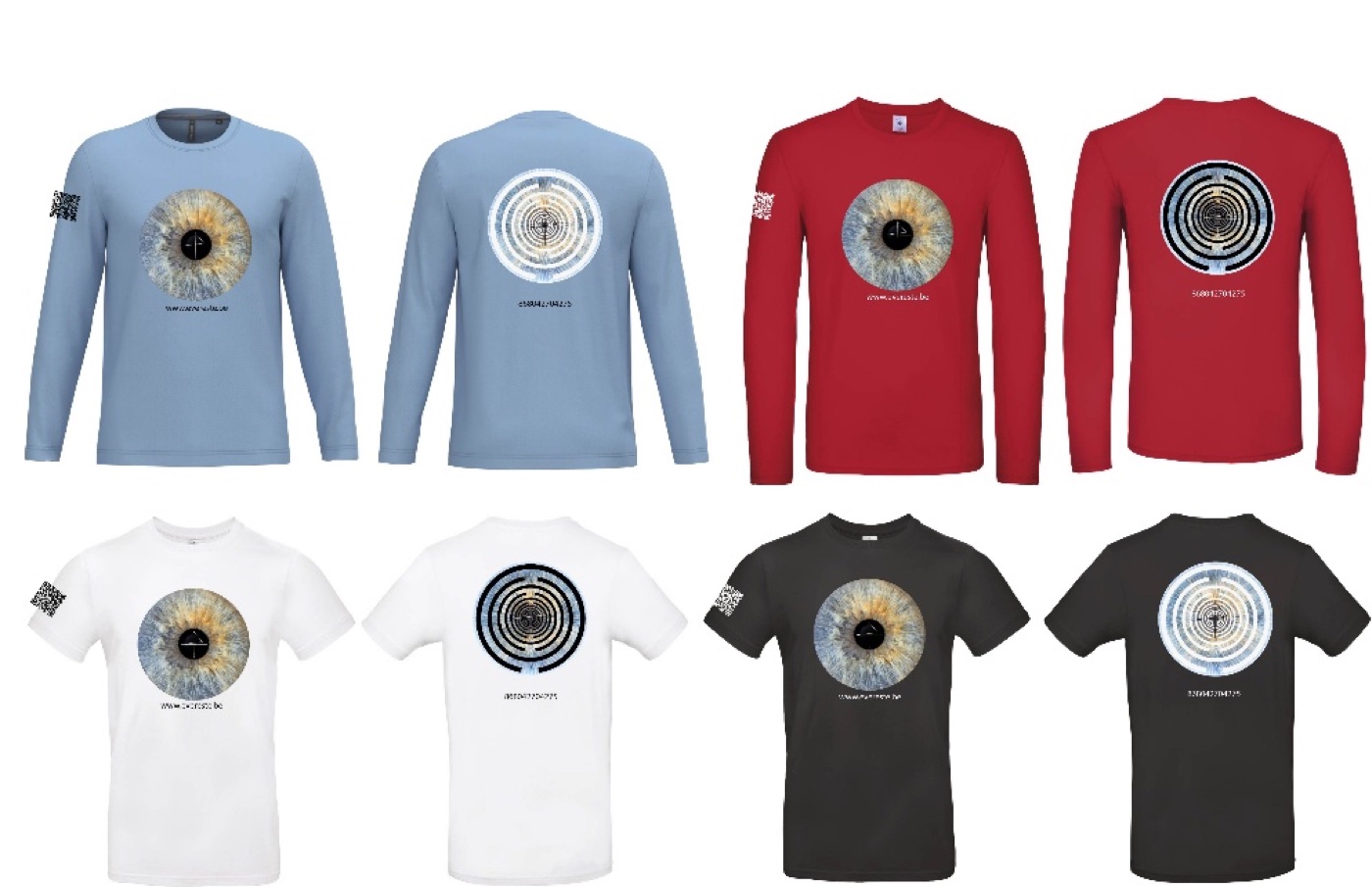
The T-shirt comes in nine colours: white, black, red, orange, yellow, green, blue, indigo and violet, each in a light or dark shade, and others on request.
But Antoine didn't leave the choice to chance. He started from your birth sky and kept only the colours of the planets that have no link with your cosmic fragility, that is, the planets that don't put you in difficulty. It is the same logic as the seven seasons of your year: each planet has its colour, and not all of them wish us equally well.
If you don't know your time of birth, he applied another rule: Hugo von Höllen's law of attraction, which he had found in the encyclopaedia Le Mystère dévoilé.
Wearing it on the right days
You can wear the T-shirt every day. But Antoine advised a finer way of using it: wear it on the days favourable to your wish. A personalised T-shirt worn only on the days concerned, he wrote, considerably strengthens the resonance of the wish.
These are the days of your personal calendar: the 52 lucky days, the good Moon windows, the days of your favourable season. Some wear it day and night during these periods. Others only during the day, and lay it flat at night, near their tree of luck.
The details
- Material: organic cotton, soft and hard-wearing, which needs much less water than conventional cotton. Linen and cashmere on request.
- Neckline: round or V-neck.
- Sleeves: short or long.
- Sizes: S, M, L, XL, XXL.
- Colours: nine colours, light or dark, chosen from your sky.
- Two models: Sigil, with your wish over the heart, and Iris, with the photograph of your eye and the wish in the centre of the pupil.
- Making: by hand, one at a time, in two to three weeks, plus the time for the photo session for the Iris model.

Antoine made these T-shirts one at a time, by hand, and he didn't want to make hundreds. Each one carried the name of a single person, their eye, their wish, their sky. A few seconds of bad luck can wipe out years of effort, he reminded us: you might as well put every chance on your side, right down to what you wear.
Send the workshop your date of birth and your wish in one sentence. We will tell you which colour suits you, and take care of the rest.
Frequently asked questions
What is the radionic T-shirt?
An organic cotton T-shirt made by hand in Antoine's workshop for one person only. On the front it carries the iris of your eye, with your wish drawn in the centre of the pupil, and on the back Lakhovsky's oscillating circuit with your personal code.
Do I need to wear the T-shirt visibly?
No. According to Antoine, the drawing of the wish works permanently, even worn under a shirt or a jumper.
What is the difference between the Sigil and Iris models?
The Sigil model carries your wish, drawn as a sigil, over the heart. The Iris model adds the photograph of your own iris, 26 cm in diameter, with the sigil in the centre of the pupil.
Which eye should be photographed?
The right iris if you are right-handed, the left iris if you are left-handed, a left-hander trained to use the right, or ambidextrous. The photo is taken in a professional studio near you.
How is the colour chosen?
Antoine selected it from your birth sky, keeping only the colours of the planets with no link to your cosmic fragility. If you don't know your time of birth, he applied Hugo von Höllen's law of attraction.
Why the notes mi, fa, sol, la, si?
Antoine activated the wish on these five notes, whose names come from the Latin hymn Ut queant laxis, which Guido of Arezzo used in the 11th century to name the notes of the scale.
Can someone else use the T-shirt?
No. The personal code on the back and your iris make it strictly personal: worn by someone else, it's a T-shirt like any other.