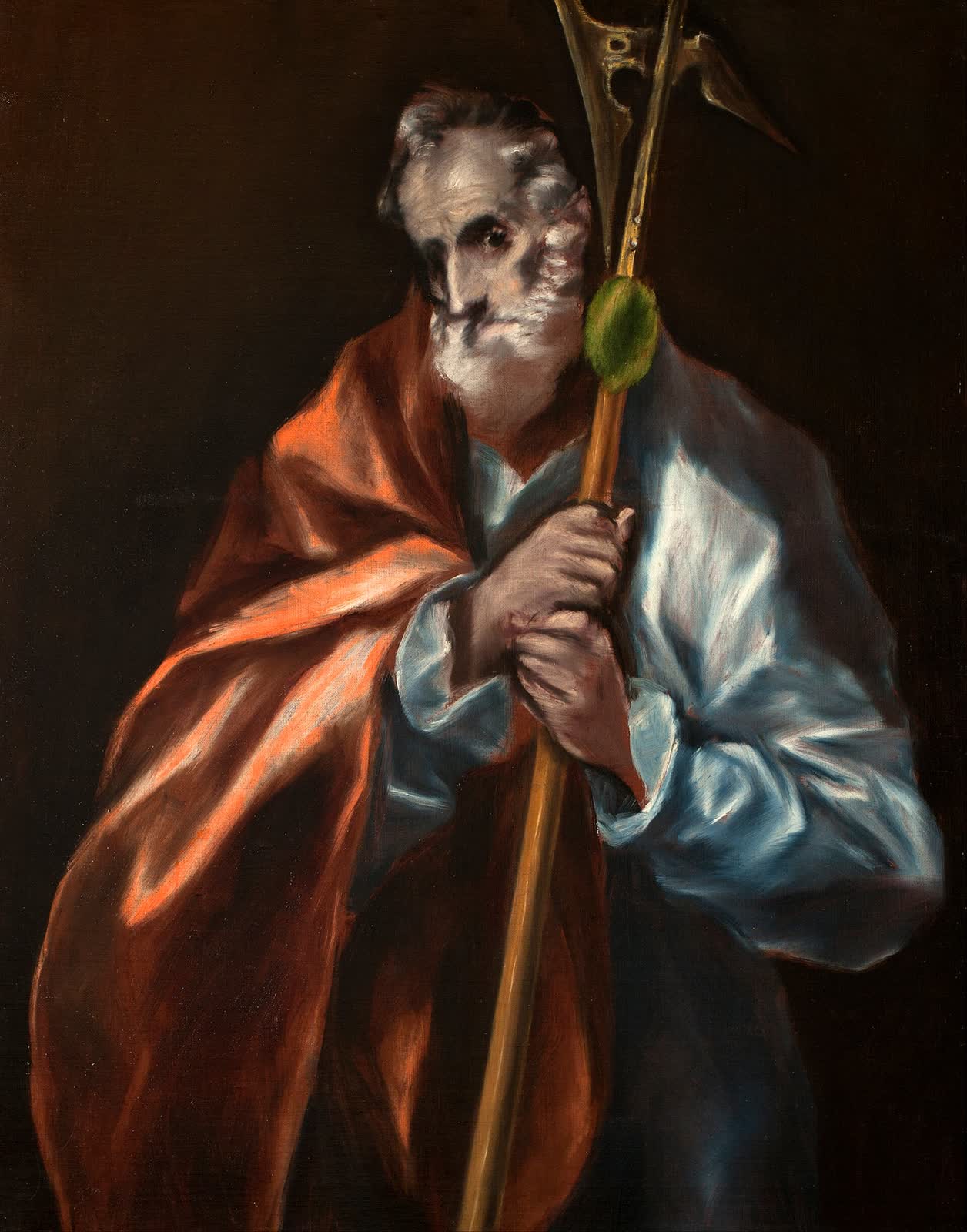
Saint Jude answers every prayer, especially those that seem hopeless or impossible.
What his devotees say, as reported by Antoine
Some saints everyone knows. Saint Anthony, whom people pray to when they've lost something. Saint Rita, the saint of desperate causes, whom people visit at Notre-Dame de Bonne Nouvelle in Liège.
And then there is Saint Jude. An apostle we know almost nothing about. A name people avoided for a long time. And who became, within a few years, one of the most prayed-to saints in North America.
The apostle no one dared to pray to
Jude, also called Jude Thaddeus, is one of the twelve apostles. He is sometimes described as a relative of Jesus. A short epistle in the New Testament is attributed to him, and tradition has him dying a martyr, with the apostle Simon, during his preaching journeys.
For centuries, though, very few of the faithful called on him. The reason was simple: his name. Jude sounds too much like Judas, the one who betrayed Jesus. People feared the confusion. So they left him aside.
That may be why, tradition says, he became the patron saint of lost causes: people only turned to him as a last resort, when every other saint had been prayed to in vain. And he answered.
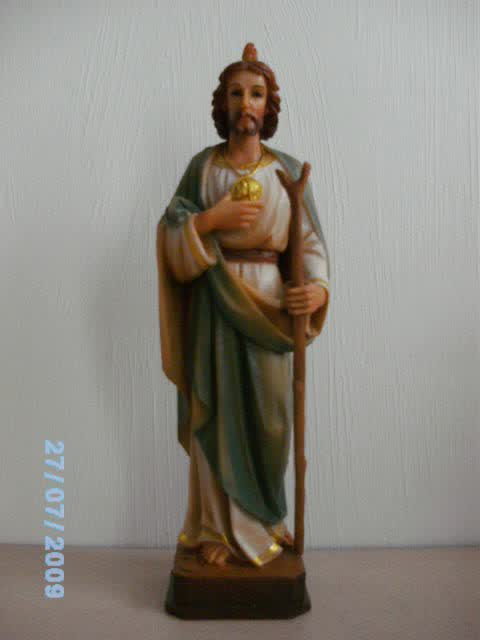
“Thank you, Saint Jude”
Antoine told the story as reported by an American journalist, Liz Trotta, for many years a television reporter and later a columnist. She had noticed something strange: in the pages of the big daily newspapers, small ads carrying the same message were multiplying.
“Thank you, Saint Jude.”
She wanted to understand. For three years, she traced the saint's legends and travelled to his places of worship, as far as the Middle East. She drew a book from it, published in French as Saint Jude, le patron des prières impossibles (“Saint Jude, patron of impossible prayers”).
Antoine summed up what she found like this: in less than fifteen years, carried by word of mouth alone, Saint Jude became the most popular saint in the United States and Canada. The donations left at the foot of his statues were so numerous, he noted, that they helped the American Church get back on its feet. And his devotees say only one thing: he answers, especially when nothing seems possible any more.
The novena
The heart of the devotion to Saint Jude is a novena: a prayer repeated nine days in a row. Antoine passed it on in its traditional form.
Every day, for nine consecutive days, six times a day, you say:
May the Sacred Heart of Jesus be adored and loved in all the tabernacles until the end of time. Amen. May the Sacred Heart of Jesus be praised and glorified now and forever. Amen. Saint Jude, pray for us and hear our prayers. Amen. Blessed be the Sacred Heart of Jesus. Blessed be the Immaculate Heart of Mary. Blessed be Saint Jude Thaddeus, throughout the world and for all eternity.
Novena to Saint Jude
Then an Our Father and a Hail Mary.
Tradition adds a gesture: leave nine copies of the novena in a church each day. Nine, always nine: the number of fulfilment, which comes back in all of Antoine's rites.
The prayer to Saint Jude
Here is the prayer you say to entrust your request, as Antoine gave it:
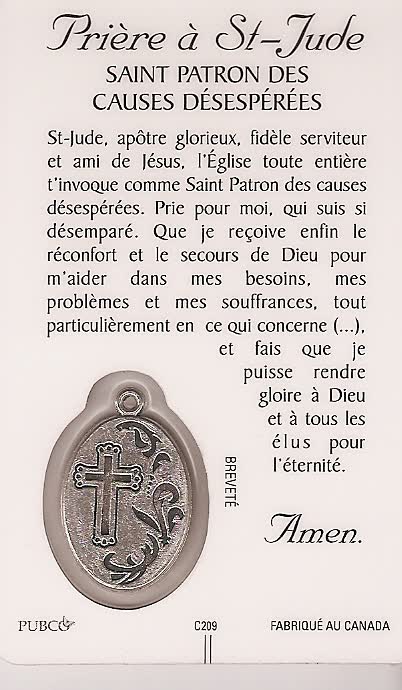
O glorious apostle Saint Jude, faithful servant and friend of Jesus, the Church honours and invokes you everywhere as the patron of hopeless cases. Pray for me. I beg you with all my heart, use on my behalf the great privilege you have of bringing visible and swift help to those who call on you. Come to my aid. Obtain for me the help and grace of God in all my difficulties, and in particular… (your request). I promise you, O Saint Jude, always to remember the great favour you will grant me. I will always honour you as my patron and protector. As a sign of my gratitude, I will do all in my power to make you known as the patron of lost causes. Amen.
Prayer to Saint Jude
In the tradition he reported, you copy this prayer out 81 times, nine times nine, and leave nine copies in a church each day, for nine days.
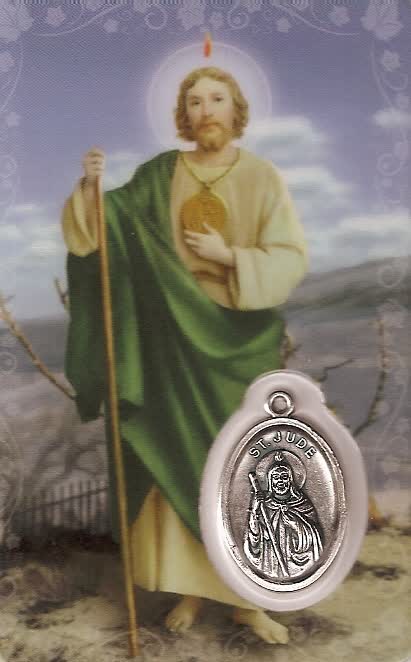
The candle and the photograph
Antoine added two pieces of advice that come back throughout his work.
The candle. Each time you ask for Saint Jude's help, light, if you can, a honeycomb candle of pure beeswax. It is the same material as in the Saint Ambrose ritual: the wax that seals the treasure of the hive. As with any candle, never leave it burning unattended.
The photograph. To entrust a loved one to Saint Jude, place their film photograph on your prayer card. Antoine explained why he preferred film in the article on places of luck: a real black-and-white photograph keeps the imprint of the person better.
The saints of impossible causes
Saint Jude is not alone. The Catholic tradition knows several saints people pray to when all seems lost, and Antoine liked to gather them together:
- Saint Rita, the saint of desperate causes, whom people pray to at Notre-Dame de Bonne Nouvelle, Rue Saint-Léonard, Liège;
- Saint Expeditus, invoked for urgent matters, in the same chapel;
- Our Lady of Perpetual Help, at the chapel of Mohiville, where people leave their novena and their little cup of paraffin;
- and Saint Jude, the last resort, the one no one dared to pray to.
Hey Jude
Antoine liked to finish with a wink. The most famous Beatles song bears his name: Hey Jude. Paul McCartney wrote it to comfort a child, and its words, in essence, tell him not to carry everything on his own and to turn sadness into something better.
For Antoine, it wasn't entirely a coincidence. The saint of lost causes gave his name to one of the most comforting songs ever written.
What to remember
A prayer can't be ordered. It is entrusted. Saint Jude is the saint of those who have tried everything, and who still dare to ask.
Nine days. A candle of pure wax. A photo of the person you love. And the request, said simply, from the heart.
A situation that seems to have no way out? Describe it to the workshop: we will tell you which saint, place or ritual to turn to.
Frequently asked questions
Why is Saint Jude the patron saint of lost causes?
His name sounded too much like Judas, and for centuries people only called on him as a last resort, when every other saint had been prayed to in vain. Tradition says he answered.
How do you pray the novena to Saint Jude?
You say the novena prayer six times a day, for nine days in a row, followed by an Our Father and a Hail Mary. Tradition also asks you to leave nine copies of the novena in a church each day.
Which candle should I light?
Antoine recommended a honeycomb candle of pure beeswax, each time you ask for Saint Jude's help.
Can I pray to Saint Jude for someone else?
Yes. Antoine advised placing the person's film photograph on your prayer card.
Who is Liz Trotta?
An American journalist who spent three years investigating Saint Jude's sudden popularity. Her book was published in French as “Saint Jude, le patron des prières impossibles”.
Free guide · Alchimixe GPS
Stack the Odds in Your Favor
Feel like it always lands on you? A bad patch has a shape, and a calendar to get out of it.
Get the free guide